




Wrath of coconuts, oil palm
By and large, many upright citizens of Malaysia would eye migrant workers with disdain at best, and with suspicion, fear, and vigilance at worst.
Somehow, this motley assembly of foreigners stand out among us like a sore thumb, forming an underclass apart, necessary, and yet menacing somehow. The immediate instinct of the body politics is to reject them, like a human body would reject an alien cell. Yet, in the final analysis, decision makers have to make this concession that foreign workers are indeed needed, and so they go about the business of how best to live with this massive presence of an alien workforce.
The business of government at least to those who hold the reign of power is to control things and people. So far, government control of foreign workers have been nothing but messy. Many departments and agencies have been roped in, and even silly RELA members have jumped on the wagon, sometimes with disastrous results.
By and large, many upright citizens of Malaysia would eye migrant workers with disdain at best, and with suspicion, fear, and vigilance at worst.
Somehow, this motley assembly of foreigners stand out among us like a sore thumb, forming an underclass apart, necessary, and yet menacing somehow. The immediate instinct of the body politics is to reject them, like a human body would reject an alien cell. Yet, in the final analysis, decision makers have to make this concession that foreign workers are indeed needed, and so they go about the business of how best to live with this massive presence of an alien workforce.
The business of government at least to those who hold the reign of power is to control things and people. So far, government control of foreign workers have been nothing but messy. Many departments and agencies have been roped in, and even silly RELA members have jumped on the wagon, sometimes with disastrous results.
The latest spate of public disagreement between the Home and Labour Ministries over who should have jurisdiction over the matter is just another glaring demonstration of our government's lack of direction over this problem.
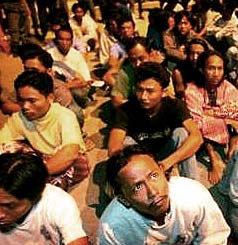 Some problems associated with foreign migrant workers are real, and some are merely perceived as real, when actually they are not.
For a long while, and even now, many Malaysians fear the criminal elements among these foreigners. Indeed, we do get occasional reports of heinous crimes committed by these foreign people. Those Malaysians who live near a construction site would inevitably eye the workers' shabby quarters with some disparagement. Then again, these get into violent fights among themselves, and between groups of different nationalities, setting off alarm among peace-loving citizens.
This harsh public perception has since been much mellowed by statistics released by the police, showing that the crimes committed by foreign workers actually constitute only a small proportion of the criminal activities in the country. Apparently, home grown Malaysian criminals are far more to be feared than strange looking and foreign sounding aliens.
How many are they?
Nevertheless, keeping track of these foreign workers is a matter of national importance. For a start, does anybody know exactly how many of these migrant workers there are in Malaysia right now?
According to various government announcements, there are anywhere from two million legal workers and upwards in the country. The trouble is with estimating the number of those who have overstayed, or who have entered this country illegally through our long coast lines and porous entry points. Since it is anybody's guess, I am entitled to mine. I think there could be as many as 4 to 5 million legal and illegal aliens in Malaysia at this moment, and that is nearly 20% of our nation's total population. One in five persons in our land could be a foreigner.
The other real problem about this mammoth presence of foreign workers points to a serious flaw in our economic structure.
Where there is a demand, there is a supply. The proliferation of an alien work force has taken root because our relatively rapid economic growth and low inflation rates have been achieved at the expense of depressed wages. Only very poor desperate people from countries with serious socio-economic problems will brave the hardship of working in Malaysia at the sort of wages shunned by Malaysians.
You could say that today the Malaysian economy is dangerously dependent on our foreign workforce.
They are everywhere of course, especially in fast growing regions like Klang valley, Johore and Penang. They form the mainstay of the unskilled and semi-skilled manpower that keep the productive machinery of the nation humming with life and energy.
Cannot survive without them
Without these foreign workers, the plantation and construction industries will probably collapse overnight. So would the small and medium sized manufacturing concerns all over the land.
In Kuala Lumpur at least, a pertinent question to ask is this: is there any business, large and small, that can survive without foreign workers?
One sees them slogging away, in hypermarkets and small retail trades, in humble coffee shops and posh restaurants, in wet markets and pasar malam, in laundries and in hardware stores, in 5-star hotels and in budget inns.
In the famous China Town (a term much disliked by the blue-blooded Chinese themselves) at Petaling Street in KL, many of these foreigners are now minding the store. There, the Chinese food outlets are all handled by them, with the locals working in their supervisory capacity only. You order a plate of Penang fried kueh teow or any of the Cantonese delicacies and chances are that the food would be cooked by a Thai or a Myanmar national. Certainly, these foreign cooks and food-servers can speak Cantonese much better than I can!
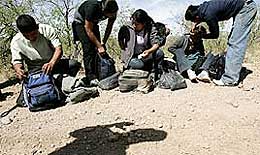 Then, there is the hidden but ubiquitous presence of the foreign maids working in Malaysian homes all over the country.
Occasionally, we read news reports of how they commit crimes against their employer, run away after a month or two at their job, and some would even rob their boss blind. Occasionally too, the stories would surface about how some of these maids have been raped, tortured, or cheated by their agents and employers.
Human interest aside, the sober fact that stares us in the face is that foreign maids have been the key factors behind more educated Malaysian women going out to work, to secure a second income for their family, and to fulfil their potentials in their chosen careers.
The life of these foreign migrant workers here in Malaysia must be very harsh.
Usually, their passports or other forms of travelling documents are detained by their agents or their employers, and this illegal move is thought of as an insurance against their running away. Like it or not, they have to stay with the employer or the agent.
Many of them have had to pay an arm and a leg to their agents in their home country anyway, as service fess, and for expenses in securing the fare and the travelling document. Having arrived in Malaysia, and started working for an employer, they still have to pay their agent out of their not too handsome wages for various vague purposes. Food is not generally provided, though shelter usually is. At the end of the month, they really do not have much disposable income left, let alone sending some money home.
It is unlikely that these migrant workers enjoy the sort of benefits that Malaysian workers have come to take for granted. All kinds of paid leaves and overtime wages are probably beyond their ken, and such other protections as Socso or EPF for foreign workers are probably never taken care of by their employers. I am quite sure they have to bear their own medical and dental bills.
Obviously, foreign workers are easy targets for ruthless exploitation by employers and employment agencies. Suddenly thrust into a foreign country like Malaysia and none too well educated, they probably know next to nothing about our labour laws, and their basic rights both as workers and as human beings. They are also uprooted from their homes, far away from the support of their family and their community. So if they suffer any injustices, where and to whom are they to take up their complaints?
Ignorant and confused, and devoid of resources and confidence, new arrivals must be frightened out of their wits by their new surroundings in Malaysia. They are easy meat for over-zealous immigration enforcement officials and corrupt police constables. I have seen with my own eyes two police constables chasing this foreign chap into a coffee shop toilet and subjecting the snivelling protoplasm to all sorts of physical and verbal abuse before extracting a small sum of cash from him.
Making a living
Here, these migrant workers have very few friends among Malaysians. That is probably why during public holidays and festive occasions, the KL city centre is packed with these workers seeking companionship among their own "kind", delighting in speaking their own tongue, and even sharing information and the odd items of food imported from their homeland. Those rare days of communal conviviality must be the only emotional reprieve for these overworked lonely miserable foreign souls.
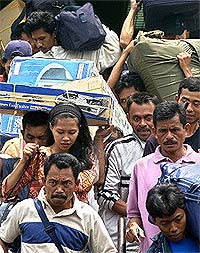 Now of course, there is the wonder of internet. My neighbourhood internet caf would be crammed with Myanmar and Thai workers, banging away with their clumsy oversized fingers on the keyboard, talking to their loved ones back home with the help of modern audio-visual technology. The internet is still the cheapest way for them to communicate with their family in faraway land.
I, like many of you, am not free from all my prejudices about these migrant workers. They do look, speak and behave so differently. Every time when my prejudices tend to get the better of me, I kick my behind and remind myself that these are just human beings trying to survive in a very hostile environment. Like me, they are just trying their best to eke out a living, for the sake of a family whom they love dearly.
After all, my forebears, like many of your forebears, have been migrant workers in Malaysia too, and they must have gone through similar kind of hell now visited upon these foreigner workers.
Should I then not treat them with a little more empathy and respect, as my forbears wanted to be treated with empathy and respect back then?


Report this comment
Are you sure you want to delete this comment?
This action cannot be undone.