




Flying docs grounded: Troubling questions raised
PKR wants an urgent independent inquiry into the tender process for the Sarawak's Flying Doctor Service (FDS) and Emergency Medevac Service (EMS).
Tian Chua, the party's strategic bureau director, who was in Kuching recently, said the FDS and EMS is virtually non-existent and those responsible for it must be brought to book.
PKR wants an urgent independent inquiry into the tender process for the Sarawak's Flying Doctor Service (FDS) and Emergency Medevac Service (EMS).
Tian Chua, the party's strategic bureau director, who was in Kuching recently, said the FDS and EMS is virtually non-existent and those responsible for it must be brought to book.
Rural communities throughout Sarawak have been asking their community leaders why the FDS has been interrupted.
Supplies of precious drugs, including vaccines, antibiotics and blood pressure treatment, have become unreliable in many remote clinics.
"Providing proper health care for poor rural Sarawakians is a must. It is also the right thing to do economically," said Tian Chua.
 "Our nation must never allow any citizen, least of all the most vulnerable among us, to be victimised," said Tian Chua (
left
), the MP for Batu
"Our nation must never allow any citizen, least of all the most vulnerable among us, to be victimised," said Tian Chua (
left
), the MP for Batu
He called for the restoration of a full FDS and EMS lifeline, and to find a lasting solution so that there will no interuption to the service.
Sarawak's FDS and EMS are helicopter services leased by the State Health Department to send medical teams to rural villages.
They provide essential emergency transport for sick patients from villages to urban hospitals, and between hospitals in this vast state.
Since the beginning of 2007, flights have diminished in frequency and at times, stopped altogether for months on end.
The FDS and EMS have flown emergency rescue missions, and delivered vaccinations and basic health care to rural communities since 1973.
There are about 175 remote communities served by these flying doctors. They face harrowing journeys on land, and rivers to reach the nearest doctor.
Contract worth RM63.8 million
Malaysiakini has obtained an exclusive look at documents detailing the collapse of the FDS and EMS since early 2007.
The Sarawak Health Department awarded a four-year contract to a Peninsula-based company, SAR, in 2007 to provide FDS and EMS services worth nearly RM16 million a year.
SAR was a company with no proven track record in Sarawak. According to the Companies Commission of Malaysia (CCM), SAR owed various banks more than RM10 million at the beginning of 2007.
"A company based in Peninsular Malaysia, dominated by a single family, with (only) RM5 million in share capital and over RM10 million in debts, was given a contract worth RM63.84 million to provide life-saving humanitarian services to the people of Sarawak," said Tian Chua.
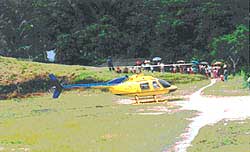 SAR had four directors registered with the Companies Commission of Malaysia (CCM) in February 2007. The directors included three members of the same family, two of whom were only 19 and 22 years old at the time.
SAR possessed only one, unserviceable helicopter at the start of 2007, although the contract awarded in mid-October 2006 had stipulated five aircrafts.
There were no flights at all until mid-February 2007, when SAR leased helicopters from another company. SAR had only one engineer on its payroll. He returned to Sri Lanka within half a year.
SAR issued invoices demanding fixed fee retainers of RM3 million to the Ministry of Health for flights in the first three months of 2007, although there had been no flights at all in January and only sporadic flights after mid-February 2007. In the end, SAR was paid only RM210,484.
Contract termination delayed
The Health Ministry issued numerous warning letters to SAR. However, SAR was given extended grace periods from January until July 2007.
The health minister at the time, Chua Soi Lek, said that "the selection of contractors is done by the Ministry of Finance and not by the Ministry of Health".
Chua's ( below ) ministry was under tremendous pressure from the Sarawak public to terminate the agreement. Yet, extensions were still granted to SAR's contract.
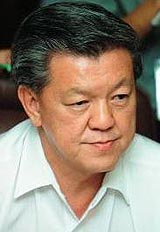 Tian questioned whether anyone in Putrajaya was assisting SAR to keep hold of a contract they evidently had no ability to perform.
Tian asked: "Was such help within the normal government procedures and guidelines?"
There have been several calls for tenders for new contractors since the SAR debacle, but to no avail. Remarkably, SAR was allowed to submit another tender.
Instead of a sustainable solution, temporary contractors including the latest company, Sabah Air, have been providing piecemeal service to help the rural folk.
During these temporary services in 2008, on average, 10 patients were airlifted by EMS every month to hospitals.
"This gives a very good indication of the number of desperately sick people deprived of the airlift service in 2007 and again, now in 2009," said Tian Chua.


