




Zaid outlines Pakatan blueprint for change
Pakatan Rakyat's much-awaited Common Policy Framework (CPF) will be driven by the opposition alliance's long-touted agenda for change and reform.
The agenda promises to restore the doctrine of separation of powers, checks-and-balances, public accountability, transparency and weed out abuse of power and exercises in absolute power.
These were the salient points stressed by senior PKR leader Zaid Ibrahim in an exclusive two-hour interview with Malaysiakini late last night in Tanjung Aru, Kota Kinabalu.
Pakatan Rakyat's much-awaited Common Policy Framework (CPF) will be driven by the opposition alliance's long-touted agenda for change and reform.
The agenda promises to restore the doctrine of separation of powers, checks-and-balances, public accountability, transparency and weed out abuse of power and exercises in absolute power.
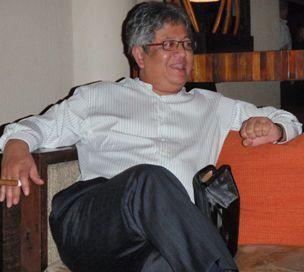 These were the salient points stressed by senior PKR leader Zaid Ibrahim in an exclusive two-hour interview with
Malaysiakini
late last night in Tanjung Aru, Kota Kinabalu.
These were the salient points stressed by senior PKR leader Zaid Ibrahim in an exclusive two-hour interview with
Malaysiakini
late last night in Tanjung Aru, Kota Kinabalu.
"The CPF, once adopted, will become the manifesto of Pakatan," said Zaid who has since taken six months sabbatical leave from his party, but not from PR.
"This is a historical draft CPF which will be finalised next week. It will be central to the political struggle of Pakatan and the reason why I left Umno and joined up.
"I am a Pakatan man and not so much with PKR although I had to join a component party to be in the opposition alliance."
Zaid, a former Umno law minister who broke ranks with his party on law and other reform issues and corruption, confirmed that the draft CPF will be deliberated upon by Pakatan leaders and members at a meet scheduled in December in Kuala Lumpur.
The CPF will draw much of its input from Sabah and Sarawak and the separate manifestos of Pakatan component parties. Membership in Pakatan has so far been confined to PKR, DAP and Pas, the Islamic party, but may include new entrants as the coalition "continues reaching out to all sectors of society".
Asked how the CFP varies from calls within Umno and Barisan Nasional to embrace the idea of change and reform, Zaid responded that "the leopard can't be expected to change its spots".
"Of course, Umno for example has introduced some change in their internal party processes but what about the mind-set of the leaders?" he asked rhetorically.
"We see no change whatsoever. It's all cosmetics. The more things seem to change, the more they remain the same. They (Umno) will never change."
Relooking at 1963 agreement
Briefly, the CPF calls for a re-look at the 1963 Malaysia Agreement, the repeal of harsh laws besides outdated ones, a national consensus on the issue of statelessness including refugees and illegal immigration issues, decentralisation and downsizing of government, the depolitisation of government institutions and education, removing economic monopolies and generally rolling back government interference in the economy.
However, a Pakatan federal government is expected to play a greater role in arresting the decline of the rural economy especially the smallholders sector as the estate sector creates a landless peasantry and drives others to the shanty towns in urban areas.
Likewise, a Pakatan federal government will actively promote the SMEs, small and medium enterprises.
Existing affirmative action policies - "to be extended to all poor" -- including the special privileges will stay but will go hand in hand with a meritocracy which will be transparent in its details.
Special privileges will be confined, as the founding fathers envisaged, to the four sectors i.e. representation in the civil service, intake into institutions of higher learning, government scholarships and opportunities from the government to do business, "and not extended to every sector of society as Umno has done".
"Also, the issue now is that the BN government claims that it has adopted the idea of a meritocracy as the way forward for Malaysia," pointed out Zaid.
"But they are short on the details and the policy is not transparent. Nobody actually knows how it is supposed to work. So, people continue to be left out from the mainstream and marginalized."
Citing the civil service as a case in point, Zaid noted that meritocracy is being touted by the BN government only after non-Malay numbers have been whittled down over the years to just under ten per cent.
"We used to have many non-Malays in the civil service before but why are they not interested now in serving?" asked Zaid.
"It's not because as BN claims that the non-Malays are not interested. It's because they know that they will not have a chance to reach the top. No one will be interested in joining a sector which denies them promotion prospects."
He pointed out that of the nine-odd public universities, not even one has a non-Malay vice-chancellor and "not many non-Malays can be found on the boards of the GLCs especially from Sabah and Sarawak and the Indian community".
The issue of autonomy
Touching on Sabah and Sarawak in particular, the reason for his current trip to Kota Kinabalu and Kuching, Zaid sees "some difficulties ahead" in agreeing on what autonomy means.
"As I see it, without having really studied the issue in depth, what autonomy means in Sabah and Sarawak is not the same understanding as what people in Peninsular Malaysia have," said Zaid.
"This is an issue that will have to be discussed by the Pakatan leaders and resolved. It is beyond the scope of the CPF. The CPF can only mention that the 1963 Malaysia Agreement needs a serious re-look."
Zaid concedes that Sabah and Sarawak have more rights as states compared with those in Peninsular Malaysia. However, if the two states insist that they have autonomy in every sense of the word, "then that is something that will not be acceptable to the states in Peninsular Malaysia".
"I must confess that I do not really know whether the Malaysia Agreement promises Sabah and Sarawak autonomy in every sense of the word. My understanding is that it does not but I may be wrong. That's why we need to look at the Malaysia Agreement again," stressed Zaid.
"Again, the point to note is that even if the Malaysia Agreement promises Sabah and Sarawak autonomy in every sense of the word, it may not be acceptable to the states in Peninsular Malaysia. But that's another issue."
Extending the issue of autonomy to the presence of Pakatan and its component parties in Sabah and Sarawak, Zaid agrees that there are issues with the opposition alliance in its current format in the two states.
This weakness, he agreed, was reflected in the recent Batang Ai by-election in Sarawak where Pakatan suffered its first defeat after several victories in a row in Peninsular Malaysia.
"I am advising against strong-arm tactics," said Zaid.
No to strong-arm tactics
Zaid's thinking is that if Pakatan leaders in Sabah and Sarawak want to incorporate their component parties and the opposition alliance locally, "it can be done".
"It's all up to them to raise the matter and discuss it with all parties concerned. I see no problem here. My only advice, as I said earlier, is not to use strong-arm tactics," reiterated Zaid who denied that his message was aimed at anyone in particular.
"I don't know whether the same name, PKR Sabah or PR Sabah for example, can be used for local incorporation. The Registrar of Societies will have to be brought in on this."
PKR leaders and members in both Sabah and Sarawak have lately been questioning the need for party leaders from Peninsular Malaysia to head the state chapters.
The opposition which surfaced recently basically stems from the "appalling ignorance and non-consultative style" of the Peninsular Malaysian leaders when dealing with the two states. Hence, the call for local leaders to be appointed.
Having visited Sabah and Sarawak numerous times since he joined Pakatan, Zaid confessed that he could see the two states were really very different from Peninsular Malaysia in many ways and not just in their politics.
"I don't blame them if they don't want people from Peninsular Malaysia coming here and telling them what to do. They feel that they have a better way forward," said Zaid.
"The racial polarization that exists in Peninsular Malaysia, for example, is absent in Sabah and Sarawak and this is reflected in their politics as well. So, perhaps this is one reason they keep stressing on the autonomy issue."


Report this comment
Are you sure you want to delete this comment?
This action cannot be undone.