




PAS preps itself for national power
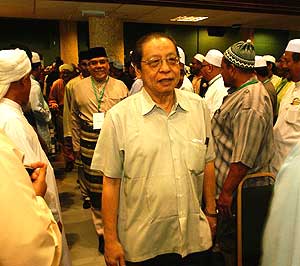
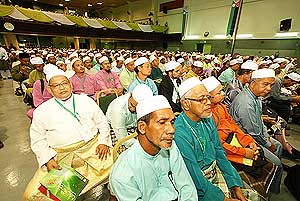
COMMENT The 56th PAS Muktamar in Kota Bharu was a low-key affair, overshadowed by the Fifa World Cup (which made for many red-eyed delegates) and the media’s attention on Malaysia's 10MP.
Intentionally so, the meeting lacked sharp internal criticism and shocking statements that capture national headlines. The mood was one of self-reflection and obvious restraint, as PAS showed it was struggling to find its way in the new political landscape.
More than any muktamar since the March 2008 polls, the meeting highlighted the strong desire of the Islamic party to win national power and its willingness to transform itself to achieve these ends.
COMMENT The 56th PAS Muktamar in Kota Bharu was a low-key affair, overshadowed by the Fifa World Cup (which made for many red-eyed delegates) and the media’s attention on Malaysia's 10MP.
Intentionally so, the meeting lacked sharp internal criticism and shocking statements that capture national headlines. The mood was one of self-reflection and obvious restraint, as PAS showed it was struggling to find its way in the new political landscape.
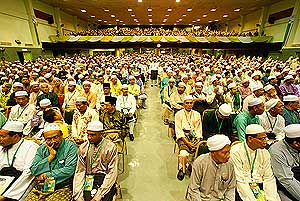 More than any muktamar since the March 2008 polls, the meeting highlighted the strong desire of the Islamic party to win national power and its willingness to transform itself to achieve these ends.
It also showed that the party is far from reaching a consensus on how it will achieve its desire to win Putrajaya, as serious differences in outlooks and goals remain.
This piece focuses on five of the key issues shaping PAS' transforming relationship to the larger political arena. My subsequent piece tomorrow examines dynamics within PAS and how the party is transforming internally.
Perhaps more than any party in Malaysia, PAS is undergoing major external and internal changes that are redefining its role in national politics.
1) Stronger relationship with Pakatan Rakyat?
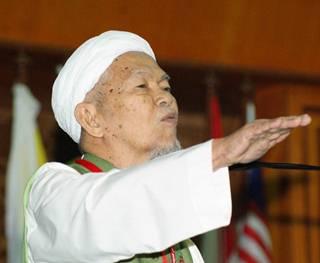
From the spiritual leader Nik Abdul Aziz Nik Mat to party president Abdul Hadi Awang, PAS leaders have publicly confirmed their commitment to opposition collaboration.
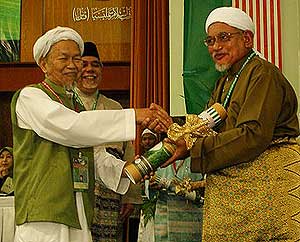 The substance of Hadi Awang's opening speech outlined three major factors underscoring the commitment - the need for cooperation to win seats (for example, the Sibu by-election) and govern, an acceptance of provisions in Pakatan Rakyat's constitution, and a strong condemnation of Umno.
The latter was a theme echoed throughout the muktamar. Over the four days of the assembly, leaders repeatedly tried to assure their Pakatan colleagues of the party's loyalty to the opposition coalition and to squash public perceptions of a Umno-PAS alliance. On paper and video, the speeches were clear that PAS is a dedicated member of Pakatan. This will create serious difficulties for PAS if reneged.
Yet, doubts remain. The fact is that the so-called Unity Group is a ‘dark force’ within the party - it operates outside of the public arena in secret, clandestine meetings. The muktamar showed that trust of the PAS leadership to keep its public commitment remains an issue, both within and outside the party. PAS has historically faced a problem of trust, especially by non-Muslims, and this issue continues to overshadow the party despite public assurances.
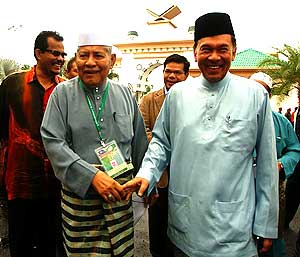
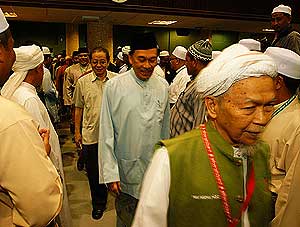 A closer look at the muktamar also highlighted the problem areas for PAS in its relationship with Pakatan. Foremost are continued concerns with the leadership of PKR leader Anwar Ibrahim. Absent from speeches was any mention of Anwar’s sodomy trial, or even substantive issues of rule of law. Nowhere did PAS leaders recognise Anwar as the opposition leader.
This highlights reservations about the leadership of Anwar and the continued belief among PAS leaders that a representative of their own party should lead.
It also pointed to growing doubts about Anwar's future as the leader of the opposition. PAS carefully created options for itself in the event that Anwar is no longer a sitting member of parliament. This issue was broached by what was not said, rather than what was.
 If there was one area where PAS delegates and leaders raised public doubts it was about PKR. Party hopping, perceived failure to deliver electorally (especially among Malays), and party divisions (believed to be getting worse, and with increasing uncertainty, within the PKR leadership) all were raised as PKR was portrayed as the "weakest link" in the opposition.
Real concerns about winning seats and the viability of winning national power were repeated throughout the meeting, as delegates went as far to ask for Pakatan as a whole - not PKR - in the selection of candidates. For many in PAS, they believe that PKR is a burden they are carrying and a growing liability politically.
2) Growing Malay deficit?
The reason is simple - some PAS delegates believe they are losing the Malay ground back to Umno. This was the most substantive issue debated at the muktamar. It is important to understand that the debate over whether the party is losing support of Malays speaks directly to the issues highlighted by the ‘dark force’ Unity Group.
A loss of Malay support is seen as reason for the party to leave Pakatan. No wonder as the debate unfolded, pro-Pakatan PAS senior leaders had to repeatedly deny any loss of support on the last day of the meeting in their response to delegates. With the recent high (and impressive) polling numbers of Prime Minister Najib Abdul Razak and the loss in Hulu Selangor, real questions are being raised about who is winning the Malay ground.
The answer is hard to determine as it is impossible to speak of Malays as one group politically. Regional, generational and class factors contribute to diversity within the Malay community and make any national assessment limited.
 Those highlighting a potential loss point to recent by-elections in Peninsular Malaysia and suggest that the pro-chauvinist agenda of Perkasa has made headway among Malays, sowing fear among Malays and doubts in PAS and its role in the opposition. The undercurrent here is that PAS cannot be seen as kowtowing to the Chinese (read DAP) and is seen not in the forefront of defending Malay rights.
Those dismissing concerns about a loss of Malay support point to increasing numbers of Malay voters voting for PAS (which is true but not tested since March 2008) and, in particular, point to the expansion of urban Malay support for PAS, which is portrayed as possible only through Pakatan cooperation and a more liberal position on moral issues. They further suggest that the economic policy environment of reducing subsidies will strengthen PAS' political fortunes.
Both sides base their analyses of different political outlooks - largely with those more parochial and Terengganu-based in the former camp and those more national and West Coast-based in the latter group.
 The bottom line is that neither group has yet to convince the other due to these differences in outlooks and assumptions. The real test will come at the next general election (or,
as noted tomorrow’s article
, the PAS party elections).
The bottom line is that neither group has yet to convince the other due to these differences in outlooks and assumptions. The real test will come at the next general election (or,
as noted tomorrow’s article
, the PAS party elections).
It is not just a matter of winning votes, but also being true to what the party is seen to represent by its members. Is the party an anti-Umno vehicle? Is the party the champion of Malays? Is the party the champion of Muslims? The muktamar raised more questions than answers, given that the debate was quite shallow overall.
Many delegates were concerned about whether the party was reflecting its core base - those who want reforms and more ‘Islamic’ governance. What was strikingly absent - particularly in the speeches of its leaders - was a clear articulation of how the party was actually representing its base.
This was most glaring in the Youth meeting, where the lacklustre discussion and paltry input of new ideas revealed that there indeed should be genuine concern for the party's ability to gain future support.
3) Real embrace of non-Muslims?
Part of the reason for the lack of a clear direction on the Malay community had to do with the headline of the muktamar, a deepening institutional and substantive commitment to increasing non-Muslim representation.
 For PAS members, this is a vehicle to secure greater non-Muslim support and win national power. The institutional creation cannot be (as yet) translated into viable political change. The relationship between Islamic parties and non-Muslims is uneasy, and PAS is no exception.
The level of misunderstanding of non-Muslims among PAS members is massive, as few of the PAS hardcore appreciate different traditions and cultures. The non-Muslim group in PAS has made little substantive headway in addressing the misconceptions, although the group has been accepted and welcomed as a wing.
The fact is that what PAS does not fully comprehend is that any non-Muslim who participates in a PAS Non-Muslim Supporters Group is not representative of the norm of views among Malaysian non-Muslims.
Comparatively, however, PAS has come much farther than any of the component parties - even arguably the more multi-ethnic PKR and the predominantly Chinese DAP - in fostering mutual understanding across races, as the spirit of dialogue with non-Muslims has become accepted and, in fact, embraced.
This was obvious in the wake in the troubles over the ‘Allah’ decision, and extends to concerns about pig farming in Kedah (apparently resolved) and, more recently, sports betting.
Coupled with the issues of understanding across ethnic groups is the issue of non-Muslim status. Are non-Muslims to be given equal status as Muslims? This is not an easy issue to resolve for PAS.
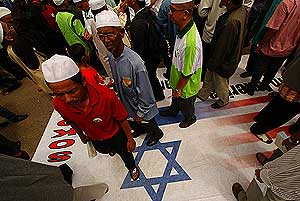 The boldest outcome of the muktamar was the decision to allow non-Muslims to stand as candidates under their flag (qualified by "in collaboration with Pakatan"). The devil will be in the details here - in particular, where and whom.
PAS' non-Muslim bureau appears to be a political tool to allow the party access to non-Malay seats. It is part of a national strategy for power, and a security measure for a perceived weakening PKR. It is political at its core, not (as yet) tied to the rights and genuine inclusion of non-Muslims.
PAS has a long way to go to granting non-Muslims full equal status. The PAS Non-Muslim Supporters Wing cannot vote, and while institutionally recognised, it still has second-class status. Moreover, missing in the muktamar was substantive inclusion of issues of non-Muslims and their rights, although there were important articulations of common interests in the areas of reform and better governance that fit with Pakatan's broad agenda.
4) New Islamist agenda?
The muktamar reinforced that PAS in Pakatan has faced a real struggle in articulating and implementing its Islamist agenda. Since March 2008 this concern has been consistently mentioned among members, the need to combine winning power with implementing Islamic governance.
At this year’s muktamar, attention was centred on sports betting and, unlike last year’s where frustration reigned, the mood was of satisfaction. For PAS members, the call to ban sports betting is the first major moral policy "achievement" they can point to under Pakatan nationally. Polling numbers suggest the issue of sports betting can have traction politically within its party base and more broadly. It is thus not a surprise that some were touting "progress".
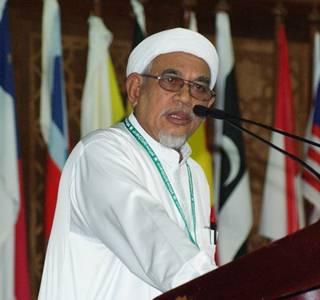 The issue reflects a continued deep-seated concern in PAS over moral issues and its continued focus on a moral agenda, as Hadii portrayed the party as the "saviour" of the nation.
Despite the claim that PAS' Islamic agenda has moved away from moral issues to a broader, more inclusive social welfare concept, this was not evident as delegates harped on issues such as zina (illicit sex), gambling and moral education.
How the Islamist agenda has transformed remains unclear. The focus on gambling represents a move to introduce issues in a piecemeal fashion, rather than carte blanch e through an ‘Islamic state blueprint’. The conservative Islamist agenda is less strident and encompassing in scope, but still a defining element of the party.
What distinguishes sports betting from earlier moral issues is its implementation. The search for commonality within Pakatan has become a new practice for PAS, as the party has gained the support of Pakatan parties in its fight against gambling. They are taking a more liberal, pragmatic approach.
Many PAS delegates now believe they can effectively continue the Islamic struggle through cooperation. It is important to note that it is a qualified ban on a particular form of gambling. This speaks to PAS' overall understanding of the new political realities.
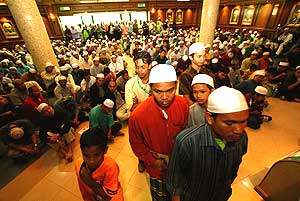 Not all within the party agree. This was evident in the Ulama Council's call for a complete ban on gambling. How PAS manages its own base will determine its effectiveness in implementing moral measures and its chances at winning national power. At the core is a tension between telling others how to behave and respecting people to make their own decisions.
Whether PAS has the strength to allow diversity and respect the different moral decisions of others will shape how effective it is in pursuing its Islamist agenda and its acceptance within Pakatan and among voters.
There are real tensions here as PAS faces constraints within the coalition to implement a programme that is politically unviable nationally and pressure from its conservative ulama-tied base to deliver ‘results’.
Sports betting has given PAS a reprieve, but for how long is another question. Given that the federal government has given its approval and Pakatan state governments are constrained in what they can ban, the actual deliverable may be moot. The issue of an Islamist deliverable will remain on the table.
5) Muting media engagement?
There was an obvious sense of discomfort with today's open media environment in this muktamar. PAS claims to be a party that is open for criticism, but clearly it does not like its internal dirty laundry aired in public.
There have been bags of it over the last year, from the admissions of secret meetings to scandals with bloggers such as Kickthefella. The mood this round was to avoid self-criticism, to accept the consensus of Pakatan cooperation and keep any real discussion in the tent. PAS as a party has apparently clearly reached a limit on what is able to take in terms of criticism. Many are particularly unhappy with the personal attacks on individuals in the blogosphere.
It is thus not a surprise that leaders and delegates called on keeping discussions "private", openly criticised members and leaders who engage the media and supported strengthening disciplinary measures for those who discuss party matters externally. A dark cloud of public silence has descended over the party, reflecting insecurity and clearly stifling input from its own members.
The muktamar discussion was restrained, and the mood set by the leadership reinforced the containment further. The moves to dampen external dissent, contrasted with the openness of earlier years and the acceptance of dialogue set by the previous PAS president Fadzil Mohd Noor, has characterised the party since its losses in 2004.
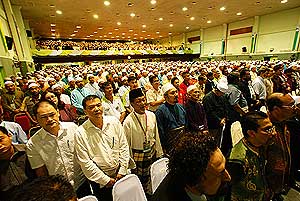 Many were quietly unhappy with the clampdown on discussion, and this poses a serious challenge for PAS to maintain its own consensus over the long term.
The reality is that the differences within the party remain and the storms will come, despite how they are portrayed in public. PAS is divided on each of the issues above. At the core the party is comprised of those who embrace broader multi-ethnic inclusion and those who remain sheltered in a parochial Malay-only view that belies the national political realities.
Ironically, the same struggle in PAS is being played out in Umno, although in a different form. PAS on its part is engaging the issues directly, deepening discomfort in attempts to forge consensus.
While PAS is far from forging a genuine shared outlook and accepted direction, and far from finding a clear strategy for national power, the 56th Muktamar revealed that PAS is willing to engage in the struggle both within its ranks and beyond, even if it is less willing to discuss the struggle openly.
Part 2: National power: Internal challenges hamper PAS
DR BRIDGET WELSH is associate professor of political science at Singapore Management University. She attended the 56th PAS muktamar as an observer. Welsh can be reached at bwelsh@smu.edu.sg.


Report this comment
Are you sure you want to delete this comment?
This action cannot be undone.