




'Vui Kong' petition to be submitted tomorrow
Campaigners have exceeded their target of 100,000 signatures in their bid to petition Singapore to commute Sabahan Yong Vui Kong’s death sentence to life imprisonment.
Campaigners have exceeded their target of 100,000 signatures in their bid to petition Singapore to commute Sabahan Yong Vui Kong’s death sentence to life imprisonment.
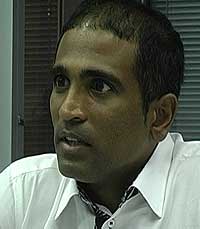 Yong’s Singapore lawyer M Ravi
(right)
and ‘Save Vui Kong’ campaign coordinator Ngeow Chow Ying will hand over the petition and signatures tomorrow to Singapore president SR Nathan.
Yong’s Singapore lawyer M Ravi
(right)
and ‘Save Vui Kong’ campaign coordinator Ngeow Chow Ying will hand over the petition and signatures tomorrow to Singapore president SR Nathan.
In all, 107,904. signatures had been received as at 4.30pm today, following the launch of the petition last month.
Of this, 31,407 signatures were gathered from the online petition, while 43,466 were from Sabah, 32,719from peninsular Malaysia, and 312 from Singapore.
Ngeow, a lawyer, said signatures were also received from 44 members of parliament and 15 senators.
He also said the signature campaign will not end until the president makes a decision.
 Yong, now 22, was convicted on Jan 7 last year for trafficking in 47g of diamorphine.
His execution is scheduled for Thursday, but Ravi has written to ask the prison authorities to confirm that the sentence will not be carried out until Yong’s rights are determined by the Court of Appeal.
‘No deterrent effect’
In Penang last night, about 60 people attended a public forum on ‘The death penalty: Lessons learnt from Yong Vui Kong’s case’.
Jointly organised by human rights NGOs - Suara Rakyat Malaysia (Suaram, Penang branch) and Amnesty International-Malaysia (AI-M), the forum was moderated by LLG culture development centre president Toh Kin Woon.
 Panellists included AI-M director Nora Murat, Suaram Penang secretariat member Choo Chon Kai and the Bar Council’s human rights committee member Clement Ong.
Nora said the death penalty has not been known to deter crime.
She also said the public is usually influenced by current incidents when they call for the capital punishment, for example, in the case of baby dumping.
“Therefore, when making laws, politicians have to make the right decision based on whether it is according to universal values and basic human rights (and not public opinion),” she said.
Ong said those who face the death penalty are usually from the lower income group.
“Not many can afford to hire a good and experienced lawyer to defend them,” he said.
“A good and experienced lawyer sometimes charges a six-figure fee, so those facing the death penalty would usually have to rely on lawyers provided by the courts.”


Report this comment
Are you sure you want to delete this comment?
This action cannot be undone.