




Appeal Court rules against Syabas disclosure
The Malaysian Trades Union Congress (MTUC) and 13 water consumers have no legal right of access to the audit report and water concession agreement involving the federal government, Selangor government and Syarikat Bekalan Air Selangor Sdn Bhd (Syabas), the Court of Appeal ruled today.
The Malaysian Trades Union Congress (MTUC) and 13 water consumers have no legal right of access to the audit report and water concession agreement involving the federal government, Selangor government and Syarikat Bekalan Air Selangor Sdn Bhd (Syabas), the Court of Appeal ruled today.
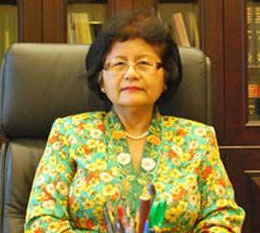 Justice Zaleha Zahari (
left
), leading a three-man panel, held that the contents of those documents could not be disclosed to them.
Justice Zaleha Zahari (
left
), leading a three-man panel, held that the contents of those documents could not be disclosed to them.
The panel, in a 2-1 majority decision, overruled the decision of a Kuala Lumpur High Court which had ordered the federal government to make those documents public.
Zaleha and Justice Abu Samah Nordin ruled in favour of the federal government, with Justice Mohd Hishamudin Mohd Yunus dissenting.
In her decision, Zaleha said the 13 respondents were not adversely affected by the decision of then-energy, water and communications minister Dr Lim Keng Yaik, to deny them access to the two documents.
Zaleha said the panel's majority view was that the 13 respondents, therefore, did not have locus standi (legal standing) to commence judicial review proceedings (to challenge the minister's refusal to grant them access to the documents).
The issue before the court was not one of denial of water supply but was on the respondents' interest, with regard to water tariffs.
She also ruled that MTUC failed to establish it had fundamental or legal right to the concession agreement and audit report.
"The High Court judge had accordingly, erred in allowing the (MTUC and the 13 water consumers) application," said Zaleha, who also ordered the respondents to pay RM5,000 in legal costs, after allowing their request that they pay nominal costs for proceedings at the Court of Appeal and the High Court because the issue before the court was of public interest.
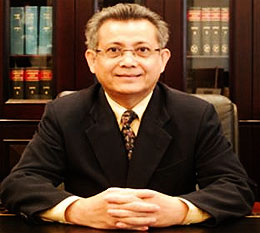 In a dissenting judgment, Mohd Hishamudin said he was of the opinion that the respondents had the locus standi since water was a basic necessity of life.
Mohd Hishamudin ( right ) said, if there was an increase in water tariff, the charge must be nominal and affordable to the citizens.
"Determination of rates must be transparent. Good governance requires transparency. Water users have the legitimate expectation to know the process involved in determining the increase in tariff," he said in upholding the decision of the High Court.
He said there was no basis for the minister to withhold the documents, adding that the audit report had never been classified as confidential under the Official Secrets Act 1972 (OSA).
Mohd Hishamudin said the audit report could not be classified just because it was discussed by the Cabinet, unless it (cabinet) made a decision to do so (to classify the document).
He said the High Court had examined the concession report and concluded that it was not detrimental to national security if the contents were disclosed.
Mohd Hishamuddin said the agreement had also stipulated that parties to the agreement might, by mutual agreement, disclose the agreement to a third party, adding that both Syabas and the Selangor government did not object to the disclosure.
MTUC and the 13 others, including its former chairperson Syed Sharir Syed Mohamud, and two children, aged 10 and 15, obtained leave from the High Court on June 14, 2007 to commence a judicial review against the minister's refusal to grant them access to the documents.
They said that as water consumers in Selangor, Putrajaya and Kuala Lumpur, they had the right to gain access to the audit report and the concession agreement signed Dec 15, 2004.
They claimed that the audit report formed the basis for the 15 per cent increase in water tariff in the Klang Valley announced on Oct 14, 2006.
The minister had denied their request to make public the documents on grounds that the documents had been classified as confidential and secret.
On June 28, last year, judicial commissioner Hadhariah Syed Ismail allowed their application, ruling that the disclosure of the documents would not be detrimental to national or public interest.
Ang Hean Leng, counsel representing the respondents, said they would bring the matter up to the Federal Court.
However, they must first obtain leave from the Federal Court to appeal against today's ruling.
- Bernama


Report this comment
Are you sure you want to delete this comment?
This action cannot be undone.