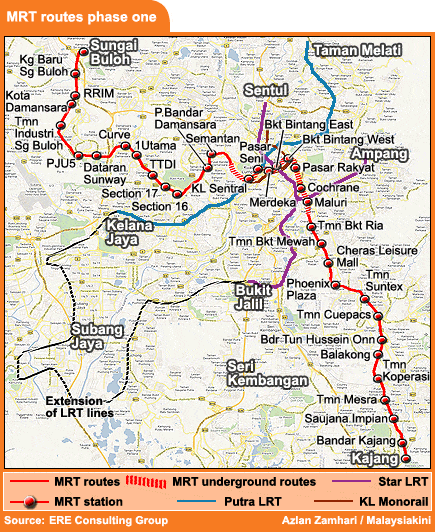
Perils of rushed MRT: Cost-overrun and under-use
The federal government may have overlooked many potential pitfalls in its haste to get the lucrative multi-billion ringgit mass rapid transit (MRT) system off the ground, Petaling Jaya MP Tony Pua warned today.
The federal government may have overlooked many potential pitfalls in its haste to get the lucrative multi-billion ringgit mass rapid transit (MRT) system off the ground, Petaling Jaya MP Tony Pua warned today.
Citing the work of renowned Oxford researcher Bent Flyvbjerg, who specialises in public policy and mega-projects, Pua said all the recent announcements on the take-off of the project pointed to disaster.
He was referring to Flyvbjerg's 2009 paper, Survival of the unfittest: Why the worst infrastructure gets built - and what we can do about it , in which the researcher studied 258 "mega-infrastructure projects" in 20 countries.
Flyvbjerg found that on average, rail projects suffered from 44.3 percent cost overruns, with the actual ridership being 51.4 percent lower than the initial forecast.
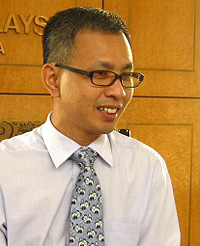 "In fact, the other statistics are no less encouraging - nine out of 10 (rail projects) suffered from cost overruns; 84 percent of rail passenger forecasts were wrong by more than 20 percent and nine out of 10 projects overestimated traffic," Pua (
left
) said in a statement.
"In fact, the other statistics are no less encouraging - nine out of 10 (rail projects) suffered from cost overruns; 84 percent of rail passenger forecasts were wrong by more than 20 percent and nine out of 10 projects overestimated traffic," Pua (
left
) said in a statement.
Using Flyvbjerg's argument, he said it would seem that there was a global trend to underestimate costs and overestimate benefits for rail projects in order to source funding and approval.
In the case of Malaysia's MRT project, Pua noted, there already were signs of a disaster in the making.
First, the Land Public Transport Commission (SPAD) has forecast 40,000 passengers per hour per direction (PPHPD), but the purchase of 58 trains proposed would only be able to handle a maximum of 24,000 PPHPD.
Fears of a chaos on the roads
Second, Taman Tun Dr Ismail and Kajang residents have raised concerns over a potential traffic mess caused by the proposed MRT stations.
Third, as Association of Water and Energy Research Malaysia (Awer) president S Piarapakaran pointed out, no environmental impact assessment (EIA) has been carried out on traffic flow around the sites of the respective stations.
Fourth, questions are also being raised about the poor integration of the proposed MRT stations with the existing LRT stations and bus terminals.
One of the biggest flaws of the proposed MRT project, Pua said, is the failure of the regulators to produce a holistic public transport framework to ensure its integration with the existing public transport infrastructure.
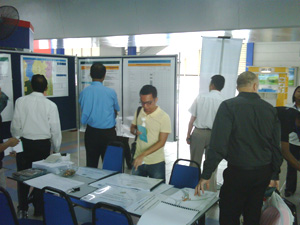 Despite a multitude of questions and complaints, SPAD and the project owner, Treasury-owned Syarikat Prasarana Bhd, have already
awarded
a portion of the project to a Gamuda-MMC joint venture, with tenders for the rest of the project to be called from April.
Despite a multitude of questions and complaints, SPAD and the project owner, Treasury-owned Syarikat Prasarana Bhd, have already
awarded
a portion of the project to a Gamuda-MMC joint venture, with tenders for the rest of the project to be called from April.
"All of the above, and more, point to the fact that the RM46 billion MRT is a rush job, a runaway train the government has set in motion with the brakes disabled, regardless of the obstacles in its path," said Pua.
He argued that the MRT project implementers have seemingly forgotten previous disasters involving rail projects, such as the bailouts of the Star LRT (RM3.3 billion), Putra LRT (RM4.5 million), KL Monorail (RM882 million) and several bus services under Prasarana.
"This has resulted in Prasarana holding debts in excess of RM9 billion, which it is unable to service, even the interest," said Pua, whose professional credentials include being the CEO of a listed IT company in Singapore.
He urged the authorities not to allow the MRT project to take off without proper, independent checks, audits and an in-depth study of its potential for failure.