




Court throws out Eskay's RM20 mil claim
The Kuala Lumpur High Court today dismissed controversial businessman Shazryl Eskay Abdullah’s suit against the developer of the crooked bridge project for RM20 million in commission fees.
The Kuala Lumpur High Court today dismissed controversial businessman Shazryl Eskay Abdullah’s suit against the developer of the crooked bridge project for RM20 million in commission fees.
In delivering the verdict, judge VT Singham said since the awarded project had ceased to exist, the claim by Eskay was no longer valid. The project was shelved by the government on April 12, 2006.
Despite the decision, Singham, who took over an hour to read out his judgment, acknowledged the pivotal role played by Eskay to secure the project for Merong Mahawangsa and in securing additional funding for the company to boost its share in the consortium from 20 to 60 percent.
In ruling that the plaintiff's application was doomed to fail, Singham said it was not because the agreement was opposed to public policy but from Eskay agreeing to refund RM20 million in the event the project was cancelled.
"Hence, the court rules that the plaintiff is not entitled to the RM20 million claim, as the undertaking agreement (which Merong Mahawangsa, its executive director Yahya Abdul Jalil and Eskay signed on July 3, 1998) is construed that the project could no longer go on. Accordingly, the plaintiff's claim is dismissed," ruled Justice Singham.
Clause 4 of the undertaking agreement specifically states that the plaintiff would be required to refund or pay part of the RM20 million should the project not take off.
The court also today ruled that despite the government agreeing to pay compensation in excess of RM222.2 million to the contractor for abandoning the crooked bridge or scenic bridge project, Eskay was not entiled to his claim.
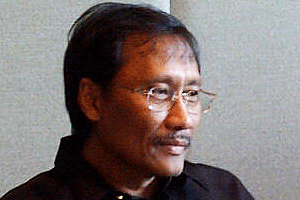 Eskay (
left
), who is a director in Aman Agropreneurs Sdn Bhd, named Merong Mahawangsa Sdn Bhd and Yahya as defendants in the RM20 million breach of contract suit.
Eskay (
left
), who is a director in Aman Agropreneurs Sdn Bhd, named Merong Mahawangsa Sdn Bhd and Yahya as defendants in the RM20 million breach of contract suit.
He claimed that sometime in 1998, Merong and Yahya approached him for help to secure the bridge project to replace the Johor Causeway.
Government must be transparent
Despite dismissing Eskay's claim, Justice Singham had strong words on the necessity for the government to adopt and follow an open tender system as well as transperancy in its transactions.
The judge said awarding projects involving large sums must be carried out through open public tenders, not through private arrangements or subject to lobbying by using the influence of certain ministers or political leaders for personal gain and benefit.
"Under those circumstances, this court would not hesitate to strike down the claim as it is opposed to public policy," he said.
He pointed out in his judgment that the objective of building the bridge between Malaysia and Singapore must of necessity be aimed at the bringing benefit to the people and not to bestow favours on a certain class or group of people who have the knack for nurturing ties with higher level politicians from government agencies, only to inflict a considerable burden on the public.
Justice Singham was, however, cognisant of the fact that such matters should be decided on a case by case basis and not by the circumstances surrounding them.
Eskay said he was promised a 16.66 percent stake in Merong Mahawangsa for finding funders for the multi-million ringgit project and also to secure it through his contacts inside the government.
“Yahya wanted my help to use my good ties with the Malaysian government to increase his equity in the consortium from 20 percent to 60 percent. Yahya also knew I had a good network with international funders,” Eskay said in his statement of claim.
Eskay - a physiotherapist by training - was said to have developed a range of contacts while working for high-profile sports bodies in the United States.
He claimed he was told that Merong Mahawangsa had to increase its paid-up capital if the Malaysian government were to give the company 60 percent of the consortium for the project.
Sometime in February 1998, Eskay secured a guarantee from the Alabama-based firm Charles E Jay for a loan of RM640 million as the initial requirement for the proposed project.
Eskay sets up meeting with Anwar
After securing the guarantee letter from the American firm, Eskay said, he met then deputy prime minister and finance minister Anwar Ibrahim on May 3, 1998, to discuss the proposal and later set up a meeting between Yahya and Anwar.
“Anwar agreed to meet Yahya at his official residence the next day, where Yahya explained about him wanting Ibex Corporation Amalgamated Sdn Bhd, a subsidiary of Merong Mahawangsa, to be given a 60 percent equity share.
"Anwar advised both of us to write directly to then Economic Planning Unit's director-general Ali Abul Hassan Sulaiman,” he said.
Eskay also sought the help of former deputy home affairs minister, the late Megat Junid Megat Ayob, to increase Merong Mahawangsa's stake in the consortium.
“Sometime around June 25, 1998, the EPU and prime minister awarded the project, known as 'Proposal to Build a Bridge to Replace the Johor Causeway', to consortium Suria Kalbu Sdn Bhd, in which Ibex had a 60 percent stake, while Transwater Corporation and Diversified Resources Bhd each had a 20 percent stake,” said Eskay.
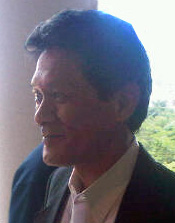 Eskay had testified that the then-Tengku Mahkota of Johor and present sultan, Sultan Ibrahim III, also
wanted a stake in the project
.
Eskay had testified that the then-Tengku Mahkota of Johor and present sultan, Sultan Ibrahim III, also
wanted a stake in the project
.
While Yahya ( right ) was present in court this morning, Eskay was notably absent.
Commenting on the decision, Yahya welcomed the verdict.
"I am glad that the matter is over," he said.
Besides this case, Eskay, who is the key member of the ‘Datuk T’ trio, is also in the media spotlight over the sex-tape controversy where a man resembling Anwar was recorded having sex with a woman.
Eskay claimed that he was the third individual in the 22-minute video, who appeared to be arranging the sex session.


Are you sure you want to delete this comment?
This action cannot be undone.