




'Proton, politics, profit behind public transport woes'
According to the Working Group on Public Transportation in Malaysia (KKPAM), the root cause of the country’s public transportation woes is the unholy trinity of Proton, politics and profit.
According to the Working Group on Public Transportation in Malaysia (KKPAM), the root cause of the country’s public transportation woes is the unholy trinity of Proton, politics and profit.
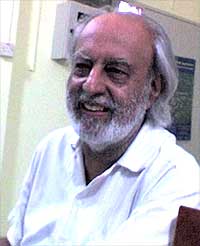 “Proton is the single largest problem facing public transport in Malaysia,” said Centre for Environment, Technology and Development Malaysia (Cetdem) executive director Gurmit Singh (
right
), who represents his organisation in the working group.
“Proton is the single largest problem facing public transport in Malaysia,” said Centre for Environment, Technology and Development Malaysia (Cetdem) executive director Gurmit Singh (
right
), who represents his organisation in the working group.
He was speaking at a press conference in Kuala Lumpur today to promote KKPAM's public forum, titled "Moving from private to public transport", scheduled for Nov 3 at the Petaling Jaya Community Library.
Gurmit lamented that the focus on personal vehicles and the promotion of the national car manufacturer for nearly 30 years had directly or indirectly caused the government to neglect nurturing a healthy public transport infrastructure.
The environmental activist said his earlier warnings on the matter had been stifled by the mainstream media, which had gone as far as distorting his words and “printing absolute lies”.
Political interference
Meanwhile, retired serviceman NB Deyananda pointed to politics as the cause of the country’s shoddy public transport, along with other issues afflicting the people's lives today such as healthcare and education.
“The people who have been in power for over four decades are behind all these problems... My answer, to solve the problems, is to change the people responsible,” opined the former army officer.
 Deyananda, who is in the working group in his personal capacity as a frustrated public transport user with many “grouses to air”, posited that political interference in policy decisions and poor policies by political appointees caused the mess that the people had to deal with now.
He is also concerned that when services for public convenience, such as public transport, are given over to free enterprise to operate, their main focus would not be on best service but on the most profit.
Profit 'rules the roost'
Parti Sosialis Malaysia’s P Siva, who also sits on the working group, agreed with Deyananda, pointing out that in Malaysia, property developers may have a hand in deciding transportation hubs.
He gave the example of the transport hub in Sungai Buloh, surrounded by empty Rubber Research Institute land, sidelining other areas in urgent need of public transport.
This, Siva said, caused consternation to many, until it was revealed that a future multi-million ringgit development was in the works.
“Profit and business interests rule the roost” and not public needs and interests he said, as businesses and cronies dictated public transport policies.
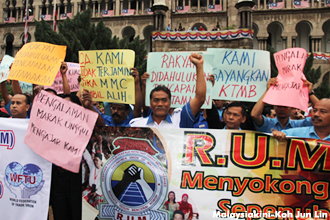 Siva warned that the planned acquisition of national railway firm Keretapi Tanah Melayu Bhd (KTMB) was a clear example of not only rail workers but the public too losing out with a profit-minded corporate entity taking over. Not only the welfare of the workers but public convenience as well would be at risk.
Siva conceded that public transport may not be a win-win industry as public interest conflicted with profitability.
However, it was possible to have a “sustainable” model public needs given first consideration and would also allow the business to survive.
While lauding the Land Public Transport Commission's (Spad) public transportation blueprint to overhaul the current system, the group called for a public engagement for Spad to explain its aims and for the people, as the biggest stakeholders in public transport, to give their feedback.


Report this comment
Are you sure you want to delete this comment?
This action cannot be undone.