




Inking process needs fine-tuning, says Bersih
Electoral reform pressure group Bersih 2.0 has urged the Election Commission (EC) to look into possible flaws with the process of applying indelible ink on voters during the next general election.
Electoral reform pressure group Bersih 2.0 has urged the Election Commission (EC) to look into possible flaws with the process of applying indelible ink on voters during the next general election.
In a press release today, the Bersih 2.0 steering committee said that based on an instructional poster issued by the EC, the new procedure might affect cause the voting process to be “fraught with unfair procedures and delays”.
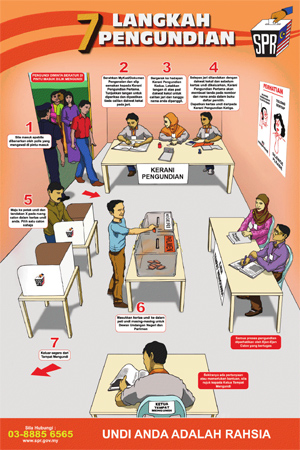 Firstly, the committee expressed concern that the EC intends to apply the ink on voters’ fingers before the ballot has been cast, which may lead to the ballot paper being smudged and deemed invalid.
“For this reason, most other countries which use indelible ink (such as Afghanistan, Egypt and Iraq) only apply the ink after the voter has cast their ballot, to ensure the voters are not in the critical path of other voters. We urge the EC to follow these examples,” said the committee.
Previously, EC deputy chairperson Wan Ahmad Wan Omar said this procedure was necessary to ensure that the inking process was deemed a prerequisite for the ballot to be issued, because a voter may not oblige to having his or her finger inked after casting the ballot.
Dry run
Secondly, the committee urged the EC to ensure that sufficient time is allocated for each voter to go through the entire process and that a demonstration be conducted to test the efficiency of the process.
The committee said that with the extra time needed for the inking process, some voting stations may face overcrowding.
Thirdly, the steering committee had expressed concern that tissue paper would be handed out to voters to wipe off excess ink because some voters might remove the ink before it is completely dry.
“Bersih 2.0 strongly disagrees with tissue paper being handed out to remove excess ink. Instead, there should be a minimum waiting time of one minute at ink application tablea to allow the ink to dry properly.
 “As this takes time and may result in the forming of a queue, the ink should only be applied after voting has been completed,” read the statement.
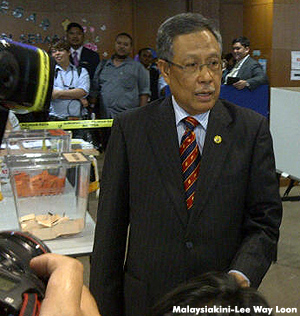
EC chief Abdul Aziz Mohd Yusof ( left ) held a demonstration in Parliament on the new voting procedures meant to improve the process. However, it was not a full-blown demonstration designed to test the overall timing.
Transparency
Finally, the committee urged the EC to be transparent on the quality, type and cost of ink purchased.
“As the money for this purchase comes from public taxes, Bersih 2.0 urges the EC to be transparent about the entire process.,” read the statement.
The use of indelible ink to mark voters who have cast their ballots was mooted following the first Bersih rally in November 2007.
Bersih demanded for this process in order to prevent occurrences of a single voter casting his ballots more than once - a phenomenon better known in Malaysia as “phantom voting”.
This process is used in many countries, such as neighbouring Indonesia and Philippines, to prove the legitimacy of the voting process.
Although ink was bought in time for the 2008 general election, the plan was scrapped at the eleventh hour, ostensibly due to legal and security reasons.


Are you sure you want to delete this comment?
This action cannot be undone.