




Dr M behind double standards in media ethics, says don
Whether a media is ethical or otherwise depends on which of the two - professional standards or government standards - is being used as the yardstick, said media professor Zaharom Nain.
Whether a media is ethical or otherwise depends on which of the two - professional standards or government standards - is being used as the yardstick, said media professor Zaharom Nain.
According to him, the government standard of an ‘ethical’ media emerged during the tenure of former prime minister Dr Mahathir Mohamad when he began interfering in the country's institutions, including the fourth estate.
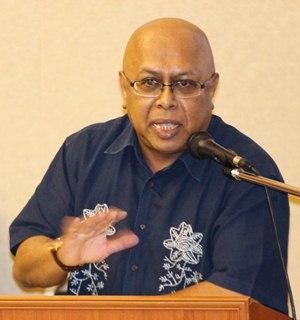 "In the 1980s and 1990s, Mahathir and the BN regime began messing around with key Malaysian institutions, including tightening controls on the media and deregulating the media in such a way - through ownership - that led the state to greater regulations and control," he told a forum entitled Media and Ethics in Kuala Lumpur this morning.
As such, according to professional standards, Umno-owned daily Utusan Malaysia has questionable ethics as it has lost many defamation cases as a result of its controversial reports.
But the same would not apply under the government standards.
"Indeed, for this regime, being professional invariably means not criticising the regime and at worst running down the opposition," said the Nottingham University lecturer.
'Criminal defamation for Utusan'
Meanwhile, Malaysian Insider chief executive officer (CEO) Jahabar Sadiq opined that the mounting defamation cases that Utusan had lost would warrant criminal action against it.
"By law, because of all the cases they've lost, they should be charged for criminal defamation, which hasn't happened," he said.
 However, Centre for Independent Journalism (CIJ) executive director Masjalizah Hamzah (
right
) cautioned that criminal defamation law was archaic and could be abused for selective prosecution.
However, Centre for Independent Journalism (CIJ) executive director Masjalizah Hamzah (
right
) cautioned that criminal defamation law was archaic and could be abused for selective prosecution.
"I would argue that criminal defamation needs to be thrown out of the window because it's not like civil defamation. Under criminal defamation, the state can prosecute without any time limit and there is jail term to it as well.
"These are very bad provisions in the law. If we let the state to decide to charge Utusan , we are in for more trouble," she said.
Also at the two-hour forum were MySinchew editor-at-large Bob Teoh, Wollongong University senior lecturer Eric Loo and the event was moderated by ABN news portal CEO Sreedhar Subramaniam.


Report this comment
Are you sure you want to delete this comment?
This action cannot be undone.