




Should the state interfere in education syllabus?
COMMENT Perhaps another aspect of the issue that was almost left out completely from the comment pieces by Dr Lim Teck Ghee and S Thayaparan is the state interference in deciding the syllabus for institutions of higher learning.
I personally feel that the state must be given the instrument to compel certain values to be taught in institutions of higher learning. If the government is responsible for the well-being of society, it must be allowed to use education (including setting the syllabus) to shape the society, especially if education has proven to be an effective tool in re-engineering society.
If we are honest about a Malaysia that is free from race bias, we have to be concerned with the level of polarisation in our society.
We are divided by economic classes and different clusters of people have less interaction with people of other clusters (the clusters maybe economic or racial in nature, or both). Even if the polarisation is not considered chronic, we should do our best to remove any form of polarisation because it leads to stereotyping in society...
COMMENT Perhaps another aspect of the issue that was almost left out completely from the comment pieces by Dr Lim Teck Ghee and S Thayaparan is the state interference in deciding the syllabus for institutions of higher learning.
I personally feel that the state must be given the instrument to compel certain values to be taught in institutions of higher learning. If the government is responsible for the well-being of society, it must be allowed to use education (including setting the syllabus) to shape the society, especially if education has proven to be an effective tool in re-engineering society.
If we are honest about a Malaysia that is free from race bias, we have to be concerned with the level of polarisation in our society.
We are divided by economic classes and different clusters of people have less interaction with people of other clusters (the clusters maybe economic or racial in nature, or both). Even if the polarisation is not considered chronic, we should do our best to remove any form of polarisation because it leads to stereotyping in society.
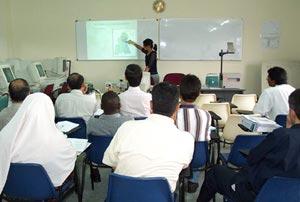 Against this backdrop, I think it is fair that the government of the day interferes with private tertiary institutions (as it had done with the public institutions in the past) to compel a subject that can promote understanding and greater appreciation among the younger Malaysians.
Whether it should be a universal and uniform syllabus imposed on all or private institutions are allowed to develop their own syllabus that later passes the accreditation process is a subject for further debate.
However, this debate is on the practical aspect of the implementation, not on the opposition to a subject that can promote understanding and appreciation of one another.
How Islamic-biased is Titas?
As much as Lim and Thayaparan were disappointed with my position, I too am disappointed that despite all the criticism and suspicion of Titas (Islamic and Asian Civilisation Studies), both of them did not touch at all on the most contentious part of Titas, that is, the syllabus.
While I am sure both of them have indeed gone through the syllabus before; I am baffled why they did not comment on it.
Most of the readers who called me names had in fact not gone through the syllabus either.
Based on the structure of the courses at public universities, Titas is taught over a period of 14 weeks. The breakdown of the time allocated for each component of the subject (hence a degree of emphasis) is as follows:
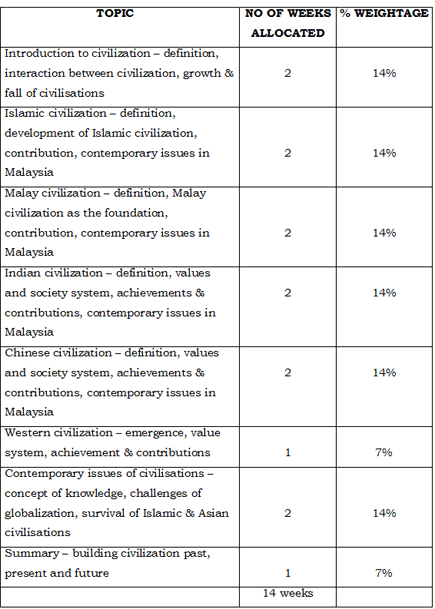
The Islamic content of the syllabus is equivalent to the respective contents on Malay, Chinese and Indian civilisations. In fact, in a study carried out in 2002 in Universiti Utara Malaysia to establish the effectiveness of Titas, a majority of respondents surveyed believed the syllabus did not have enough Islamic content and had failed to raise an understanding of Islam!
While I may be sympathetic to Lim's list of suspicions against Umno and its malpractices, it is irresponsible to make a blanket objection on the pretext that everything will be manipulated as Umno's secret agenda without going through its proper merits, if implemented correctly.
My record so far speaks for itself of my opposition to Umno and the BN. Yet I did not enter politics to be dogmatic and prejudiced against anything and everything that happens to be initiated while my political opponent is in power.
Doing so speaks volumes of the respect (or lack of) we accord to the civil service. They may have to answer to an Umno federal government, yet there are enough independent and good souls in our civil service who want to do the right thing.
Crudest political opportunism?
I have tried to stay objective in evaluating the pros and cons of Titas.
It is Lim's right to think that it was political opportunism on my part when I voiced my caution not to fuel the right-wing elements of Umno on this issue, especially when I feel that Lim's fair suspicion against Umno had clouded his objective assessment of the merits and demerits of Titas.
Nor will I feel offended by Thayaparan's comments, though I wish he had not so easily concluded that my response is "symptomatic of the intellectual poverty of many in the Malay intelligentsia", as if to assert his personal views that Malay intelligentsia is generally not intellectual.
The very language and stereotyping Thayaparan uses is the very fuel that will be manipulated by irresponsible quarters to feed further the fire of divide in our country.
In the final analysis, I want to remain ideal in my political views. I want to speak for the benefit of Malaysians, not for the Malays, Chinese, Indians, Iban, Kadazan or anyone. I want to be able to voice my opinion on policies that I think will bring greater good to the majority of Malaysians and assist in nation-building, even if my views are not popular.
When we speak against the New Economic Policy to the chagrin of the Malays, we did not do it to please the non-Malays. We were firm because it is fair and it is the right thing.
When I was adamant that Pakatan Rakyat's manifesto would not be written along racial lines and no mention of specific programmes for a specific ethnic group, I was vilified for weeks by Hindraf. It did not perturb me because the manifesto speaks for all Malaysians.
Thus, my support for Titas has nothing to do with pleasing the Malay voters. I had benefitted from greater interaction with different people and cross-learning of different cultures and I believe each Malaysian will benefit too.
Any issues with the implementation of Titas should be confined to the discussion on the practical aspect of Titas, not the philosophy of cross-learning in our tertiary institutions.
One day, I hope to see a Malaysia made up of younger Malaysians who understand multiculturalism, like my young friend Galvin Wong. For that to happen, it makes common sense for them to learn different cultures (even if it is imposed initially).
Yesterday: Titas is about cross learning in a multicultural society
RAFIZI RAMLI is PKR's director of strategy and the MP for Pandan.
Related stories
Titas would benefit the Chinese, says don
'Titas will inculcate harmony and nationalism'
Lack of trust leads to Titas fury and friction


