



M’sian dilemma affects foreign investment in local property market
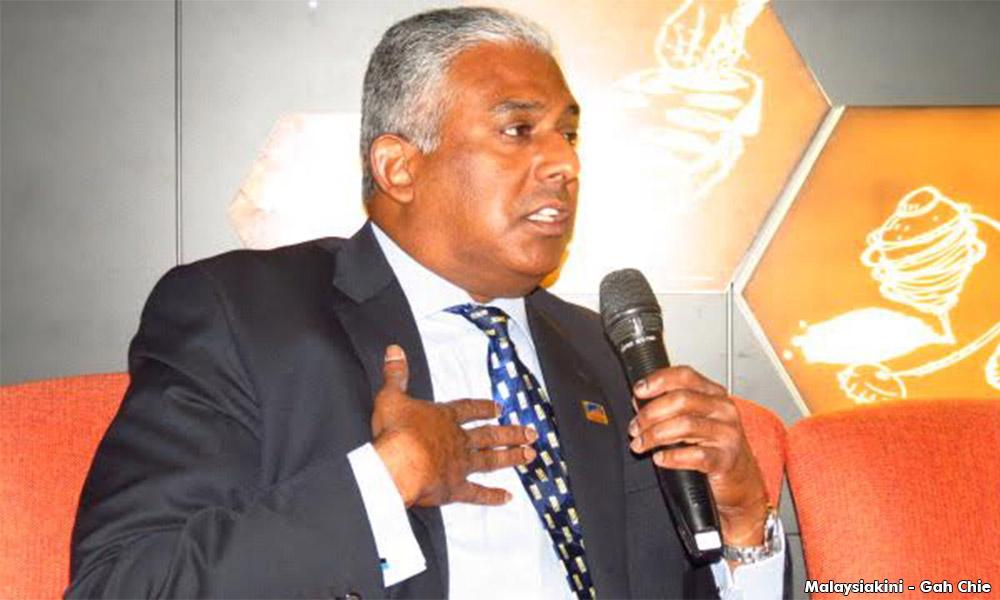
Malaysia's property market has become a bit of a 'no-go territory' for foreign investors until the country is able to resolve its 'dilemma', says a veteran real estate agent, Siva Shanker.
The real estate market is currently driven by domestic consumption, said Siva, an immediate past president of the Malaysian Institute of Estate Agents (MIEA).
"I don't think there are many foreign property investors rushing to come to Malaysia now. I think Malaysia has become a little bit of no-go territory.
"Until we solve this dilemma that we are in and come to a closure, I think everybody is going to treat us at arm's length, be a bit careful," he said when making a slide presentation on the property market outlook in Kuala Lumpur.
Malaysia's property market has become a bit of a 'no-go territory' for foreign investors until the country is able to resolve its 'dilemma', says a veteran real estate agent, Siva Shanker.
The real estate market is currently driven by domestic consumption, said Siva, an immediate past president of the Malaysian Institute of Estate Agents (MIEA).
"I don't think there are many foreign property investors rushing to come to Malaysia now. I think Malaysia has become a little bit of no-go territory.
"Until we solve this dilemma that we are in and come to a closure, I think everybody is going to treat us at arm's length, be a bit careful," he said when making a slide presentation on the property market outlook in Kuala Lumpur.
However, he did not explain what this 'dilemma' was at the event, nor did he say so when asked to elaborate at a press conference later.
Siva also said the industry originally expected the property market, which remained 'unexciting' in first quarter of 2015, to be getting better in the fourth quarter of that year.
"But, unfortunately, that didn't happen because I think, primarily among other things, was The Wall Street Journal (WSJ) breaking the news on 1MDB and the market underwent a little bit of tailwind, with investors adopting a hands-off approach," he said.
In his slide presentation, Siva noted that the current political scenario also had an impact on the market.
At a press conference later, Siva declined to comment on the government's role in assisting the property market to recover following 1MDB fiasco.
Transactions dropped 5.7 percent in 2015
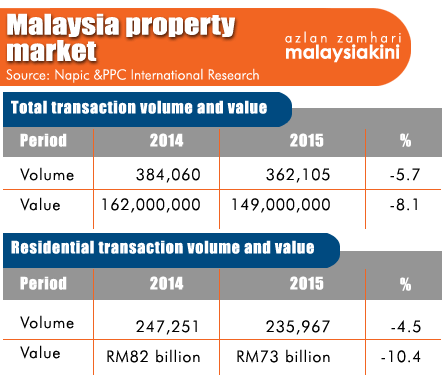
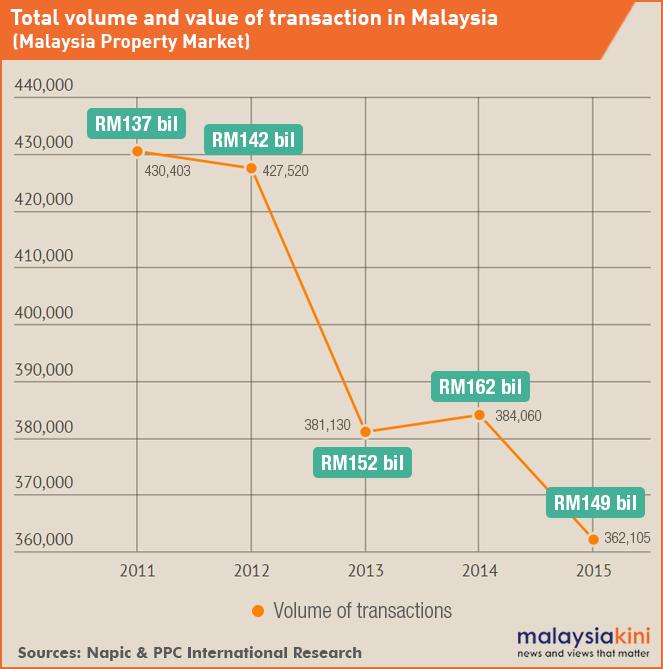
According to Siva, property transactions, which recorded 384,060 in 2014, contracted by 5.7 percent to 362,105 transactions in 2015.
He said the slashing in the value of property transactions by 8.1 percent to RM149 billion in 2015 from RM162 billion in 2014 was a sign of depreciation in property values.
 "It is not the end of the world. Although things look bad now, I don't think it will be like this forever, because everything is in a cycle. Yes, we are on the downcycle now, but we think there will be a level-out soon," he said.
"The year 2016-17 will see the market finding its level. The knee-jerk reaction will subside and 2018-19 will see the marking beginning to level out and start its upward trend," Siva said, with the market peaking again in 2020-21.
The property market will rebound in 2017 due to the perception that the buyers have, that the market has almost plunged to the bottom now. Thus, they would come to buy properties, he said.
He also commended the developers who were mostly building high-end properties for finally acknowledging the need to build affordable housing, which he said would also contribute to the upward trend of the market in the years to come.
 Siva urged the government to define the price of affordable housing as different people have different opinions about the price.
"Let's not speculate what is the affordable (housing) price. The authorities must first of all define exactly what 'affordable' is and the range in which everybody can work towards building in," he said.
Finance Minister II Johari Abdul Ghani has noted an over-supply in higher-end properties priced above RM500,000 between 2011 and 2015, while only 21 percent of the new housing launched in Malaysia were priced below RM250,000.
"This development has increasingly priced out more urban Malaysian households from the housing market," Johari said.
The government is also looking into measures to allow more first-time house buyers to secure a bank loan to purchase affordable houses priced at RM300,000 and below, Johari also said.


Report this comment
Are you sure you want to delete this comment?
This action cannot be undone.