


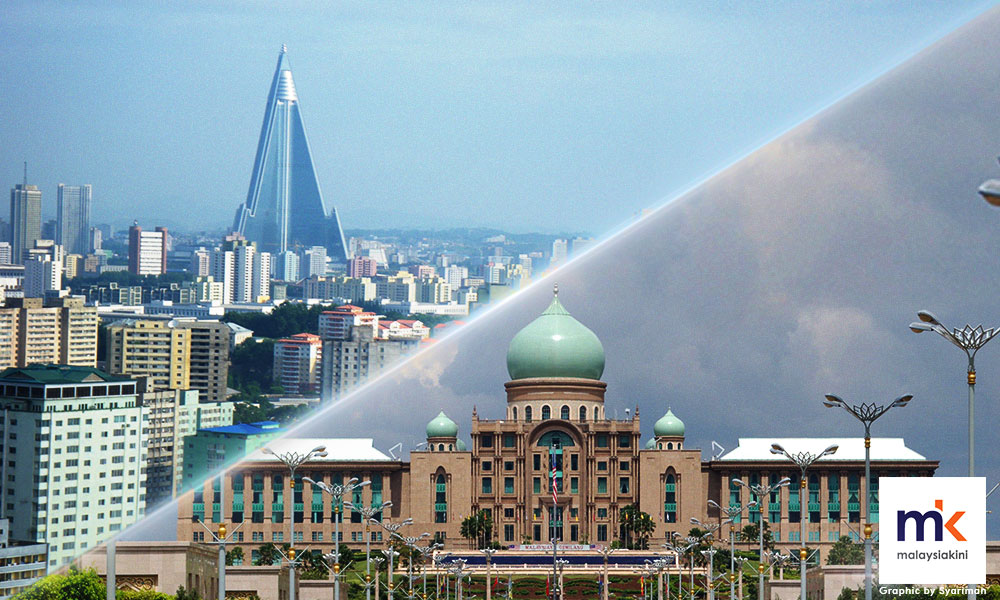

Pyongyang's move to bar M'sians' exit 'well planned', says analyst
While most people view Pyongyang's recent moves against Malaysia as irrational, one pundit thinks otherwise.
Analyst Phoon Wing Keong believes Pyongyang's ban on Malaysians from leaving North Korea was deliberately done to achieve three objectives.
These are as a revenge against Putrajaya for expelling North Korean envoy Kang Chol; to demand the release of Kim Jong-nam's body; as well as to pressure the Malaysian police not to go after two North Koreans (being sought for Jong-nam's killing) who are still in Malaysia.
While most people view Pyongyang's recent moves against Malaysia as irrational, one pundit thinks otherwise.
Analyst Phoon Wing Keong believes Pyongyang's ban on Malaysians from leaving North Korea was deliberately done to achieve three objectives.
These are as a revenge against Putrajaya for expelling North Korean envoy Kang Chol; to demand the release of Kim Jong-nam's body; as well as to pressure the Malaysian police not to go after two North Koreans (being sought for Jong-nam's killing) who are still in Malaysia.
"The turn of the events is even worse than cutting ties. When we cut ties, we are just putting a stop to the diplomatic relationship. But the situation (holding Malaysians as 'hostages') has escalated into a diplomatic crisis," Phoon told Malaysiakini.
"Prior to this, Pyongyang was more inclined (to achieve its target) through diplomatic means by sending its delegates over. However, it had failed in this effort.
"Now, the country is forced to escalate its action in the hope that the Malaysian police will cease to go after those involved in the case.
"Pyongyang is perceived by the international community as unpredictable, a rogue nation and one this is irrational diplomatically and militarily. But in fact, this was rationally calculated.
"Banning Malaysians from leaving North Korea is meant to break the deadlock. Pyongyang wants the Malaysian government to give in to their demands," Phoon said.
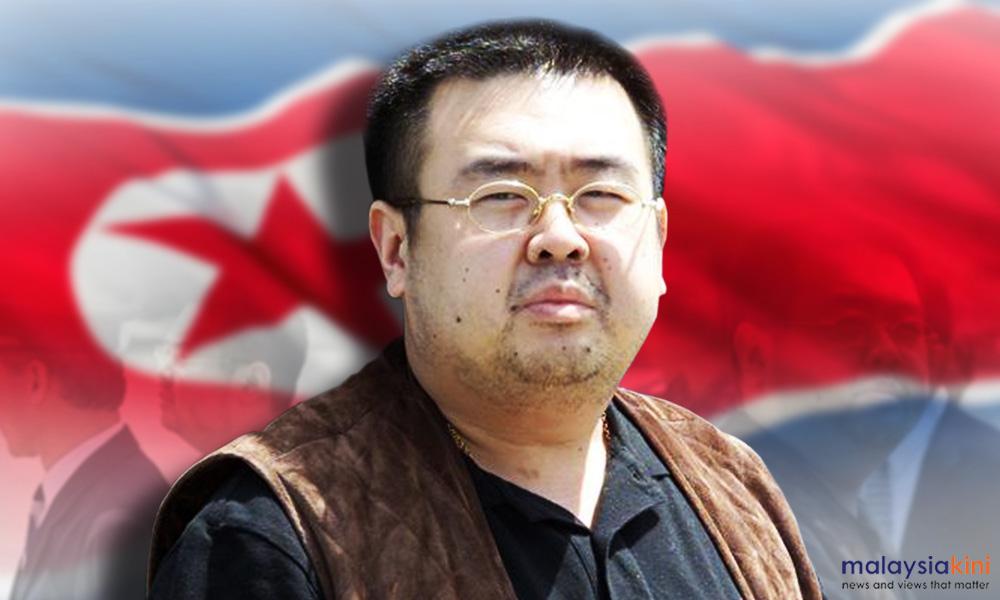 The probe into the death of Jong-nam (photo), the estranged brother of North Korea's leader Kim Jong-un by the Malaysian police, revealed that he was killed with VX nerve agent, a chemical weapon classified as a weapon of mass destruction.
In issuing an instruction to bar all North Koreans from leaving Malaysia yesterday, Prime Minister Najib Abdul Razak said the country is, however, reluctant to cut ties with Pyongyang for the sake of negotiations to free those held back there.
Another analyst, James Chin, director of the Asia Institute, University of Tasmania, said Putrajaya is unlikely to concede to Pyonyang by surrendering Jong-nam's body.
"It would send a very bad message to the world, that North Korea can bully Malaysia by holding its people hostage, in return for Jong-nam's body," Chin said.
At this stage, both countries cannot do much to improve the situation, simply because they have no advantage against each other, he added.
"There is very little the Malaysian government can do because the country's trade with North Korea is small and the number of Malaysians travelling to North Korea is very small," he said, adding North Korea also faced the same problem.
"It is very difficult for both the governments to negotiate a settlement as the North Korean ambassador has been kicked out while the Malaysian ambassador has been recalled from Pyongyang.
"The best option is for Malaysia to ask a third party to settle the issue. The only ones who can speak with North Korea are the people from China," Chin said.
Sweden, Red Cross can help
However, he added, this would be difficult and unlikely to happen for now, as North Korea has "pissed off" China by firing missiles towards Japan early this week.
Even if both countries secure a mediator, the Sarawak-born academician said, the mediator would still need to find a way to handle the deadlock carefully.
"If Malaysia gives them the (Jong-nam's) body, then Malaysia will lose face. If Pyongyang allows Malaysians to leave North Korea without getting the body, then it will lose face," Chin noted.
Academician Oh Ei Sun proposed that Malaysia get help from non-aligned parties, such as a country like Sweden or the Red Cross, which are deemed as neutral entities.
"Sweden is country that is sought even by countries at war, while the International Red Cross is another entity that is deemed as neutral. This is why they are great," said Oh, a senior fellow at Singapore's Nanyang Technological University.
Malaysia should not succumb to the pressure by Pyongyang, which wants the authorities to conduct the probe hastily and classify the cause of death as a heart attack.
"(We will set a precedent) if we do that. In the future, any country in the African region (for example) will conduct an assassination here when they cannot do it back home," Oh warned.


Are you sure you want to delete this comment?
This action cannot be undone.