




Q&A: Shafie not fit to be a minister
Prof P Ramasamy, whose post-retirement contract was abruptly terminated, talks to malaysiakini in this first of a two-part series about his 24 years at Universiti Kebangsaan Malaysia and the rot in higher education.
Malaysiakini: You've been with Universiti Kebangsaan Malaysia (UKM) for more than 24 years. What would you considered as your major achievements?
 P Ramasamy:
I don't really like to blow my own trumpet. Others can see my achievements. I came back in 1981 from Canada after finishing my masters. Actually I came (to UKM) to do my field work because I was registered under McGill (University) for my PhD.
P Ramasamy:
I don't really like to blow my own trumpet. Others can see my achievements. I came back in 1981 from Canada after finishing my masters. Actually I came (to UKM) to do my field work because I was registered under McGill (University) for my PhD.
When I came here, things were moving so fast. I got married. I got a job here as a temporary lecturer and was confirmed in 1983. In 1993, I was made the associate professor and 1998, I was made full professor of faculty of social science and humanities.
In the early stages (of my career), I was involved in the labour movement. I was a member of Institute of Social Analysis (Insan) and we published Nadi Insan, which was banned because we were covering quite radical stuffs in the early 80s.
Prof P Ramasamy, whose post-retirement contract was abruptly terminated, talks to malaysiakini in this first of a two-part series about his 24 years at Universiti Kebangsaan Malaysia and the rot in higher education.
Malaysiakini: You've been with Universiti Kebangsaan Malaysia (UKM) for more than 24 years. What would you considered as your major achievements?
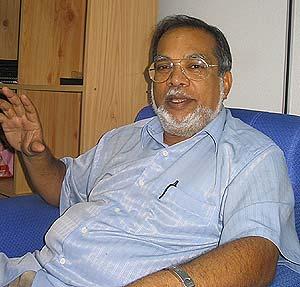 P Ramasamy:
I don't really like to blow my own trumpet. Others can see my achievements. I came back in 1981 from Canada after finishing my masters. Actually I came (to UKM) to do my field work because I was registered under McGill (University) for my PhD.
P Ramasamy:
I don't really like to blow my own trumpet. Others can see my achievements. I came back in 1981 from Canada after finishing my masters. Actually I came (to UKM) to do my field work because I was registered under McGill (University) for my PhD.
When I came here, things were moving so fast. I got married. I got a job here as a temporary lecturer and was confirmed in 1983. In 1993, I was made the associate professor and 1998, I was made full professor of faculty of social science and humanities.
In the early stages (of my career), I was involved in the labour movement. I was a member of Institute of Social Analysis (Insan) and we published Nadi Insan, which was banned because we were covering quite radical stuffs in the early 80s.
I was also the founding member of the Malaysian Social Sciences Association. We not only organised seminars but articulated views for the academic community and the outside world. I was involved in Insan with (KS) Jomo, Ishak Shaari and a few others.
Many lecturers had come back from overseas filled with idealism. So we want to do something beyond the campus. I wanted to fight for labour.
The early and mid-80s were kind of heyday for Insan where I was involved in organising labour in Negeri Sembilan, Perak, Pahang and we exposed the contract labour camps in Felda schemes, which actually became a national issue. I personally went and we took photographs of people who were involved in contract labour and we used to give talks on child labour in plantations and elsewhere. And we organise May Day celebrations, calling for true democracy in Malaysia. Looking back, those were really eventful, meaningful days. Not so much now in the academia.
At that time, there was some kind of freedom. No one told me that what you were doing were wrong. There were nonetheless a lot of complaints against me, from the AG (Attorney-General's) chambers, from the (plantation) management. I was often blocked and cannot be allowed into plantations because 'you were trespassing, you came here to stir up the workers'. But we had some kind of freedom. We could organise DAP, PAS to come into the campus but now you can't do that. The other day, my head of department got a warning (from the campus administration) for bringing in some members of the opposition into the campus.
Then we had the 1987 crackdown. Former Insan member Nasir Hashim was taken in, so was Cecilia Ng - that was basically the end of Insan. After that, I focused on writing on labour issues. And I was also taking up the case of working-class Indians.
In the 90s, I became interested in nationalism, in ethnic conflicts. I was trying to understand the dilemma, the problems of the underdogs and gravitated to working on and understanding the Sri Lankan ethnic conflict. I write a lot on the peace process. I'm not an expert in Sri Lanka but I took an interest in it, reading and writing about it, and sort of developed an in-depth view of things.
The LTTE (Liberation Tigers of Tamil Eelam) leaders were aware of this and they came over and met me. I fight for the legitimate cause of the Tamils. I'm always made it very clear. My support is not a chauvinistic support for the Tamils. The Tamils should get equal rights, just like the Sinhalese, no more no less. I made it clear that I will fight for the rights of people who have been oppressed.
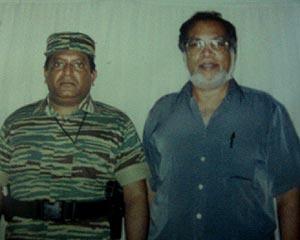 In early 2002, there was a ceasefire in Sri Lanka. I went to the northeast and met the LTTE leader (Velupillai Prabakaran) himself. Subsequently, I was appointed to sit in the LTTE's Constitutional Affairs Committee in 2003 until today. I was the only non-Sri Lankan Tamil (in the committee). We were entrusted to the task of coming up with a proposal for the northeast administration of Sri Lanka. That proposal would form the basis of a permanent settlement. In fact, I had permission from the university to do this..
In late 2003, we submitted the proposal to LTTE. The LTTE looked at it and they actually have no problem with it and when they submitted the proposal to the government, a month of two later, the government fell. (President) Chandrika (Kumaratunga) came into power and she refused to touch the issue of implementation.
When (former) prime minister Ranil Wickremesinghe came here (Malaysia), he met with me and congratulated me for helping with the peace process. He was a broad-minded person and so was the constitutional affairs minister. Even the (Ports and) Muslim (Religious Affairs) Minister Rauff Hakim came here. They were all very happy that a Malaysian was involved (in the peace process).
Tell us more about your family?
I have three children. My wife is not working. She is a former teacher. The eldest is my son, he is at University of Dundee, Canada, to do medicine. My daughter has just finished her first year chemical engineering and going to second year in the University of Bath (in UK), and the third is a daughter, who is in Form 5. We live in Semenyih (Selangor).
Did your extra-curricula activities create problems for you?
I was not invited to some conferences. In some conferences, they wouldn't allow the organisers to circulate my papers. I carried on. They did not have any ground to remove me. In terms of academically - in teaching and research - they can never fault me.
I make sure my gaji was halal. I make sure I do the work. I never cancel my classes, and I make sure I take care of my students. I had that commitment to my students and I still have. Now I see when I go to class, the students are so sad and silent. They tell me, "Prof, we can't even listen to you because we are sad you're leaving."
Even when I attend the interview for my professorship, I had no problem (getting confirmation) because I produced good publications. On plantation workers, I am a basically an authority.
As an academic, you can't just teach a subject to your students but you must also relate it to the outside world. What we find in the larger society, we find it here. Of course, I criticise the university.
A few years back there was an attempt in restructuring. The restructuring went through. I was the few who opposed the restructuring because there was no academic basis (to the exercise). Anyway, given the top-down approach here, they can do anything. Now some of them are thinking that the restructuring was bad. In fact, I told them, "I told you so in the beginning and no one opposed."
So you are dealing with an academic environment here where the students are scared, the lecturers are scared. It has become a culture. They seem willing to accept such norms and values of the academia. You can't do this, you can't do that.
We had (Prof Dr) Awang Had Salleh, the first vice-chancellor (during Ramasamy's term), then there was (Dr Abdul) Hamid (A Rahman). We thought he was the best vice-chancellor because he never bother about the university. (Prof Dr) Anuwar Ali - he had some sympathy for the academics. (Prof Dr) Sham Sani was also an academic. He wasn't actually bothered.
In fact, after my retirement (in March this year), they didn't want to give me a contract. After I finished my inaugural address, probably the most well-attended inaugural address - the vice-chancellor (Prof Dr Mohd Salleh Mohd Yasin) couldn't make it - but one day I was having my lunch, he congratulated me.
 When I went to see him to ask why I (my contract) was not renewed, I found the problem was the former dean. Apparently he didn't give me the so-called required marks. Then I showed my curriculum vitae to the vice-chancellor and of course, he raised the issue of a commentary piece I wrote on (then prime minister) Dr Mahathir (Mohamad) which appeared in
Washington Post
, and for not clocking in (when reporting to work).
When I went to see him to ask why I (my contract) was not renewed, I found the problem was the former dean. Apparently he didn't give me the so-called required marks. Then I showed my curriculum vitae to the vice-chancellor and of course, he raised the issue of a commentary piece I wrote on (then prime minister) Dr Mahathir (Mohamad) which appeared in
Washington Post
, and for not clocking in (when reporting to work).
I told him, "I'm sorry, I don't clock in but everybody can vouch I'm probably the person who stays the longest in the office, until 11pm." He wasn't bother so much about that but he said he would have difficulties if I didn't do it. (He's) quite a reasonable kind of person. He asked the dean to re-do the exercise. After that, they came up with a month-to-month contract, subject to approval, for two years.
After all that has happened, how does your colleagues and students view you?
Some of my colleagues are my former students. I think I can certainly say that I have excellent relationship with my students. I think they look up to me and after lecture we will go for a cup of coffee. The real class begins after we had our coffee. They have always enjoyed that session.
The education system can be hierarchical. There are students who dare not question the lecturers. I don't know, it's difficult to break this mindset. I tried to do that by allowing them to express opinions instead of imposing my views. I have been told I'm a Marxist and then a Tiger terrorist (laughs) and now I'm sort of an advisor to GAM (Free Aceh Movement). [Laughs] In fact, after my termination, some of them said the Tiger professor was eliminated from university for engaging in terrorist activities.
In fact, they (students) are all very unhappy. I told them that I was not going to appeal and they said they would appeal for my reinstatement because the students are being affected. I have one of my colleagues who is working for PhD under me.
A few years ago, ILO (International Labour Organisation) appointed me as coordinator for their Global Labour University Programme. And I said okay and started with the global labour university project and they wanted to select the participating universities. I made sure UKM get chosen. They were at first a bit reluctant but then I'm here and they were comfortable with that.
ILO identified a number of universities. They have one in Latin America, in Brazil, one in South Africa, one in Europe and one in Malaysia. What they will do is that they have a Masters programme. The pilot programme was started in University of Kassel in Berlin and then University of Sao Paulo will have the same curriculum, maybe with few additional courses to suit the local circumstances. And the funding will be provided by ILO. So we have local and international students coming to take the course. At first, the university (UKM) was a bit reluctant.
Before my termination, I submitted a 35-page proposal so that the implementation was programmed in the year 2006/07 and they kept asking me when we were going to proceed. Now I don't think ILO is interested. In fact, when I was in Berlin recently they were really concerned because at that time I wasn't sure about (the renewal of) my contract. "If you are not doing it then who is going to do it?" I told them, "don't worry about it". Now on hearing this (the termination), they are not interested.
This programme is meant to educate trade unionists about globalisation, how to deal with globalisation. The vice-chancellor and deputy vice-chancellor know about it. The department of post-graduate studies, where the programme is, was upset that my contract wasn't renewed.
This (the ILO project) will put UKM in some credibility. There are several other universities which are interested in this. These are the painful aspects of after having worked so hard, they are just not interested in it. I have been working on the project for the last five years. I thought it would be a very good thing for the university to at least have a programme to cater to the trade unionists.
There was so much pressure from the public in Dr Edmund Terence Gomez's resignation. But not much in yours.
I understand that and I'm taking it in great stride. There are letters from Australia, especially from the Tamil community, from the US, New Zealand, because this (the news) was actually splashed all over and they asked 'what we can do for you'. Some said they would be writing letters to the prime minister.
My colleagues are all shocked. They said 'if this could happen to you, it could happen to anybody'. It doesn't matter what the academic credentials are. Obviously, these things are not important as far as UKM is concerned. As for the students, I can vouch they are really unhappy, especially my PhD students. In fact, half of those in my Masters class are those from Indonesia. They came precisely because of me. They said 'we don't find other lecturers who can deliver or help broaden our experience'.
There are tremendous support from outside. There is a rally organised for me in Ipoh and Sungai Petani, especially from the Indian community. They don't read malaysiakini, they SMSed (short messaging service). They were very disturbed and they want to bring in two busloads of people to demonstrate. I told them it was not necessary.
Gomez has argued that the termination of academics was not a racial issue. There were other lecturers affected, not just Indian Malaysians.
My termination might not have anything to do with ethnicity per se. But that doesn't negate the fact there is racial discrimination here. In my particular case, or Gomez's case, it might not be related to the very fact that we're Indian. This point doesn't negate the fact that the university is run ethnically.
For example, I was never made a coordinator for any programme except for the global university programme, and that was because they have no choice. I don't think ILO would accept it (if it was someone else). I was never made the head of department. I was never made a coordinator. I was never given any positions.
In fact, a former student was made the head of the programme. Administratively, I was not given any role. That is blatant. We see the vice-chancellor, deputy vice-chancellor, deans, are all members of the Malay community. Even when I was the most qualified academically, they wouldn't think about giving it to a non-Malay. It's not that I am very keen of getting it. The point is, it should be given to people who are qualified.
While Gomez might be right but I think he is looking at the termination itself. He's not looking at the larger picture of the university. Of course, there are many different definitions. If you're a member of PAS, of course, no way. You must have the right qualification especially if you are talking about the vice-chancellor, deputy vice-chancellor. Today, I think the criteria is that you must be at least pro-Umno or an Umno member.
You mentioned previously there was more or less academic freedom in the old days. At what point this come to an end?
It was after reformasi and the coming of Akujanji. During the reformasi period itself there was a lot of radical ideas. In fact, most of the students in my class were anti-Umno. But that changed slowly when they started bringing in pro-Umno people.
I think whatever little space we had is all gone. The rot is always there but after the reformasi period, it was either you submit or you get the boot or you get the warning. The vice-chancellors, they are basically persons who carried out directives from the Higher Education Ministry. Even when you go overseas, the vice-chancellor can only put 'sokong or tak sokong' (support or not support), the actual approval comes from the Higher Education Ministry. They are the ones exercising veto power.
 Of course, our minister, Shafie Salleh, is not doing anything. He is supposed to give a boost to higher education. The separation of higher education (ministry) from lower education is actually a bureaucratic measure more to streamlined and close up loop holes, and not to provide space and the environment for universities to function properly.
So how can you talk about world-class universities when you had leaders like the vice-chancellor who is not even an academic. Who knows about the vice-chancellor, what has he done?
What could be done to stem the rot in higher education?
Scrap the Akta Universiti and Universiti Colleges (Universities and University Colleges Act) and Akujanji. Basically (former premier Dr) Mahathir (Mohamad) designed the Akujanji. You can't simply make piecemeal reforms without understanding what the rot is about. (Opposition Leader) Lim Kit Siang had suggested a royal commission to look seriously into why our academic institutions are basically static and lower than mediocre. It's a serious problem.
Today, lecturers can easily get away for not going to classes. Lecturers get away cancelling, postponing classes. To me this is a crime and these poor students who want a good education and they are being denied it. And they are so scared to complain. All the appeal procedures are basically nonsensical. There was a recent case of student appeals where I threatened to take it up to the Parliament.
UKM has joined a programme with Institute of Diplomacy for Foreign Relations - a Masters course. I taught two classes last year. Some students failed and they appealed. I came to find out why their appeal was never considered. You can't do this. They can sue the university. These are the kind of thing you must do. Students have appealed and that appeal has to be considered. Instead they just brushed it aside and no action was taken. Of course, they put the blame on the former dean, who is no more here.
In addition, the high degree of plagiarism is not checked. There are colleagues who are no longer here plagiarising books. My concern is if lecturers do it, the students would also do it. You should set the standard, you should provide the kind of academic leadership. If you make a complaint to the university, they will make sure they will never address it because they don't want the university to get a bad name.
The Akujanji has not had much impact on the lecturers. The Akujanji was just another additional (layer of control). They will always have additional measures to regulate behaviour. To address this thing, it has to come from the top. It has to come from the prime minister (Abdullah Ahmad Badawi) himself.
I don't think the minister would do it. (Higher Education Minister Dr) Shafie (Mohd Salleh) has not indicate that he was serious about reforming our institutions of higher learning. When Gomez accused Universiti Malaya for the alteration of marks, he (Shafie) did not take any action. I think he should resign. He is not fit to be a minister.
In terminating your contract, the vice-chancellor has alluded to your lack in academic ability.
This vice-chancellor said something like my academic was not really strong. Actually I don't take this seriously because no one takes him seriously. [Laughs]
I think the public knows who I am. He (the VC) has not given his syarahan perdana (inaugural address). There are others who have given their syarahan perdana . The present dean has not given his syarahan perdana .
Syarahan perdana is a lecture based on a book that you did. For retiring professors, if they want their contract renewed, they have to give their syarahan perdana. This is a lengthy process where you have to do research and write. And if you don't finish the syarahan perdana, they give you maybe six months or one year, and after that they tell you to do it.
This is like a reflection on the area of one's expertise. There are professors who have not given this, but they have been extended. So obviously in my case, the syarahan perdana doesn't matter. Even when they knew I was going to give my syarahan perdana (in March), they didn't want to give me my contract. After my appeal, only then they gave me a month-to-month contract.
The dean mentioned earlier on the procedures of contract renewal for professors. Do you think that you have misunderstood it?
No, I have been very clear. If they didn't want to give me my contract, they should have just terminated me. Why do you give me my contract? There are people who are given questionable professorship. I do not want to go into that.
I was given a professorship in 1998. Why did you give me a professorship? Maybe you are just doing me a favour by giving it? Am I not entitled to one? So they are just trying to hide behind the fact that the contract is not a right, that it is a privilege because they can give it to you and take it away, but there must be reasons. There must be some kind of natural justice.
Anyway, my lawyers are still looking into this for a possible legal challenge. I may take legal action. Not so much that I want to be reinstated but I just want to highlight the fact that what they did was unacceptable.
They don't have a formula (for renewal of contracts). If he is nice to you, plays golf with you, goes and bows to the Dato' and says 'how are you?', this seem to be those things that they considered more seriously than others.
Tomorrow: Brokering peace in Aceh, Sri Lanka


Report this comment
Are you sure you want to delete this comment?
This action cannot be undone.