




Nyonya Tahir - a landmark judgment
A religious court has ruled that an ethnic Malay woman raised by her Muslim grandmother died a Buddhist in a case hailed as a first in Malaysia.
A religious court has ruled that an ethnic Malay woman raised by her Muslim grandmother died a Buddhist in a case hailed as a first in Malaysia.
"After considering all the evidence, the court has decided that Nyonya binti Tahir, was not of the Muslim faith at the time of her death," Syariah Court judge Mohamad Shukor Sabudin was quoted as saying in the New Straits Times newspaper.
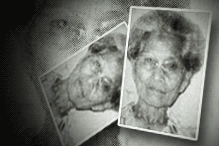 "The court allows the family of the deceased to proceed with her funeral," the judge said.
The ruling contrasts markedly with one from the court last month that sparked religious tension in the Muslim-majority country for declaring that a mountaineering hero be buried as a Muslim despite protests from his Hindu wife. The High Court later said it could not overrule the verdict.
The case threatened racial and religious harmony with minorities saying non-Muslims were increasingly losing out in legal disputes to Muslims, whose matters are heard in syariah courts in the country's dual legal system.
The constitution says civil courts have no jurisdiction on matters in syariah courts.
The latest case was hailed a landmark one after non-Muslims were called to provide statements to the Syariah Court for the first time in the country's history.
"In future, we should use this as a landmark case to give everyone an equal opportunity to seek justice," Malaysian Sharia Lawyers Association president Muhamad Burok was quoted in the newspaper as saying.
Married a Chinese man
Nyonya's religion became an issue after her children registered her death last Thursday with authorities using a word that indicated she was a Muslim and should therefore, authorities said, be buried according to Islamic rituals.
But Nyonya, who died aged 89, was raised as a Buddhist, despite the fact her grandmother was married to an ethnic Chinese who converted to Islam.
According to evidence in court, Nyonya practised Buddhism and ate pork. She later married a Chinese man who never embraced Islam.
Nyonya had also made a written declaration that she wanted to live as a Buddhist and be buried as one.
"My mother did not follow the Muslim teaching and lived and prayed as a Buddhist," Nyonya's son, Chiang Ah Fatt, told NST .
The court ruling comes as Malaysia's non-Muslim cabinet ministers last week presented an unprecedented and controversial memorandum calling on Prime Minister Abdullah Ahmad Badawi to protect the rights of religious minorities.
The ministers later retracted the memorandum after colleagues slammed the move as a breach of protocol. Abdullah has said that his government would review laws relating to religious conversion.


Report this comment
Are you sure you want to delete this comment?
This action cannot be undone.