




Tengku Mahaleel: NAP lacks horsepower
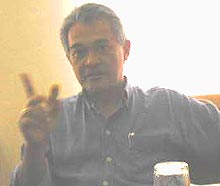
Former Proton chief executive officer Tengku Mahaleel Tengku Ariff is doubtful that the new National Automotive Policy (NAP) had enough horsepower to boost the nation's automotive industry.
Former Proton chief executive officer Tengku Mahaleel Tengku Ariff is doubtful that the new National Automotive Policy (NAP) had enough horsepower to boost the nation's automotive industry.
He said although the NAP aimed to make Malaysia a regional hub for vehicle manufacturing, assembly and distribution, there were no clear guidelines as how this could be achieved.
 He said the policy had failed to address the issue of capacity building and ignored the potential of research and development in the local automotive industry.
It also lacked strategies to craft a sustainable domestic market size and export capabilities, he added.
However, Tengku Mahaleel conceded that the policy did have its bright side which could benefit local manufacturers. This included vehicle-type approval and the elimination of approved permits (APs) for second-hand cars by 2010.
"But the question is whether these positive policies can be properly executed. The devil is in the execution, We are terrible executors," he told a two-hour interview with the media recently.
Proper strategies
Tengku Mahaleel said one had to look at previous government policies in the Industrial Master Plan (IMP) I and II between 1986 and 2005 in order to evaluate the effectiveness of the NAP.
 He said the latest policy appeared to be repeating the aspirations stated in the master plans. He asked whether a 'situational policy' had been done before the NAP was drafted.
"To restate (in the NAP) what we had in the IMPs would mean that we did not achieve what was sought in the IMPs. Is this true?
"Before you draft a new policy, we need to have a situational analysis to tell us what we have achieved and ask where are we heading from there. Do we need to go higher than the IMPs or lower?"
Tengku Mahaleel also stressed on the need to have proper strategies in place in order to encourage large-scale manufacturing with exports and high industry linkage.
"To achieve this, clear rules should be in place to have investments in engine casting, engine machining, body white stamping. If we impose these conditions, Malaysia could benefit from high investments to establish an engine facility which might cost at least RM500 million.
"We could also benefit from a research and development, test and design centre which can cost up to RM1 billion. At the same time, Malaysia will gain employment and high knowledge end of the industry."
He cited China as an example of how 'clever' policies had successfully attracted high-end car manufacturers.
"China has well-thought policies. It tells the companies: yes, I'll give you the licence you need but you have to do engine casting, engine machining and body white stamping in the country. So the investors, had to invest on stamping machines and at the same time provide employment."
Banking policies
As for the NAP's 'failure' to address strategies to craft a sustainable domestic market size and export capabilities, he said:
"A key policy strategy is to craft a sustainable domestic market size to attract investments. A steady 500,000 to 700,000 market size will attract investors."
He said the fact that the domestic market was highly saturated with the aggregate of one car to four persons, the policies were much-needed.
 "We need to address the end-life value. Singapore and Japan have done this. In these countries, it would be cheaper to buy a new car than to maintain an old one. So people can do way with an old one and invest in a new car."
Tengku Mahaleel also reiterated his criticism against Malaysian banking policies regarding vehicle financing.
He claimed that the banks had "sacrificed the national car industry in pursuit of profit."
"Banks here offer financing up to seven and nine years. By the time your car is three years old, you can't sell because the balance loan sum is higher than the value of the car.
"This force consumers to maintain the old cars. It kills the market for new cars."
'Whipping boy'
Asked why Proton was not doing well as far as exporting was concerned, the company's former CEO said he was puzzled as to why Proton was singled-out when the 'export performance' of other local manufacturers was far worse.
"Proton is bad, Perodua is worse, Naza's export is almost zero. Why ask about Proton alone? It seems to be the whipping boy among local car manufacturers."
 He said the real reason why Proton was not selling well overseas was because of the limited models it offered to distributors.
"To market overseas, we need good dealers. To attract dealers you must have at least 10 to 15 product varieties. Proton only has three models that can be sold: Waja, Gen 2 and Savvy.
"Toyota for example, you have 40 over models to choose from. Proton has three, which would the dealer chose? The answer is obvious. That's why we only have the domestic market to turn to."
Being aware of this problem, Tengku Mahaleel said he had worked hard when still in office to ensure that Proton churned out new models such as the new Satria, Gen 2 sedan, station wagon and MPV (multi-purpose vehicle).
"Now what has happened to these models. The new Satria was supposedly launched last October. The dealers are still waiting for the new models and if they are made to wait any longer they might lose interest altogether."
'Brain power'
Tengku Mahaleel also noted that many failed to realise that Malaysia had an advantage over other Asean countries in terms of product design, testing and other manufacturing capabilities due to our "brain power".
"You know how much it cost to design a car in Malaysia? It is one-sixth of the cost in Europe and Japan. Our brain cost is relatively low than our counterparts. Our engineer is paid RM2,000 but overseas they are paid 1,500 pounds. Working same hours doing the same work.
 "This is our unique advantage and this can lure investors."
Tengku Mahaleel also noted that the NAP lacked clear specification on what kind of research and development activities would qualify companies to claim for incentives under the Industrial Adjustment Fund.
"Without a clear policy, foreign investors may look elsewhere where the terms and conditions are clearer as in neighbouring countries like Thailand whose car industry is running ahead of us."
Mahaleel, who led Proton for 12 years since April 1996, left the company last year after stirring-up a controversy by criticising the government's automotive policies.


