




Q&A: I disagree with Eusoff Chin
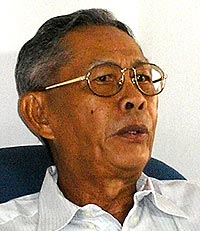
Anuar Zainal Abidin, former chief judge of Malaya and former Suhakam commissioner, talks to malaysiakini about our right to discuss the conduct of judges, judicial appointments and his 'tearful' experience during his 30-year judicial service in this second of a three-part series.
Malaysiakini: There have been complaints on the lack of transparency in the appointment and promotion of judges. Recently, the Bar Council suggested a commission for judicial appointments to be set up. What do you think?
 Anuar:
I agree. But, you know, I like the old system. It's more informal but very effective. I'm talking about the time of (former Lord President) Suffian (Hashim). When I was appointed, it was only a matter of a phone call but I knew very well that before the phone call was made, he (Suffian) had already done investigations. That was his style. He would called someone from the Bar and one or two judges. They would have had coffee and informally he would ask them what do you think of this chap ... is he a suitable person to be a judge? That would be the opening.
Anuar:
I agree. But, you know, I like the old system. It's more informal but very effective. I'm talking about the time of (former Lord President) Suffian (Hashim). When I was appointed, it was only a matter of a phone call but I knew very well that before the phone call was made, he (Suffian) had already done investigations. That was his style. He would called someone from the Bar and one or two judges. They would have had coffee and informally he would ask them what do you think of this chap ... is he a suitable person to be a judge? That would be the opening.
But those days was much easier because whoever was suggested by Suffian was accepted by the government. The prime minister (Hussein Onn) was then a lawyer and he knew what it was all about. So he (Suffian) did not face any difficulties. How could he have faced difficulties when he was very careful. He knew what he was talking about and would not have picked a name unless he was sure that the candidate was suitable for a position in an office of high ranking.
Should we revert to the old system then?
No, because the old system won't work (now) due the expansion factor. You are not just appointing two, but 10 or 20 judges.
As for the proposed commission, I think we must be careful to ensure that members of that commission to be among those who are in the position to know candidates for judicial appointment. For that, you will require retired judges and senior lawyers.
Certainly politicians should not be in there because they tend to have political bias. I also would not want to see the executive (government) to be members. If the executive becomes a part of the commission, this would negate the very idea of an independent judiciary. So the most suitable would be former judges, or senior lawyers and chief justices.
Anuar Zainal Abidin, former chief judge of Malaya and former Suhakam commissioner, talks to malaysiakini about our right to discuss the conduct of judges, judicial appointments and his 'tearful' experience during his 30-year judicial service in this second of a three-part series.
Malaysiakini: There have been complaints on the lack of transparency in the appointment and promotion of judges. Recently, the Bar Council suggested a commission for judicial appointments to be set up. What do you think?
 Anuar:
I agree. But, you know, I like the old system. It's more informal but very effective. I'm talking about the time of (former Lord President) Suffian (Hashim). When I was appointed, it was only a matter of a phone call but I knew very well that before the phone call was made, he (Suffian) had already done investigations. That was his style. He would called someone from the Bar and one or two judges. They would have had coffee and informally he would ask them what do you think of this chap ... is he a suitable person to be a judge? That would be the opening.
Anuar:
I agree. But, you know, I like the old system. It's more informal but very effective. I'm talking about the time of (former Lord President) Suffian (Hashim). When I was appointed, it was only a matter of a phone call but I knew very well that before the phone call was made, he (Suffian) had already done investigations. That was his style. He would called someone from the Bar and one or two judges. They would have had coffee and informally he would ask them what do you think of this chap ... is he a suitable person to be a judge? That would be the opening.
But those days was much easier because whoever was suggested by Suffian was accepted by the government. The prime minister (Hussein Onn) was then a lawyer and he knew what it was all about. So he (Suffian) did not face any difficulties. How could he have faced difficulties when he was very careful. He knew what he was talking about and would not have picked a name unless he was sure that the candidate was suitable for a position in an office of high ranking.
Should we revert to the old system then?
No, because the old system won't work (now) due the expansion factor. You are not just appointing two, but 10 or 20 judges.
As for the proposed commission, I think we must be careful to ensure that members of that commission to be among those who are in the position to know candidates for judicial appointment. For that, you will require retired judges and senior lawyers.
Certainly politicians should not be in there because they tend to have political bias. I also would not want to see the executive (government) to be members. If the executive becomes a part of the commission, this would negate the very idea of an independent judiciary. So the most suitable would be former judges, or senior lawyers and chief justices.
So the commission should be exclusive to the legal fraternity?
Yes. Well, maybe (add) a respected public figure, but not politicians or those from the executive.
On judicial appointments, we have seen veteran judges like (Court of Appeal) Gopal Sri Ram being sidelined. We also see those - who had sat in the former deputy prime minister Anwar Ibrahim trials and appeals - being promoted rather quickly. How do you feel about that?
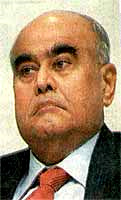 I feel bad about that. I also feel sorry for Sri Ram. I feel that he should have been at the Federal Court by now. If you look at our judges - as far as the legal brain is concerned - Sri Ram is far ahead of anyone. He should be in the Federal Court. We lose a good brain in the apex court if he is not elevated.
If we take seniority (as the criteria) Sri Ram is one of the most senior. If we take intellect, Sri Ram is far ahead than the others. So what would be the reason for him not being able to go up?
So why do you think he was not promoted?
I really do not know. I thought he would have been appointed to the Federal Court a long time ago because of his legal ability. A lot of people don't like him because of his judgment and sometimes he uses words that can break people's hearts.
But we have to accept that judges are independent and accept their right to say things.
Well, judges can always make comments but we don't have to express in (such) strong terms. We have got other ways to do it. Especially when he is the master of the language. One can always choose the right way to do it. After all, the law is full of innuendos. I can say some things which mean different meanings.
For instance, if I disagree with a lawyer, I would say so and the normal answer from lawyers would be: 'As it pleases your lordship'. But what he really means is 'you bloody fool!' (Laughs) And then, we smile at each other. Now, that is English language! And the lawyer doesn't (need to) put on a sour face. There is always a double meaning.
Isn't the most practical thing is to clean up the judiciary to stop corruption?
It is not so much of cleaning up. It is about the taking extra care in appointing new judges. We need to go to the basics. We need to go right to the time before the mistakes were made. Before appointments, there must be some discussions. If the discussion is between (two people) only, then that is not a discussion.
We should include senior lawyers in the discussion. It may be informal discussions but still the information is very important and useful because they would know which officer is suitable or not from their point of view. You also need to get the point of view from those in the (judicial) service and from the AG's (attorney-general's) side.
So, all these three (views), if we consider, we may come to a proper selection of judges. Even if you have a commission, can we rely on the members' knowledge of the candidates? The only way is to call the candidate and do an interview. That would be the same as interviewing clerks, which is definitely not my idea of appointing judges. It is such an august position... you don't put the candidate at the end of the table and start asking him questions.
Going back to the criticisms made against the judiciary, do you think that should be curbed?
We are talking about Article 127 (of the Federal Constitution)?
 Yes, (former chief justice) Eusoff Chin recently stated that the Article prevents the public from discussing matters concerning the judiciary, especially judicial misconduct.
Look at Article 127... it specifically uses the word 'Parliament'. I don't think my English is so bad to misunderstand (its meaning). The constitution specifically uses the word 'Parliament'. It means only the Parliament cannot discuss, but I can and you can (too).
This is where I disagree with Eusoff Chin... he says you can't. (He says) if Parliament cannot discuss and therefore you (the public) also cannot discuss. But in actual fact, the public is free to criticise. If it's wrong, it's wrong. Just because the wrongdoer is a judge does not mean the public cannot say anything.
But we have to be careful about is sub-judice. We must explain to the public that comments cannot be made on pending cases. This is where I disagree with the American press which always sensationalise court trials. Two institutions (court and the media) are carrying separate trials. In fact, the press trial is even stronger that the court.
But the fear of sub-judice arose mainly to prevent juries from being influenced. In Malaysia, we don't have a jury system.
But there are also the witnesses. When they read the opinions reported in the press, it may influence them. The danger is there. So once the court starts the trial, the media should stop commenting until it is all over.
There had been talks about the backlog of court cases for years. How can we reduce the backlog? More staff?
More staff definitely. One clerk can file how many files? The problem is expansion. The clerical problem is a big one. Whoever is in charge must look into this... especially the chief registrar. This is about administrative efficiency for the smooth running of the court. The chief registrar should know what is needed.
The cases filed are immense. We have clerks who lasted for only one week as they could not stand the work load. So we had temporary clerks... Once, we had a temporary clerk who had been with us for 10 years and we recommended to PSD (Public Service Department) (for that person) to be employed on permanent basis but was told the chap was not qualified. Ten years experience and they still asked for paper qualifications! The poor chap, he worked well. But that was the situation then.
Judges are still taking notes in courts. Can't this be changed?
It's difficult. We tried (to solve the problem) by using short-hand typist. But with short-hand, you must have a qualified person. Here they give only the general short-hand typists to sit in the open court. But what they write down is full of blanks because they cannot understand the words and terms used by the lawyers. At the end of the day, they come running to the judge to fill in the blanks. If I am not mistaken in the Philippines, the short-hand reporter that sits in court is a barrister. In America, it is also a barrister.
Here, the problem is because the Treasury is very tight with the money. Once when I was a chief registrar, recommendations were made by Mampu (Malaysian Administrative Modernisation and Management Planning Unit) to the court for a new filing system - colour-coded system and it cost about RM500,000. So we asked for the fund to start the filing system but they said no. I argued that it is Mampu who recommended and that they are 'your people', but they said they have no budget.
But we were lucky, (former Selangor mentri besar) Harun Idris was convicted and fined RM600,000. The next day, I cut out the paper cuttings and ask my clerk to send them to the Treasury and told them: 'We found the money to finance the new system. The court fined Harun and therefore the money belonged to us.' And we got it! (Laughs). That was in 1977 when I was chief registrar.
You started off your career as a magistrate?
Yes, I started as a magistrate then promoted as the president of the Sessions Court, then state legal adviser for Pahang. After that, I served as a senior federal counsel, and after that I was appointed the chief registrar.
How long were you as a chief registrar?
 Less than a year. Then after that, I became a judicial commissioner in Johor. I was the first JC... for about a year then I became a judge. I was in the judiciary for 30 years. I loved the job. There are small anecdotes that makes it so special.
I remember I was in Raub as the Sessions Court president - I was doing magistrate's work. I remembered giving one long lecture to an offender - what offence I don't remember - admonished him and discharged him. He was never sent to prison. Some 20 years later, somebody stopped me at Jaya Jusco and said: 'I don't think you remember me but you gave me a good lecture and because of that, I manage to raise my children to be good people, one is a doctor, one is a doctorate...'.
Another memorable incident was when I was visiting Penang prison when an inmate gave me a pair of elephant book stand. He said: 'Sir I don't think you remember me but you sentenced me to seven years' jail, but I don't blame you, I blame the police!' (Laughs) I think he must be 'hammered' by the police because he pleaded guilty. Sometimes, you can feel tears (in your eyes) when you faced such situations.
Tomorrow: 'Toothless' Suhakam should at least shout
Part 1


