




Lawyers want EGM over limitation of rights
The Bar Council has been asked to hold an extraordinary general meeting (EGM) to discuss disputed clauses in the Legal Profession (Amendment) Bill 2006, which were passed by both houses of Parliament at the just-concluded sitting.
The Bar Council has been asked to hold an extraordinary general meeting (EGM) to discuss disputed clauses in the Legal Profession (Amendment) Bill 2006, which were passed by both houses of Parliament at the just-concluded sitting.
More than 150 lawyers have signed a requisition, which was handed to the councils's executive director Catherine Eu today.
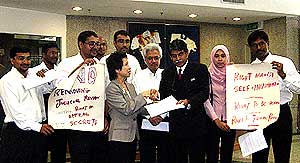 GK Ganesan, 45, a lawyer spearheading this movement, said "it is our desire to move the EGM to adopt such resolutions as are necessary repeal what we consider to be draconian and unconstitutional provisions".
"I have written to the Bar Council asking who made such amendments and I have yet to hear from them. I don't understand why the Bar Council didn't consult the members on this."
The group is of the view that the contentious clauses can be withheld, since the Bill has yet to receive Royal assent. It will then have to be gazetted and assigned an enforcement date for it to become valid law.
Ganesan pointed out that the amended Bill was said to have been drafted without consulting all the members of the Bar.
"We request the prime minister to intercede by having the offending provisions withheld from being gazetted," he said.
Objections to changes
The amended clauses relating to disciplinary proceedings are also said to have "a grave and negative impact on the livelihood and well-being of ordinary members of the Bar".
The proposed amendment to Section 76(2) and (3) states that secrecy can be maintained by the members of the examining board, the Bar Council, the disciplinary board and committee and its staff.
The board is exempted from disclosing any information relating to such proceedings or matters in court.
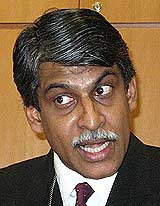 "This is fundamentally wrong as it lacks openness...They should be judged by their peers and be subjected to judicial scrutiny," said Ganesan.
Another contentious amendment relates to Section 103E(2) which states that "there shall be no judicial review against any decision or order made by the disciplinary board".
This effectively limits the appeals mechanism which lawyers are given should they currently appear before the disciplinary board.
"If the amendments come into force, disciplinary proceedings (that are) commenced under the new provisions are liable to be dangerously abused," he said.
"The Bar Council is suppose to protect its members. Instead it has allowed these amendments affect the bread-and-butter issues of its many members."
Other contested amendments include the curtailment of lawyers' right to be heard; breach of lawyers' right against self-incrimination; and powers given to the board to make restitution orders against lawyers.


