




Suhakam inquiry: How it works
The Human Rights Commission of Malaysia (Suhakam) concluded its fifth public inquiry today since its inception in 1999.
The Human Rights Commission of Malaysia (Suhakam) concluded its fifth public inquiry today since its inception in 1999.
Its latest surrounded the allegation of excessive by the police during the May 28 petrol and electricity hike demonstration outside the Kuala Lumpur City Centre, dubbed as ' Bloody Sunday '.
So how does the human rights watchdog conduct its inquiries?
In all its inquiries, there will be a panel of Suhakam commissioners with the number varying from case to case.
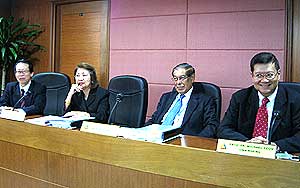 For the Bloody Sunday proceedings, there were four commissioners headed by KC Vohrah. The rest were Choo Siew Kioh, Dr Michael Yeoh and Zaitoon Othman.
The proceedings, which kicked off on Oct 5, took place in the 'inquiry room' located in the Suhakam headquarters in Kuala Lumpur.
54 witnesses
The commissioners sat facing the public gallery and observers. On their right, were three Suhakam officials and on the left, an interpreter and the witness called to testify.
Witnesses were summoned one at a time and for the Bloody Sunday inquiry, 54 people, comprising police officers, victims and the demonstration's organisers, testified during the week-long proceedings.
As for the observers, they included representatives from the Bar Council, Police Secretariat and Attorney-General's Chambers.
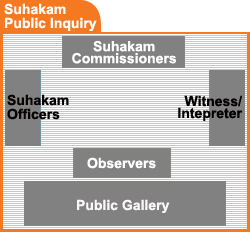 The proceedings, conducted in English, commenced at 9.30am and an average of six witnesses were called in a day.
After a brief introduction, the witness was asked general questions by the Suhakam officers, followed by the commissioners who grilled them on the demonstration and related issues.
After this, the panel of observers were allowed to pose their questions if any.
Among the witnesses called were Dang Wangi district police chief Kamal Pasha Jamal and businessman Amran Zulkifli, who received five stitches to his head after being allegedly beaten by Federal Reserve Unit (FRU) personnel.
The proceedings also saw commissioners taken by surprise by some of the answers from the witnesses.
In one instance, Zaitoon was visibly puzzled when the Dang Wangi police chief told her that he considered the displaying of placards and banners as an 'act of violence'.
Poor coverage
The inquiry, however, failed to attract the attention of the media and public.
Apart from malaysiakini , the other media organisations which covered the proceedings throughout were Chinese newspaper Sin Chew Daily, the Sun, Harakah and Chinese online paper Merdekareview .
The public gallery, which is able to house some 30 people, only saw one or two individuals at any given time and this too regulars such as rights group Suaram coordinator Chang Lih Kang and Parti Sosialis Malaysia (PSM) pro tem secretary-general S Arutchelvan.
Suhakam is expected to release its report on the 'Bloody Sunday' later this year.
Prior to this, Suhakam had conducted inquiries into the Kesas Highway incident (2001), conditions faced by Internal Security Act detainees (2002), alleged mistreatment of native villagers in Sabah by the police (2004) and the death of police detainee S Hendry.


