




MCA roadshows to explain Umno's racist remarks
The racist flames ignited at the Umno general assembly last week seems to have burnt the ruling party's non-Malay partners in the Barisan Nasional coalition with MCA being the first casualty.
The racist flames ignited at the Umno general assembly last week seems to have burnt the ruling party's non-Malay partners in the Barisan Nasional coalition with MCA being the first casualty.
Party top leaders, including four ministers, will meet with grassroots leaders by way of a nationwide roadshow to explain the party's stand on several current issues, including the racist remarks made by Umno delegates to the assembly.
The roadshow is aimed at alleviating discontent among party members disquieted by the statements made during the assembly.
The first briefing for grassroots leaders in Selangor kicked off today at MCA headquarters in Kuala Lumpur. The roadshow will continue next year to cover all the states.
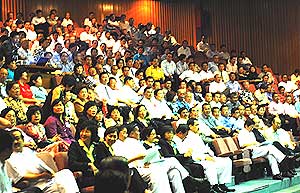 Leaders invited for the briefing include all MCA parliamentarians and state assemblypersons, all division and branch leaders, and the wanita and youth wings.
Although Umno president Abdullah Badawi has tried to neutralise tensions in his winding speech, leaders from non-Malay political parties and communities have openly expressed outrage over the racist remarks made during the assembly.
A Malacca MCA leader told malaysiakini that the coming briefings are similar to the party's special briefing held last month ( photo ) to explain issues such as the new Chinese schools under the 9th Malaysia Plan, the disposal of Nanyang Press Holdings shares to media mogul Tiong Hiew King, the bumiputera equity controversy and Umno Youth deputy chief KhairyJamaluddin's statement on Umno and MCA.
No compromise
In the special briefing, party president Ong Ka Ting made the assurance that the party leadership had conveyed the Chinese community's demands to the government and that they will not compromise the rights of the Chinese community.
 "The leadership thinks that the (impact of the) previous briefing was not significant, so they want to extend it to grassroots leaders in all states," said the MCA leader who declined to be named.
He said that the roadshow was planned before the Umno assembly but racist statements made by Umno delegates would certainly become one of the main features at the briefing.
"This is one of the issues that the Chinese community is most concerned."
Approaches taken and statements made by the party leadership over several issues related to the Chinese community had drawn flak from certain quarters, including party members.
The leadership was criticised as weak and having surrendered to the hegemony of Umno. Hence, the roadshow briefing is seen by some MCA observers as a critical move to restore the leadership's image and reputation.
However, some political observers and party leaders doubted the effectiveness of the roadshow.
"No matter how strongly you criticise in the closed-door briefing, people do not hear you," said MCA Federal Territory youth vice-chief Yee Poh Ping when contacted by malayiskini yesterday.
"The Chinese community wants to see MCA fight for the community's rights openly. If MCA fails to do so, the situation will become worse and we will be further marginalised."
Stronger stand necessary
MCA observer Tee Beng Lee commented that instead of welcoming the winding speech made by Abdullah, Ong should have given a stronger and clearer stand on the issue.
"He could have asked Abdullah to learn the lesson from the assembly and restrain his party leaders to make the assurance that they will not repeat the same statements," said Tee when contacted yesterday.
Tee dismissed the party roadshow briefing as an effort to do damage control.
 "MCA should make their stand clear at all times, not hold briefings only when something happens. To me, this is like covering their ass."
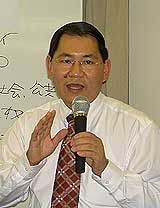
Tang Ah Chai ( left ), chief executive of Kuala Lumpur and Selangor Chinese Assembly Hall, thought that MCA leadership should train their members to carry out open and rational discussions on national issues, instead of solving problems solely through the BN leadership.
He said the 'kapitan' system of leadership which surrenders all decisions to respective leaders cannot be implemented in a modern democratic society.
"We cannot simply sweep all the controversial issues under the carpet every time. This actually delays the progress of democracy and transparency of the country," said Tang.
"The same problem will rise again soon, because we did not solve it seriously and openly."


Report this comment
Are you sure you want to delete this comment?
This action cannot be undone.