




Johor not conducive for investment
In the past two days, malaysiakini has been carrying a special report on the state of Singaporean investment in Johor.
In the past two days, malaysiakini has been carrying a special report on the state of Singaporean investment in Johor.
On Tuesday, our report showed that the level of investment from across the Causeway into the state was alarmingly low compared to the previous year - standing at a mere RM208.9 million, a massive shortfall of the total amount of RM1.9 billion in 2005.
And yesterday, malaysiakini spoke to a senior manager from Johor State Investment Centre (JSIC) who was confident that investment from Singapore will start coming in the final quarter of the year.
 However in this final part of the series,
malaysiakini
spoke to several Singaporean investors who said the environment was not good enough to invest in Johor.
However in this final part of the series,
malaysiakini
spoke to several Singaporean investors who said the environment was not good enough to invest in Johor.
They generally do not share the state government's optimism that money will start pouring in soon.
On the contrary, the Singaporean investors and local businessmen interviewed by malaysiakini expressed their disappointment over the fading attraction to invest in Johor.
Among the problems holding back these investors are poor security, unfriendly business policies, dwindling competitiveness and political instability.
"The main players in various industries have left the state one by one, the environment here is not conducive for investment," said Loh, a Singaporean who owns a factory in Johor Bahru.
Loh, who declined to reveal his full name to protect his relationship with the Johor authorities, disagreed with the rosy picture put up by the Johor State Investment Centre that Singapore's investment will multiply in the last three months.
"This is not likely to happen," he said.
Cumbersome policies
It is not just investments from Singapore that has fallen dramatically. The Foreign Direct Investment (FDI) into the state only stood at RM2.4 billion for the first eight months in this year. This is only 44 percent of the total amount which flowed in last year.
 Loh pointed out that the increasing labour costs had driven the labour intensive industry to other countries which offer cheaper labour such as Indonesia and Vietnam.
According to JSIC, Johor was not eager to attract labour-intensive industries as it was keen to welcome high technology industries.
However, Loh doubted the competitiveness of Johor to do this. He pointed out that Singapore's high technology industries have more investment choices following the city-state's joint venture industrial parks in other countries such as China, Indonesia and Vietnam.
"These industrial parks initiated by the Singapore governments are the preferred locations for large companies, but Johor Bahru has no similar platforms."
"Those still staying in Johor are SMEs that cannot afford to leave. Many large factories had left Johor," said Loh who has been running business in Johor for over 40 years.
He also complained that government agencies had shown no improvement in efficiency.
"It was easier to apply for foreign labour after 1997 but now the procedures become more complex and bureaucratic."
NEP factor
Telecommunication service distributor Sebastian Chan commented that the business policies introduced by Malaysia government in the past few years were detrimental to small and medium enterprises (SMEs).
"Almost all changes by the government make us suffer," said the Singaporean businessman, quoting the example of frequent increment of interest rates by Bank Negara.
Since November last year, Bank Negara had increased the interest rate three times, from 2.7 percent to 3.5 percent
Chan also complained that Singaporeans were being discriminated in Malaysia.
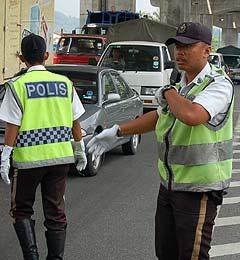 He claimed that he was fined by Johor traffic police because of his nationality. But he refused to reveal the details.
During the interview, Chan expressed his fears over the aggressive implementation of the New Economy Policy - as a result of small talks in the business circle that the Malaysian government would force all private companies to hire 30 percent of Bumiputera employees.
The compulsory 30 percent Bumiputra employees was a suggestion raised by Umno delegate in the assembly.
Security fears
The lack of security in Johor also appeared to be a common concern among investors.
"I saw it with my own eyes two to three robberies happening in a same location. The second robbery took place just 15 minutes after the police left."
He said security had been deteriorating in the past few years.
"This is indisputable fact. Criminals always target Singaporean. I have seen many cases," said is another businessman Lam Kai Yang, who is a Malaysian construction consultant based in Johor Bahru.
On Dec 6 this year, a Singaporean with his business consultant was kidnapped from his company located in Senai.
He was released after four days with a record-breaking RM250 million ransom paid by his family. Kidnappers were never arrested.
This case was widely reported by the Singaporean media and further shattered the confidence of Singapore's investors towards Johor.
PM-Dr M spat
However, as far as JSCI is concerned, the security situation in the state is not bad at all. In fact the state agency blames the media for over-blowing the issue.
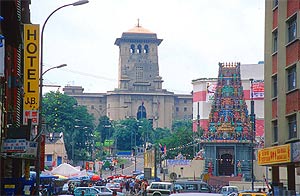 "Singaporeans think Johor is not a safe city, but actually this issue was played up by the media in both countriesJohor is still as safe as candy," said JSIC senior manager Mohamed Basir Mohamed Sali told
malaysiakini
.
"Singaporeans think Johor is not a safe city, but actually this issue was played up by the media in both countriesJohor is still as safe as candy," said JSIC senior manager Mohamed Basir Mohamed Sali told
malaysiakini
.
Investors also noted that the continuing spat between former Prime Minister Dr Mahathir Mohammad with his successor Abdullah Ahmad Badawi caused fears of political instability in the country.
Loh stressed that political stability determined whether an existing policy would continue to be implemented as planned or if there would be potential uncertainties.
This is a big concern for investors, said Loh.
Mahathir had been vigorously criticising Abdullah in the past few months, saying that Abdullah had reversed various polices implemented by him, this including the scrapping of the new bridge to replace the Causeway.


Report this comment
Are you sure you want to delete this comment?
This action cannot be undone.