




Refugees live in a state of fear
Refugees and asylum seekers in the country live in constant state of fear and intimidation from the authorities.
Refugees and asylum seekers in the country live in constant state of fear and intimidation from the authorities.
They are unable to access the most basic and fundamental services including healthcare due to the climate of fear and insecurity they live in, said a group of doctors.
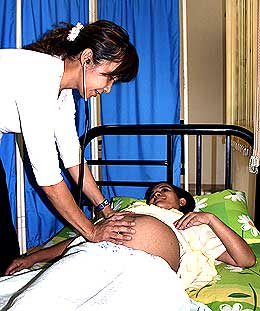 According to their recently released report, almost 100,000 among the estimated range of several hundred thousands to one million undocumented immigrants in the country are refugees and asylum seekers.
The report, published by the Medecins San Frontieries (MDF) or also known as Doctors without Borders, identified several obstacles faced by refugees and asylum seekers.
Among them are difficulties to accessing healthcare facilities.
Many refugees and asylum seekers in Malaysia, stated the report, do not know how the healthcare system works and fear being reported to the authorities.
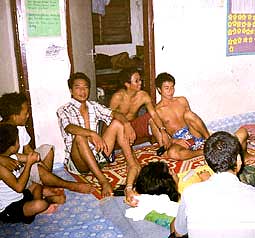 As foreigners, refugees and asylum seekers have to pay at least twice as much as Malaysian for an outpatient treatment.
In addition to that, they also face the danger of being deported as hospital officials are obliged to report "illegals" to the police.
"I was really worried, because I had no money to pay for medical care. I told my brother-in-law that I could not go to the hospital because I had no documents, and was scared of getting reported," said a Burmese woman.
"People had told me that if you go to the hospital without documents you are arrested."
Living in jungle
Besides that, refugees and asylum seekers in Malaysia also live and work in deplorable conditions.
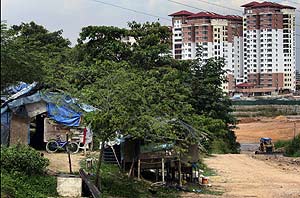 "In a country like Malaysia, where living standards are so high, it is astonishing to see the inhuman conditions in which many undocumented migrants live," said the report.
Although some of them live in urban rural areas, many choose to live in jungle sites because they cannot afford a more comfortable home and to stay close to construction sites which employ them.
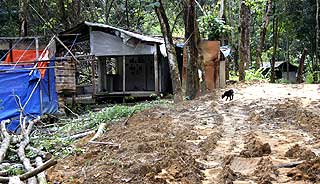 Many also choose to live in jungle to escape harassment and raids in the city.
The refugees and asylum seekers, who often work as cleaner or waiters in restaurants or at the construction sites work an average of six days a week and clock more than 10 hours per day for an average wage of RM3 per hour.
Not only that, many of them have reported to having been the victim of their employers' abusive language and behaviour.
MSF also reported that most of the refugees and asylum seekers are at high risk of depression and stress due to the intimidation and fear they feel for the authorities such as the police and Rela, the Peoples' Volunteers Corp.
Being undocumented immigrants, they can be arrested anywhere and anytime and upon arrest, they can be put into detention centres or jails with appalling detention conditions.
"The police came at night and caught everybody, even those who had documents and were entitled to be here. The police did not care, we are worth nothing. The police burnt our houses and everything else down. We are worried about the raids," said a man from Aceh.
200 people in one room
Commenting on a detention centre, a man from Burma said: "There, we are only allowed to wear shirt and pants, not even shoes. They take away everything from you and throw all our belonging away.
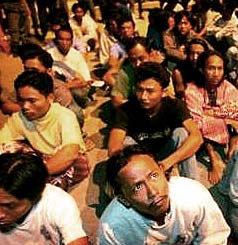 "The conditions are really terrible. There were 200 people in one room. Only one lamp and one toilet for 200 people. The smell was so terrible that I could not eat anything when I arrived," he added.
"We did not have much food anyway. There is no tap other than in the toilets, which is disgusting water. I fell sick quickly with high fever."
The report concluded that "without clinics run by MSF and its local NGO partners, the health of refugees and asylum seekers in Malaysia will go untreated, needlessly risking their lives, health and human dignity."
The Belgium-based MSF has started working in Malaysia since 2004 and their main aim is to improve access to medical and mental health services for refugees and asylum seekers in and around Kuala Lumpur.
MSF not only produce medical services to refugee and asylum seekers communities, but also to anyone who approach their facilities.
They have recently handed down the project to its local partners.


