




9MP review: EPU should call Indian NGOs
The Economic Planing Unit (EPU) in the Prime Minister's Department should call Indian-based non-governmental organisations for a dialogue and briefing on the mid-term review of the Ninth Malaysia Plan (9MP).
The Economic Planing Unit (EPU) in the Prime Minister's Department should call Indian-based non-governmental organisations for a dialogue and briefing on the mid-term review of the Ninth Malaysia Plan (9MP).
 Such a move would reflect the government's seriousness in wanting to do more for the Indian community, said Malaysian Indian Business Association (Miba) president P Sivakumar.
He noted that the government - in the 9MP - is committed to increasing the corporate wealth of the Indians to three percent from its current dismal 1.2 percent since 1970.
The 9MP (2006-2010) is the first Malaysian plan unveiled by Prime Minister Abdullah Ahmad Badawi's administration.
Sivakumar was responding to recent media reports that Yayasan Sosial Strategik (YSS) - the social arm of MIC - is planning to hold a roundtable discussion on the 9MP mid-term review on April 10.
YSS has invited 25 Indian-based NGOs, several guests from the EPU and other relevant government agencies.
"In actual fact it is the EPU that should be calling the NGOs," said Sivakumar.
"It is in a better position to make adjustments or recommendations for the Indian community in the review in explaining their effort, resources and money already spent and any hopeful re-designs of new steps or measures.
"We don't think there is any quarter in the Indian community that has the concrete data to show the progress of the Indian equity increase to three percent under the 9MP," he told Malaysiakini .
Enough paperwork
Sivakumar stressed that Miba is making this request to the EPU to avoid the situation where another private group meeting becomes nothing more than a planning process - in which another round of findings, reports and recommendations are submitted but yield no effective changes.
"We think that the time has come to say enough to more paperwork. What we want to see are results," said the Johor-based businessman.
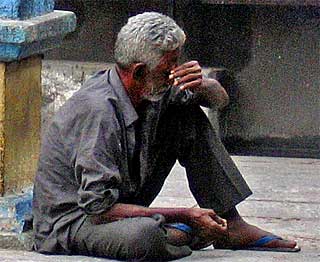 "The EPU can provide a detailed view of how the lower level segment of the Indian community can benefit and the next stage of implementation for the Indians to improve their economic standing.
"This is in line with the promise made by the prime minister who announced 'we will do more for the Indian community'," he added.
Sivakumar said the community's economic setback is now a national issue especially after the Nov 25 street rally organised by the Hindu Rights Action Force (Hindraf).
The rally drew some 30,000 disgruntled Indians to the streets in Kuala Lumpur and subsequently paved the way for the detention of five Hindraf leaders under the Internal Security Act on Dec 13.
It's the community's right
Following this, Sivakumar said, the prime minister invited the heads of 13 Indian-based NGOs for a discussion on the community's woes.
"He understood all the issues that were raised and promised to do more for the Indians. He agreed that the policies were good but the implementation did not go downwards," said the businessman who also attended the meeting in Putrajaya.
He said those present had pointed out to Abdullah that the New Economic Policy (NEP) had failed in its delivery as far as the Indian community is concerned.
In view of this, Sivakumar said, Miba is suggesting to the prime minister and government to recruit a more multiracial professional team at all the state EPUs at the planning, implementation and delivery stages.
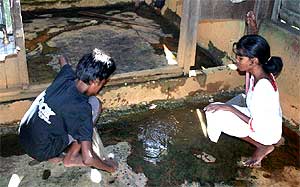 "This will ensure that the poor of all communities benefit from the national policies of the government with an independent monitoring mechanism set up to ensure check and balance on the deliveries and uniformity in the levels of gain and the success of the policies," he added.
Reiterating the importance of the EPU taking the lead in this matter, Sivakumar said Malaysians have the right to be served by the right department.
"So it is the Indian community's right to be served by the EPU," he added.
Action-oriented programmes
Meanwhile, the Consumers Association of Subang and Shah Alam, Selangor (Cassa) has expressed support for Sivakumar’s statement.
Its president Dr Jacob George told Malaysiakini that in the aftermath of the March 8 elections, it is pertinent that the EPU leads the charge in this endeavour instead of the MIC-linked YSS.
"It is very important that the EPU takes the lead and include not only Indian-based groups and leaders but also consumer groups dealing with the marginalised segment of the Malaysian society.
"The issue should not be left entirely in the hands of YSS as there is now a lot of resentment from the people and Indian-based NGOs regarding this," he said.
 George said YSS can be part of the group of facilitators in achieving the targets but not lead or coordinate the entire programme.
"Past attempts did not bear fruit and the election results have shown this. The old formula does not work anymore," he added.
Also calling for an end to the culture of paper presentations, George said the community wanted to see action-oriented programmes instead.
"There must be a set framework and set targets. If the targets are not achieved, then a post-mortem must be done. Enough paperwork, it is a waste of time," he added.
Reiterating on the importance of the EPU taking the lead, the Cassa president said the unit has the best credentials, political will and resources to undertake the task.
"The success and failure of the task will then be the responsibility of the EPU and bring an end to finger pointing at others," he added.
Contacted later, the Malaysian Associated Indian Chambers of Commerce and Industry (MAICCI) president Pardip Kumar Kukreja said MAICCI also feels that the EPU should take the lead in this initiative.
He added that MAICCI will not be able to attend the April 10 roundtable discussion organised by YSS.


