




Policy crisis behind economic woes
analysis The challenges to food production in Malaysia are manifold, starting with neglect of development of knowledge in this sector.
analysis The challenges to food production in Malaysia are manifold, starting with neglect of development of knowledge in this sector.
Modern food production is a knowledge intensive and high-tech sector; the value chain is not one of ancient paradigms of agriculture, but one of global agri-business.
The paradigm has shifted. Recent high oil prices have prompted a rethink of ‘food miles’, meaning that food should travel the shortest distance from farm to table.
 When the government panics and sends out calls to increase food production, it only shows how out of touch it is with the issues involved.
Malaysia does not have an adequate supply of human resources with the right skill sets and attitudes for farm work. Young degree-holders today want white-collar jobs and to work in air-conditioned rooms. If the farm sector imports labour, there is the question of levies and housing, and additions to the already high number of foreigners in the workforce.
Fields are left idle even though state governments have provided irrigation facilities. If those allocated land do not farm it, can they be made to do so? If they refuse, can the land be re-assigned to those willing to farm? The Association of Vegetable Farmers has reported that 70 percent of its members are farming on land that they do not own.
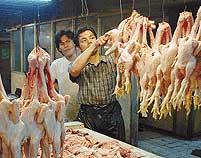 The cost of agricultural inputs has gone up. Fertilisers and animal feed are imported, and prices have increased by 200 percent due to rising oil prices.
Distortions in the pricing and distribution chain make it problematic for farmers to recoup their expenditure. There is a ceiling price on many food items; farmers are not allowed to sell directly to the market; and the involvement of intermediaries further reduces the income of farmers.
Basic logic demands that policies that reward those who do the actual work. This is also the only way to ensure the sustainability of any business. If structural issues are not resolved and those who work and risk their capital are not assured of good returns, why would they get involved?
Drastic realignment required
The writing has been on the wall for a long time, but we are still blind to the urgency of the message. Global fuel and food prices will not dip any time soon, given the surging demand from China and India.
We know that Malaysia’s oil reserves will run out in 2014. There is only a five-year window to readjust infrastructure to make changes in production and our lifestyle.
The prime minister has advised the people to make changes. The point is, the government must create the conditions for change to be possible.
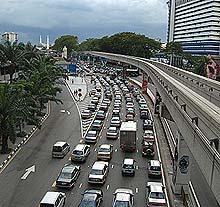 For example, we could drive less to save money, but the public transportation system is in shambles. How would we cope in running a business or managing our lifestyle?
Those who buy local cars complain about quality and technical problems. For safety reasons, they buy foreign cars, even though they don’t like to pay more, including import taxes.
There are thousands of kilometres of tolled roads, yet traffic congestion is still bad and even more fuel is burned while motorists are caught in traffic jams. The government, meanwhile, complains about the high fuel subsidy which amounts to RM43 billion a year.
Tremendous wastage results from such policy conflicts and these must be eradicated for any system to work.
 A private company proposed a high-speed rail network between Kuala Lumpur and Singapore, but the government rejected this as costing too much - a one-time expenditure of RM8 billion. It is an investment, unlike the fuel subsidy which is a yearly outlay and an expense.
The rail system will facilitate greater traffic and business. Yes, it would have an impact on highway concessionaires and airlines, but this is part of the market shakeout adjustments that are normal in a free market economy. It would be good for the country and for the affected businesses, as they would be forced to innovate and become more efficient.
While the rest of Asia is working to modernise rail networks to benefit a large mass of people and to prepare for a post-oil era, when will Malaysia come up with efficient intra- and inter-city rail links.
Voters communicated their impatience in the March 8 general elections - with security threats, inflation, higher operating costs and stagnating income. Their hardship has been escalating day by day, but the government has yet to offer workable solutions.
The heart of the nation’s woes lies in the quality of the governance system. The government must stop talking. It must use the remaining money wisely to find real solutions.
FOONG WAI FONG is Director of Megatrends Asia and best-selling author of ‘Megatrends Asia’ (with John Naistbitt), ‘The New Asian Way’, ‘Mr Prime Minister We Have to Talk’, and ‘Culture Is Good Business’.


