




No fuel stop for foreigners at the border
Malaysia will ban petrol stations on its borders with Thailand and Singapore from selling fuel to foreigners, in an attempt to contain the spiralling cost of subsidies.
Malaysia will ban petrol stations on its borders with Thailand and Singapore from selling fuel to foreigners, in an attempt to contain the spiralling cost of subsidies.
It's the question of principle because you are talking about taxpayers' money, and taxpayers' money being used to subsidise petrol for those not entitled to receive the subsidy," said Deputy Prime Minister Najib Abdul Razak.
"Our level of subsidy is very high," he told a press conference.
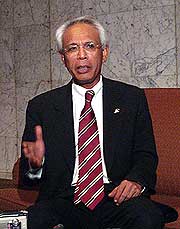 Domestic Trade Minister Shahrir Samad said the ban on sales to foreign vehicles would be enforced from Friday and remain in place until the government unveils a new mechanism for selling subsidised fuel to the public.
"This move is a stern act by the government to reduce the leak in subsidies that involves high costs and which should actually be enjoyed by the lower-income group in the country," he told the official Bernama news agency.
Speaking to reports in Parliament today, Shahrir said oil subsidies planned for Malaysian should benefit the citizens and not for foreigners to enjoy.
"We are looking into ways to curb smugglers as well but the public must also help the government," he said.
He said the ministry relied on public reports to catch the offenders and asked for the people to show more care for the money the government used on the subsidised fuel.
Shahrir said foreign vehicles will eventually have to purchase petrol and diesel fuel at market price as soon as the ministry sorts out a more comprehensive subsidy system.
"With a better system, subsidies would be channeled to only those who deserve it," he said.
The ban affects up to 300 petrol stations, and extends up to 50 kilometres from the border in the northern states of Perlis, Kedah, Perak and Kelantan; and Johor in the south which faces Singapore.
The move comes as the government conducts a controversial review of its fuel subsidies, expected to cost RM43 billion this year if oil prices hover around US$120 per barrel.
Don't act in haste
Meanwhile Johor's former tourism executive councillor Jimmy Low today urged the government to reconsider the petrol ban for foreign registered cars in border states.
He likened the decision by the Domestic Trade and Consumer Affairs Ministry to bar petrol stations from selling diesel and petrol to foreign registered vehicles as "killing the goose which lays the golden eggs", especially in the Johor context.
Low, who held the tourism portfolio from the mid 80s to the early 90s, said that banning sales was not the solution to solve the subsidy problem.
"We all know that Johor Baharu is a popular destination for Singaporeans and furthermore, there is the 3/4 tank ruling imposed on Singapore cars if they want to leave the Republic.
"During my time we made a survey and found that at least 20,000 to 30,000 Singaporeans are day trippers, which means they come in their cars, do their shopping and eating and then drive home.
"And each Singaporean spent an average of RM200. That's a lot of money for the economy of Johor Baharu. So what if they pump half a tank of Malaysian petrol," Low told Bernama .
Gov't subsidises 21 food items
Malaysia heavily subsidises petrol, diesel and gas as well as 21 food items but rising global prices and controls have triggered severe shortages, as well as smuggling across its porous borders and long coastline.
Singaporeans often make day trips across the causeway linking the island state to Malaysia to fill their petrol tanks and buy groceries, which are cheaper here.
Despite the urgent need to lower the subsidy bill, the government is braced for a public backlash over any further increase in a country where public transport is weak and many people are dependent on their cars.
The ruling coalition suffered its worst ever result in March 8 elections, losing five states and a third of parliamentary seats in a setback partly credited to anger over high prices of food and fuel.


Report this comment
Are you sure you want to delete this comment?
This action cannot be undone.