




Two factions to face off in MCA
The race is now on. With the conclusion of the MCA branch and divisional elections over the weekend, the mercury has gone up a few notches within the party.
Those who have successfully cleared the second election hurdle - 75 out of 191 divisions saw contests - can now set their sights on higher posts at the national level.
But it also means an arduous journey that will stretch over two-and-a-half months of hard campaigning before the final 100-metre dash to the finishing line on Oct 18.
The race is now on. With the conclusion of the MCA branch and divisional elections over the weekend, the mercury has gone up a few notches within the party.
Those who have successfully cleared the second election hurdle - 75 out of 191 divisions saw contests - can now set their sights on higher posts at the national level.
But it also means an arduous journey that will stretch over two-and-a-half months of hard campaigning before the final 100-metre dash to the finishing line on Oct 18.
Political re-alignments are not surprising, with rank-and-file leaders often switching ‘camps’ according to the leadership’s expectations of the party.
Yet despite repeated denials of factionalism by MCA leaders, the recent branch and divisional elections have indicated otherwise.
“It is inconceivable that factionalism does not arise when individuals at the top are taking the initiatives to lobby for support from the lower level. However, although Team A and Team B are well-entrenched, new groups are appearing,” said a party veteran.
With the conclusion of elections at the branch and division levels, the picture is becoming clearer for MCA watchers - two major groups are emerging and are expected to face off at the October polls.
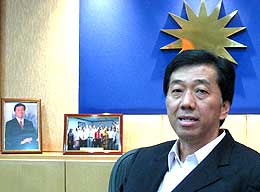 The move by incumbent president Ong Ka Ting (
left
) in not defending his position and the expectation of vice-president Ong Tee Keat going for the party No 1 post further ferments a change in support at the grassroots.
The move by incumbent president Ong Ka Ting (
left
) in not defending his position and the expectation of vice-president Ong Tee Keat going for the party No 1 post further ferments a change in support at the grassroots.
Tee Keat has repeatedly declared that he would not enter into any ‘cartel’ or electoral pact with any individual or groups, but many take this with a pinch of salt.
New teams make appearance
It is widely believed that Team A is headed by secretary-general Ong Ka Chuan and backed by his younger brother, incumbent president Ka Ting. Both are supportive of vice-president Tee Keat (former Team B leader) vying for the president’s post.
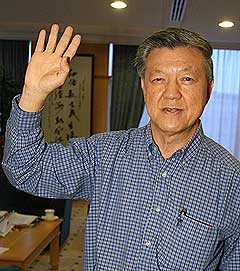 Major players in the ‘new’ Team B are former vice-president Chua Soi Lek (
right
), vice-president Donald Lim Siang Chai, Ling Hee Leong, Ting Chew Peh, Ng Yen Yen and Fong Chan Onn. Ironically, all were in Team A when they were backing then party president Ling Liong Sik.
Major players in the ‘new’ Team B are former vice-president Chua Soi Lek (
right
), vice-president Donald Lim Siang Chai, Ling Hee Leong, Ting Chew Peh, Ng Yen Yen and Fong Chan Onn. Ironically, all were in Team A when they were backing then party president Ling Liong Sik.
Nevertheless, both teams face some setbacks in last weekend’s divisional elections.
Notably, Team A supporter Lee Hwa Beng lost his battle for the chairman’s post in Kelana Jaya to his division’s Wanita chief Ong Chong Sian. Albert Chang won the Gopeng division’s chairman post with 159 votes against Lee Thim Leng, is believed to be aligned to Team B.
Among the so-called ‘Gang of Eight’ (in the central committee line-up during the Ling Liong Sik-Lim Ah Lek leadership crisis), only Tee Keat remain in the top leadership. Other former key players have either left or are expected to leave the political arena like former deputy president Ah Lek’s successor Chan Kong Choy, who has indicated he would not defend his current post.
Re-aligning political pacts
The political permutation after the March general elections was somewhat unprecedented in the context of MCA politics.
Ex-party chief Liong Sik recently denied he was involved in the current on-going campaign in MCA following speculations that he was supporting Team B, led by Soi Lek.
Many would probably agree that the former president’s influence is still strong within the party. His sons, Hee Leong, 39, won the Kuala Kangsar division’s youth chairmanship unopposed while Hee Keat, 36, captured the Segambut divisional chairman’s post in a straight fight.
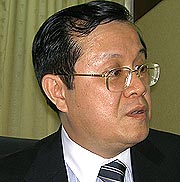 Expect Tee Keat (
left
) to face his arch rival, Soi Lek (aligned to Team A during the Ling-Lim leadership crisis), in the coming party polls.
Expect Tee Keat (
left
) to face his arch rival, Soi Lek (aligned to Team A during the Ling-Lim leadership crisis), in the coming party polls.
If that is the case, the campaign will be dirty with Soi Lek's sex video being made an issue.
Aligned to the new Team B, Donald Lim (another former Team A leader) is believed to be Soi Lek’s running mate, taking on Ka Chuan should the latter decided to contest the deputy’s post.
With the conclusion of the divisional elections, ‘errand boys’, political aides and ardent supporters are now scrambling to obtain feedback on the degree of support for their political masters and their chances of victory.
The next stage
Having gone through this divisional hurtle, the next stage is bargaining and negotiating for support before the actual campaigning takes place.
Most newly-elected divisional chiefs already aligned to political factions are expected to deliver the “numbers” (delegates’ votes).
Those expected to contest top posts include newly-elected divisional chairmen Soi Lek (Batu Pahat), Donald Lim (PJ Selatan), Chan Onn (Alor Gajah), Jui Meng (Bakri) and Hee Keat (Segambut).
Other former top leaders expected to make a bid for top posts included Ting Chew Peh (Kapar delegate), Yap Pian Hon (Puchong delegate) and Hee Leong (Kuala Kangsar division Youth chief).
Both the Youth and Wanita wings are expecting changes at the national level. With incumbent Wanita chief Yen Yen stepping down, her protégé Chew Mei Fun (despite her electoral loss of PJ Utara parliamentary seat) is expected to seek to replace her.
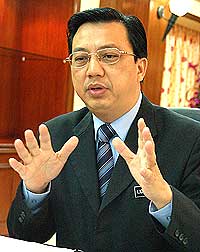 Meanwhile, with Youth chief Liow Tiong Lai (former Team B who is now aligned with Team A) (
right
) also moving up the leadership ladder, his to-be-vacant post is likely to see a keen contest with speculation that Wee Ka Siong (former Team B leader, also seen to be aligned with Team A) is interested in the post.
Meanwhile, with Youth chief Liow Tiong Lai (former Team B who is now aligned with Team A) (
right
) also moving up the leadership ladder, his to-be-vacant post is likely to see a keen contest with speculation that Wee Ka Siong (former Team B leader, also seen to be aligned with Team A) is interested in the post.
Predicting the winners
It is interesting to note that candidates holding government posts have a distinct advantage over those who don’t as these ‘heavyweights’ are more inclined to contest for top party posts.
‘Lightweight’ candidates, including those making political comebacks, can console themselves by contesting for central committee seats. Those close to the ‘winning candidates’ but are afraid of losing in a stiff contest, can sit back and hope for political appointments.
This is an interesting time for political pundits trying to predict the fates of key candidates. The strategic alliances, secret pacts and hard bargaining, which all occur behind closed doors, will contribute to the unpredictability of the election results.
Even experienced pundits can testify that forecasting a political party’s election outcome with impeccable accuracy is an impossible task, much like trying to predict the exact landing spot of a tossed coin.


