




'Townhall' meeting makes debut in Selangor
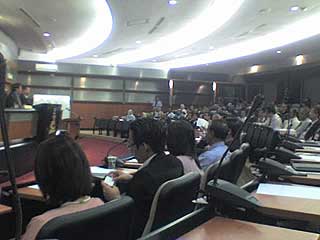
‘Town hall' democracy made its debut in Selangor yesterday when the PKR-led state government held a dialogue between residents', NGOs and developers' associations on the subject of its ban on hillslope development.
'Town hall' democracy made its debut in Selangor yesterday when the PKR-led state government held a dialogue between residents', NGOs and developers' associations on the subject of its ban on hillslope development.
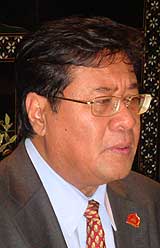 "I am just testing this ‘town hall' concept, and I don't want it to be very formal," said Menteri Besar Abdul Khalid Ibrahim at the outset of the dialogue, which took place at the Annex Building of the Selangor government's headquarters in Shah Alam.
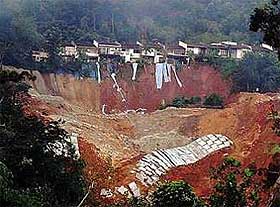
The subject of the dialogue was the government's decision to ban development projects on Class 3 and 4 slopes, which refer to hillslopes with a gradient of 25 degrees and above.
Hillslopes became a thorny issue for the Pakatan Rakyat coalition after media reports quoting inside sources suggested that Khalid and his state exco colleagues, Teresa Kok and Ronnie Liu, were reconsidering the ban allegedly after being lobbied to do so by developers' associations.
The dialogue yesterday turned into a two-hour debate as the 120 attendees argued on the pros and cons, as well as the various models of sustainable development.
 Laying out the framework for much of the discussion, Real Estate and Housing Developers' (Rehda) Selangor chairperson Fateh Iskandar Mohamed Mansor argued that developers were never consulted before the decision on hillslopes was made, lamenting that they had already invested a lot of time, effort and money in property projects.
"Many companies have suffered. This includes 140 upstream and downstream related activities. Most of us had already bought land before the present government came in. This is the loss we are suffering currently," he said, adding that safety and environmental concerns can be managed by the implementation and enforcement of adequate safety and environmental codes.
"Isolated policies will not solve the problems. We hope the government will implement rules and regulations to govern development and developers on these sensitive areas.
"We also believe the government must have better enforcement so that these regulations are implemented and monitored rigorously," he said.
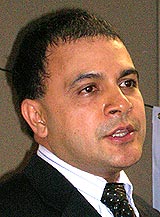 However, land and municipal laws expert Derek Fernandez jumped at Fateh's argument that developers have suffered or will suffer financial losses after being disallowed to develop the land they purchased after the government's ban on hillslope development.
"Who are these developers? Where are the lands? How did they get the land? What were the premiums to get the land?" he asked, in reference to the many claims that have been made regarding the questionable acquisition of land in Selangor during the previous administration.
"There were serious allegations that the (previous) state government had alienated land to give to cronies, to people who had political and business connections and had de-gazetted forest reserves," Fernandez said.
"Part of these funds were used to fund political processes," he added.
He said the Federal Planning Department had, from as far back as 1997, stipulated that hillslopes with gradients exceeding 25 degrees could not be developed.
"Did you buy these lands before 1997 or after 1997? That's obviously relevant when talking about this (Selangor government's) policy," said Fernandez.
Less emotion, more logic
Fernandez also emphasised his disappointment that a government policy that was already in place was being subjected to uncertainty merely because of pressure from certain interests.
"Do we keep visiting policies made by the government regularly or is this a one-off thing because other parties said they were not consulted on the matter?
 "I am of the opinion that once a policy is made, reasonable time must be given for that policy to be effectuated, actuated, implemented, and its consequences fully discovered before a revisit of that policy is to take place.
"To do otherwise would make that policy, arrived at by the Selangor government, useless as it can be changed any time," said Fernandez, whose remarks were met many times with applause.
Among the others who spoke at the dialogue were chairperson of the ill-fated Highland Towers owners and residents' committee Dr Benjamin George, who reminded the audience of the 48 people who died when one of the Highland Towers blocks collapsed in 1993.
Former president of the International Real Estate Federation (Fiabci) and its current Asia Pacific chairperson Alan Tong Kok Mau, on the other hand, called for the audience to be less emotional and more rational in considering the safety of hillslope development.
 "I think the fear is because of a lack of understanding, technical knowledge and experience," said Tong, who pointed to the "beautiful" cities of Acapulco, Melbourne, Singapore and Hong Kong as examples of safe and successful hillside development.
Echoing him, Institute of Architects Malaysia president Lee Chor Wah said there are many examples of successful and safe hillside developments, with the failed ones being exceptions.
"We have so many high rise (buildings) on slopes that have faced no problems. Why harp on a few examples? Why react in such a way?"
A fair chance to speak
Speaking to reporters after the dialogue-cum-debate, Khalid said many people have lauded the opportunity to air their views.
"This is the first time, maybe, in Selangor that we have a town hall meeting between two bodies that have been confronting each other, but who are now able to sit down in a civilised manner and find improvement for the state.
"One of the developers said it was a good thing and should have been done 20 years ago, so this issue would not have arisen," Khalid said.
He reiterated, however, that the state government was not planning to withdraw a ban on hillside development, but would continue to listen to all views including those of developers and landowners.
"We haven't changed our view but we are giving the people a chance for reassessment," Khalid said.
"We think we made the correct decision. But we allow them (developers) to come out with all their arguments to re-validate our decision by giving the people a chance to air their views."


Report this comment
Are you sure you want to delete this comment?
This action cannot be undone.