




Bills fall far short of PM's reform pledges
Mixed reactions have been recorded to the contents of the Judicial Appointments Council (JAC) Bill and the Malaysian Commission on Anti-Corruption (MCAC) Bill , tabled yesterday in Parliament.
Mixed reactions have been recorded to the contents of the Judicial Appointments Council (JAC) Bill and the Malaysian Commission on Anti-Corruption (MCAC) Bill , tabled yesterday in Parliament.
Although there is cautious optimism that a start has been made, the lingering sentiment is one of disappointment over the provisions, which fall far short of the bold reforms pledged by premier Abdullah Ahmad Badawi.
Comments follow, edited for brevity and clarity.
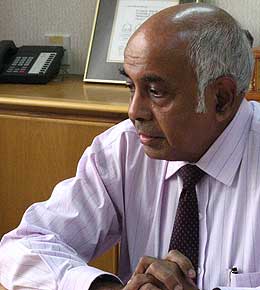
Param Cumaraswamy, former UN Special Rapporteur on the Independence of Judges and Lawyers
The JAC Bill is a disappointment. While (the mechanism and criteria) for recommendation of appointments may give a semblance of transparency, it could lead to executive interference.
The prime minister (PM) has the power to appoint and remove any or all the non-judicial members (eminent persons) of the commission at any time without giving any reasons.
In essence, this means that the independence of the judiciary would be dependent on the personality of the premier in power - in effect the executive arm of the government.
 Without amending Article 121 of the constitution to restore the doctrine of separation of powers and conferring the judicial power on the courts, judicial independence cannot be secured by merely (enpowering) the chief executive of the government to uphold judicial independence.
Clause 2 of the Bill read together with the PM’s power to remove the eminent persons at any time without giving reasons, pursuant to Clause 9(1), virtually gives legal legitimacy for executive dominance over the judicial arm of the government.
There are other flaws in this Bill which are most worrying.
Clause 5(1)(f) provides for the PM to appoint four eminent members to the commission after ‘consulting ‘ the Bar associations in Malaysia. The word ‘consultation” is not defined in the Bill.
Past experience has shown that the process of consultation between the PM and Conference of Rulers over judicial appointments was abused by one PM. The process of consultation should not be seen as a sham.
While the Bill provides for the PM to accept persons recommended by the commission, it does not expressly provide what happens if he does not accept the recommendations.
This omission read together with the power of the PM to amend the legislation within two years ‘whenever it appears to him necessary or expedient to do so...’ leaves much to be desired. It provides unfettered power to the PM to amend the legislation under the pretext of ‘removing difficulties or preventing anomalies’. It will be open to abuse.
Clause 28 provides for the PM to tender his advice under Article 122B of the federal constitution. Under Article 122B the advice tendered to the Agong is after certain processes under the same Article including the consultation with the Conference of Rulers.
What happens if the Rulers have a differing view from that of the PM over any recommendation particularly in the light of the choices made by the PM from those recommended by the commission?
Hence without amending the constitution to entrench the commission and harmonise Article 122B with its functions, conflicts between the constitution and the legislation could arise.
 Finally, it must be stressed that the present PM (Abdullah,
left
) may be well meaning and may not abuse his powers. The same cannot be said about future PMs. We must learn from experiences of the past.
Finally, it must be stressed that the present PM (Abdullah,
left
) may be well meaning and may not abuse his powers. The same cannot be said about future PMs. We must learn from experiences of the past.
What is needed is a law which will insulate the judiciary as an institution and individual judges to secure their independence. The Dewan Rakyat as a constituent part of the legislature must be mindful of these concerns and provide for such insulation.
The Bill is far from providing such insulation. The constitution must be amended to entrench the independence of the judiciary.
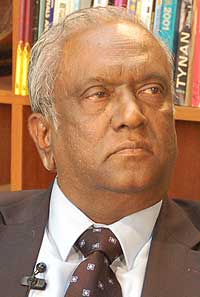
Ramon Navaratnam, president, Transparency International (TI) Malaysia
I'm quite positive about the two Bills. TI is heartened by the promise made by the Abdullah to deliver the JAC and MCAC.
 It is a pity the government has not tabled a Bill on the Independent Police Complaints and Misconduct Commission, as it is inter-related (and necessary for effective functioning of the government).
TI feels the Bills are a major breakthrough for Malaysia. It remains to be seen how effectively they are implemented.
However, we hope the MCAC Bill will be revised at the parliamentary committee stage to (improve the provisions and) plug loopholes.
- We welcome the new five committees in MCAC (but) hope that those appointed to these will be people of high integrity. There is no point if the people appointed do not command respect; it would be like having a ‘first-rate car but a third-rate driver’.
- The special committee on corruption must be chaired by an opposition member of Parliament so that it will not be a mere rubber-stamp on findings.
- We are alarmed by the harsh penalties for lodging a false report. We are worried that it could be used against complainants who may merely be whistleblowers. The jail sentence and maximum RM100,000 fine may deter people from lodging reports.
- We also feel that the MCAC’s findings should be tabled and debated in Parliament, unlike the annual Suhakam report.
K Shan, campaigner, Amnesty International Malaysia (AIM)
There was a public outcry over the absence of independence of the judiciary and ineffectiveness of the Anti-Corruption Agency (ACA), prompting calls for reform by people who have lost confidence in the two systems.
 However, AIM is of the view that the two Bills fail to meet public expectations. The new bodies should be credible, independent and able to function effectively.
It is clear that these characteristics are lacking in the Bills, given that the executive has overriding control both agencies.
Under the concept of separation of powers, the judiciary must be independent of the executive. However, we see that the PM has the power to revoke any appointment.
In terms of the JAC Bill, we note that the government has rejected the recommendations of the Bar Council for independent judicial appointments.
We are also worried about the lack of transparency in the appointment of Sessions Court judges and magistrates, who are currently selected by the attorney-general's (AG) chambers.
In terms of the MCAC Bill, the AG will continue to hold the power to prosecute, so the commission will not be an independent body.
Overall, therefore, the two Bills have failed to restore public confidence.
Syed Ahmad Idid Syed Abdullah, former High Court judge
I am delighted that Pak Lah was able to table the Bills well within 2008. Many who have managed to read the JAC Bill say that it is weak. I suppose Pak Lah must have met opposition (from his cabinet and party) and so decided to lower the passing mark. It is, however, a start.
 Judges must know that their decisions affect people [...] and must be able to make sound decisions based on the facts and principles.
What should we look for in any judge? (I have previously) suggested that before any judge is appointed, the selectors must take into account:
- Physical make-up, such as listening ability and good health;
- Attainments including active participation in games, sports, etc;
- General intelligence, which is crucial;
- Special aptitude, such as a judicious, diligent, well-read person;
- Interest in and love of the law and justice;
- Disposition in terms of self-reliance and independence in decision making; and
- Circumstances including family background.
Probity, ethics and fairness in the person's lifestyle are the controlling factors. If we take in corrupt persons as judges, then there can never be justice.
I sincerely hope the commission will perform as it must and then we can get a new set of judges. Maybe that can get Malaysia a fresh start to a full squeaky-clean judiciary in the next generation. It is a good beginning and 2009 should be a year for ‘justice in the making’.
Dr Koh Tsu Koon, Gerakan president
The choice of suitably qualified and well respected persons with impeccable integrity to be members of JAC and in the five scrutinising bodies on the MACC will be crucial for the successful implementation of these two major reforms.
 This is because the human factor is the deciding factor.
Although not completely independent and definitely not perfect, the to-be-established JAC is an improvement over the present system where the sole prerogative lies with the Prime Minister on recommendation solely from the CJ (chief justice).
In the new system, although the prime minister still has the final say, there will now be greater consultation and more comprehensive consideration through the JAC in the appointment of judges. So, it is a major step in the right direction.
JAC may not have quorum to pick top judges
Meanwhile, Bernama reported newly-retired chief justice Abdul Hamid Mohamad raising a technical issue involving the membership of JAC.
JAC is to comprise nine members including five senior judges, four of whom are the most senior in the judiciary.
According to the Bill, the nine members are the chief justice (CJ) as the chairman, Appeals Court president, Chief Judge of Malaya, Chief Judge of Sabah and Sarawak, a Federal Court judge and four eminent persons appointed by the prime minister.
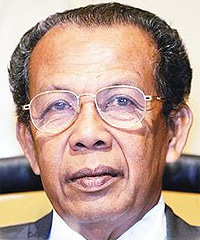 "In making the choice for Appeals Court president, the Chief Judge of Malaya, Chief Judge of Sabah and Sarawak and the Federal Court judge, who are members of the JAC, have a stake in the matter. This means they will have to abstain from participating in the proceedings," Abdul Hamid was quoted as saying.
"And as the Bill states that a minimum quorum of seven members must be met in making these appointments, it might be very difficult to meet this requirement.
"It becomes more complicated when it comes to appointing the CJ. The Appeals Court president, Chief Judge of Malaya and Chief Judge of Sabah and Sarawak have a stake in the matter and as such, they will have to abstain in the selection process.
"Again the minimum seven persons quorum requirement cannot be met."


Report this comment
Are you sure you want to delete this comment?
This action cannot be undone.