




'Muda lupa' syndrome in the longhouses
The results of the just-concluded Sarawak election in the rural constituencies were shocking to the opposition.
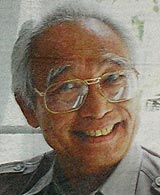
The results from Bukit Begunan where former PBDS strongman Daniel Tajem is contesting on an opposition ticket could be a good illustration to the role of longhouse politics in swinging votes in favour of the BN.
The results of the just-concluded Sarawak election in the rural constituencies were shocking to the opposition.
The results from Bukit Begunan where former PBDS strongman Daniel Tajem is contesting on an opposition ticket could be a good illustration to the role of longhouse politics in swinging votes in favour of the BN.
When the results from Bukit Begunan and 28 other Dayak-majority constituencies started to filter into Tajem's operations room at Bayai, Sri Aman on the night of May 20, he and his campaign managers were totally speechless.
Early in the day, there were optimism and an air of confidence in his camp after 11 days of hard campaigns cris-crossing the countryside. The other candidates of the Malaysian Dayak Congress/Sarawak National Party also shared Tajem's confidence.
 MDC candidates, who donned the Snap symbol expected to win 10 seats - Bukit Begunan, Engkilili, Batang Ai, Pelagus, Tamin, Marudi, Batu Danau, Ba'Kelalan, Opar and Kemena.
But when the results started trickling in by 7pm, Tajem and his aides were shocked and could not believe what they heard from the counting centres in Sri Aman and throughout the state. There was complete silence, although there were hundred of supporters present.
By 9pm, almost all the results were known. Except for Dr Johnichal Rayong, who won the Engkilili seat and the only MDC flag bearer, all the MDC/SNAP candidates became casualties of the 'brutal' tactics of BN.
Reasons for defeat
What were the reasons for the defeat of the Dayak opposition candidates? Did the rural voters really reject them?
A few reasons were given, but the main factor was the massive vote-buying and infusion of funds into the BN campaigns. The opposition had expected this and had in fact told the voters to receive the money, but vote for the opposition candidates. After all, the money belong to the people, they argued.
However, the Dayak 'mudah lupa' (easily forget) what they were told the taking away of NCR land and converting it into state land, the injustices inflicted against the community in various other ways.
But they cannot be blamed, as they are simple minded, lack exposure to 'real' news in the media and can easily be exploited by unscrupulous people. What they used to hear is only government news. When they are confronted with threats and intimidation from the tuai rumah (longhouse headmen) and other government agents, they become frightened. Even the more well-to-do Dayaks are no better, as the election results bear testimony to this 'muda lupa' syndrome.
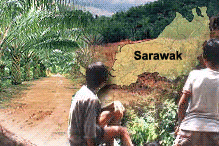
In the elections, the BN devised an entirely different campaign strategy, which caught the opposition with their pants down. Previously, money was passed directly to the voters on the eve of polling. This time the distribution was done through their tuai rumah .
Three days before polling, all headmen were summoned for a meeting, where they were coached to say something to their own people. And on their return to the longhouses, they were given money to be shared with longhouse followers.
 The
tuai rumah
then called for a meeting of the longhouse folks and ordered them to vote for the BN candidates. Anyone who failed to follow his order would be expelled from the longhouse and would not be given any share of the bounty or any project that the government had promised them.
The
tuai rumah
then called for a meeting of the longhouse folks and ordered them to vote for the BN candidates. Anyone who failed to follow his order would be expelled from the longhouse and would not be given any share of the bounty or any project that the government had promised them.
The tuai rumah had to ensure that his people vote for the BN candidate, otherwise the BN candidate would report him to the district officer, Resident or the state secretary. Otherwise, he may lose his monthly allowance of RM450 and the three-month arrears announced by Rural and Regional Development Minister Abdul Aziz Shamsuddin on the eve of polling. Some RM5.7 million have been set aside for this purpose.
Extensive vote-buying
In Tajem's constituency, for instance, he was defeated by a man, Mong Dagang, whom he picked to replace him in the 1996 state election and practically lost in all the longhouses in the five polling districts. Before the money came, many longhouse chiefs and their followers had pledged their support to Tajem who had represented them in six previous elections. Many of these voters are his own relatives. After the money was distributed, everything changed; longhouse headmen, their followers and even Tajem's own relatives voted against him.
Similar incidents of extensive vote buying were also reported in other Dayak constituencies. In Batang Ai, MDC pro tem president Nicholas Bawin was also a victim of such BN tactics. Bawin was earlier reported to be far ahead of his opponent. But after the distribution of money, Bawin was losing his support.
 Bawin's next-door colleague, Dr Johnichal Rayong was slowly losing his grips on the Engkilili constituency had he not been 'saved by the bell'. On the eve of polling, most of the headmen and their followers had gathered at the Merindun Oil Palm Scheme to attend the funeral of an influential person in the area who passed away two days earlier. The absence of the
tuai rumah
in their respective longhouses deprived the 'unseen hands' from handing over the 'ang pow' to them and their followers. However, they were able to do so with other headmen in other polling districts. This explained Rayong's slim majority.
Bawin's next-door colleague, Dr Johnichal Rayong was slowly losing his grips on the Engkilili constituency had he not been 'saved by the bell'. On the eve of polling, most of the headmen and their followers had gathered at the Merindun Oil Palm Scheme to attend the funeral of an influential person in the area who passed away two days earlier. The absence of the
tuai rumah
in their respective longhouses deprived the 'unseen hands' from handing over the 'ang pow' to them and their followers. However, they were able to do so with other headmen in other polling districts. This explained Rayong's slim majority.
In other Dayak constituencies, the voters were allegedly paid RM60 each with a promise of another RM300 upon the victory of the candidates.
The government has effectively used the tuai rumah system as its weapon in the last election. The tuai rumah is not only the headman of the longhouse, he is also, in all intents and purposes, a civil servant receiving a wage from the government. If that is not enough, he is also a policeman who gives orders and disciplines his followers as well as acts as prosecutor and judge in village disputes.
Unless this system is abolished, future elections will be unfair to the opposition candidates in the rural areas. But the greatest fear is that the system will create a government full of corrupted people.
JOSEPH TAWIE, a former Press Liaison Officer with the Sarawak Police, has been following the recent electoral process in Sri Aman.


