




Global scrutiny of Penan blockades
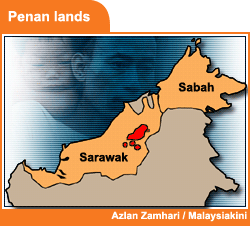
The Penan blockades against timber and plantation companies in the Tutoh-Apoh area of Sarawak remain standing and are drawing international concern.
The Penan have refused to remove the blockades unless the government respects their ancestral land rights. The blockades continue despite one-sided coverage by local newspapers and threats against the Penan by the police.
The Penan blockades against timber and plantation companies in the Tutoh-Apoh area of Sarawak remain standing and are drawing international concern.
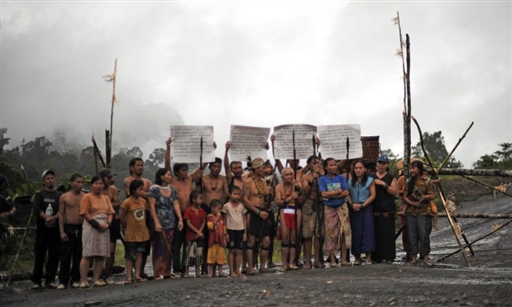 The Penan have refused to remove the blockades unless the government respects their ancestral land rights. The blockades continue despite one-sided coverage by local newspapers and threats against the Penan by the police.
According to Mark Bujang, executive director of Brimas, a NGO working for indigenous peoples’ rights, state assemblyperson Lihan Jok, Miri Resident Dr Ngenang Janggu and local police chief Jonathan Jalin, visited Long Bangan on Aug 29 to persuade the Penan to dismantle the blockade.
“The headman of Long Bangan, Tua Kampung Unga Paren, who is also the elected president of the Sarawak Penan Association, welcomed the government entourage and asked them to enter his house. Lihan and the others refused, preferring to talk outside,” Bujang explained, quoting local sources.
“Ngenang Janggu pleaded to Unga Paren to dismantle the blockade. He also repeated what Lihan said in Long Bedian, that the government is concerned about the welfare of the Penan. He said by putting up blockades, the Penan would only stop development from coming in, and they would also tarnish Sarawak's name.”
 According to Bujang, Ngenang promised that the government would look into Penan requests for assistance in providing building materials for their houses, in building schools and clinics and also in providing birth certificates and Mykad.
“However, regarding their main demand, recognition and respect of the Native Customary Rights (NCR) to land and also of their tana' penurip (forests for hunting and gathering), both Lihan and Ngenang said they would have to bring the matter up to the higher authorities,” Bujang said.
Bujang said Unga Paren thanked the resident, Lihan and Jalin for coming to visit him at his village. He also thanked the resident for expressing the government's concern that they would look into the Penan requests for housing materials, schools, clinics and identity documents. However, Unga Paren said that, if the Penan demand for recognition of NCR land rights is not met, than the Penan would not dismantle their blockades.
According to Bujang, Jalin then warned Unga Paren that the blockades are illegal and that he can be charged.
Unga Paren answered: "You have said that putting up blockades is illegal. You also said that I am wrong, not once, but thrice, this week. Now you have said it in front of my villagers, who act as my witnesses. So, what are you waiting for?"
He held out his arms for Jalin to handcuff, but the police officer only looked down to the ground and did not arrest him, according to witnesses. After that, the government entourage left.
‘We will lose everything’
According to a report on the Penan blockades against oil palm plantations in Britain’s Sunday Times , Lihan accused unidentified “outsiders” of fomenting trouble.
“I have spoken to the timber companies affected by the blockades. Their managements said they have always treated the Penan well,” Lihan was quoted as saying to a local newspaper.
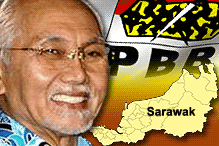 “Sarawak’s government, which has been ruled by the same grandee, Abdul Taib Mahmud, for 28 years, has presided over what environmental campaigners say is the systematic destruction of the rainforests,” the
Times
report went on.
“Sarawak’s government, which has been ruled by the same grandee, Abdul Taib Mahmud, for 28 years, has presided over what environmental campaigners say is the systematic destruction of the rainforests,” the
Times
report went on.
“Members of Taib’s family control or hold shares in several of the companies that have reaped generous rewards from licences, concessions or contracts issued by the state.”
Meanwhile, AFP journalists photographed at the Long Nen and Long Belok blockades last week were accused of being “foreign instigators” of the Penan.
Instead, the journalists wrote a measured and moving article on the desperation of the Penan, who are losing their land. They interviewed Sagong, a chief of a group of nomadic Penan, who number less than 1,000 of the total 12,000 Penan in Sarawak.
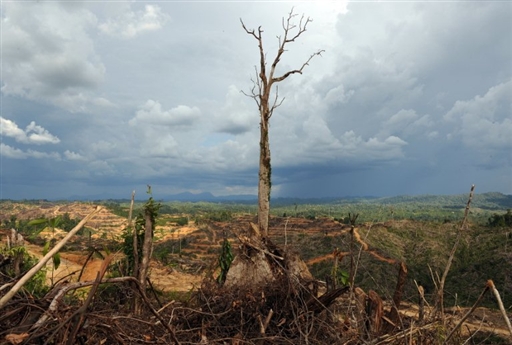 “The companies logged all the teak already, and now they are going to clear the land for oil palm plantations,” the report quoted the young chief as saying. He had brought 15 of his people to a blockade against the timber and plantation companies.
“If that happens, we lose everything, we cannot survive this. Yes, it is sad to leave this life of roaming. But what can we do? We have to strive for the best for ourselves. It is our fate to face this challenge. I came here to man the blockade and safeguard the land.”
At Long Nen, Bujang met with two members of the community who have erected the blockade - Matias Ngau and Jonika Ayat. According to Bujang, the Long Nen blockade is the largest in the area. Five other Penan villages are supporting Long Nen: Long Lilim, Long Kerangan, Long Lutin, Long Kevok and Ba' Marong.
Jonika told Bujang that three individuals from the plantation and timber companies had tried to intimidate her husband as well as Matias.
“They could be gangsters. They had been hanging around at the blockade site for the first three days of the blockade,” Bujang said, but they were no longer there when he arrived.
Previous blockades have been met with force by the police and the logging companies. Penan communities have alleged that deaths had ensued in the past, following the use of tear gas and violence.
The future remains uncertain for the peaceful Penan, but they appear determined to protect their land for future generations.
KERUAH USIT is a human rights activist - anak Sarawak, bangsa Malaysia . His 'The Antidote' column, which appears in Malaysiakini every Wednesday, is an attempt to allow the voices of marginalised people to be heard all over Malaysia.


Are you sure you want to delete this comment?
This action cannot be undone.