




'Mega-dams' may displace 600,000
The announcement on Jan 11 of an investment of US$11 billion (RM37 billion) by the State Grid Corporation of China (SGCC) in Sarawak's Corridor of Renewable Energy (Score) brought a welcome smile to the face of beleaguered Prime Minister Najib Razak.
The announcement on Jan 11 of an investment of US$11 billion (RM37 billion) by the State Grid Corporation of China (SGCC) in Sarawak's Corridor of Renewable Energy (Score) brought a welcome smile to the face of beleaguered Prime Minister Najib Razak.
However, the PM's brow may now be furrowed by adverse international press coverage. The deal has raised worrying questions regarding corruption and the displacement of thousands of native landowners, required for the construction of the 'mega-dams' that will deliver profits for the SGCC and its local partners.
The Financial Times of London quoted an estimate of 608,000 local people who will be "likely" to require relocation. The number of natives who will face eviction from their homes is still unclear, but the scale of uprooting and alienation of communities will undeniably be immense.
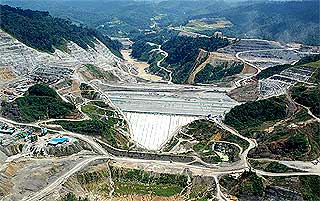 The fundamental issue, say critics of the 'mega-dams', is one of waste.
The state government argues it needs 12 new dams to provide electricity for Score projects such as the giant Salco aluminium smelter in Bintulu, a planned partnership between CMS and the multinational Rio Tinto Alcan.
Opponents of the dams point out that Sarawak already has a comfortable surplus of electricity. The 2,400 megawatt Bakun dam ( above ), begun over a decade ago, is scheduled to provide even more excess energy.
Furthermore, local people are incensed by the government's choice of an aluminium smelter industry, notorious for pollution and discharge of toxins into the environment.
Family ties and contracts
The waste of taxpayers' money, used in the construction of the 'mega-dams' and the relocation of affected communities, dominates debate.
The stench of allegations of corruption - of PKFZ dimensions - swirls around the new dams and related Score industries.
Transparency International has described the Bakun dam project as a "monument of corruption". The 12 proposed dams are also being condemned as further monumental "jobs for the boys".
 For example, the RM209 million contract for the power line connecting Bakun to the Salco smelter was awarded on Jan 13 to Naim Holdings by Sarawak Energy Berhad.
Sarawak Energy monopolises the local electricity grid. Its chief executive officer, until last month, was Abdul Aziz Husain, brother-in-law of Sarawak's durable Chief Minister Abdul Taib Mahmud ( left) .
The chairman of Sarawak Energy is Abdul Hamid Sepawi, Taib's cousin. Abdul Hamid is also chairman of Naim Holdings . No conflict of interest has been declared.
The beneficiaries of the Salco project are CMS, Naim, Sarawak Energy and their partners. In its 2008 report, CMS announced it was 29.3 percent owned by Abdul Taib's family, including his late wife and two sons.
Since 2005, CMS has been awarded RM1.3 billion worth of government projects , and Naim RM3.3 billion, according to Bloomberg News . CMS and Naim responded to Bloomberg by denying any improper influence by Abdul Taib over the contracts awarded.
Displaced people neglected
The beneficiaries of the contracts may have huge numbers dancing before their eyes, but thousands of impoverished farmers will see their homes vanish for each mega-dam.
The Bakun resettlement scheme has set a disturbing precedent. In 1998, 10,000 Kayan, Penan, Kenyah and other villagers were moved from their longhouses and settlements, mostly to Sungai Asap.
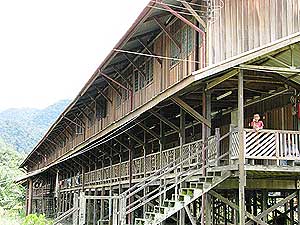 Gara Jalong is a Kenyah headman whose community, Long Geng, was forced off their land. The Bakun dam submerged the Long Geng longhouse, together with its history, and its intricate murals and carvings.
"We asked how much land would the government give us if we moved to the resettlement scheme? Initially, we asked for 10 acres. But the government did not agree to our request.
"When we all asked for seven acres...then, the government made a decision. They allocated only three acres of land for us. So...we also made the decision, of refusing to move into the resettlement scheme," Gara told his story with calm dignity.
Most of his fellow villagers refused resettlement at the Sungai Asap site, and moved upstream to carve out a new life in Long Lawen. Thanks to hard work, the Kenyah community at Long Lawen has thrived.
 In stark contrast, Lejau Ului, a Kenyah who moved to the Sungai Asap site recounted being assured: " 'Don't worry because of the three-acre land. If your land is already full, you can always ask for more later. The government will not forget all of you. The government will manage all your problems,' we were told. So, that's why we came.
"It's only when arrived here that we realised the problems. What the government said wasn't true. Suddenly the government's promises were not the same as before. They have already changed. That is because they made promise to us by word of mouth," Lejau said.
Lejau's family, and others who resettled at Sungai Asap, were promised a school, clinic, and modern amenities. A dozen years later, they are struggling with insufficient land, unemployment, and ramshackle facilities. They are mired in poverty.
According to the Sungai Asap villagers, the compensation promised them was not delivered in full, and what was paid out had already been exhausted.
Many cannot afford to pay their electricity and water bills, according to a Universiti Malaysia Sarawak (Unimas) Social Impact Assessment report made available to the Star .
A silver lining?
There may be a silver lining for natives threatened by the ‘mega-dams'. Two recent stunning landmark court victories by native landowners over the Sarawak authorities have thrown the government's land dealings into the limelight.
 The
court decisions
give hope to Malay and Dayak communities dispossessed by 'Big Business', in the shape of oil palm plantations, logging, or the new threat of joint SGCC-Sarawak Energy dams.
The
court decisions
give hope to Malay and Dayak communities dispossessed by 'Big Business', in the shape of oil palm plantations, logging, or the new threat of joint SGCC-Sarawak Energy dams.
In a lawsuit filed by Agi anak Bungkong and 15 longhouses against Ladang Sawit Bintulu Sdn Bhd, Tabung Haji and the Sarawak government, High Court Judge David Wong found on Jan 21 that the oil palm plantation had infringed the Iban communities' Native Customary Rights.
He awarded the disputed land to the longhouse folk.
On the same day, the High Court Judge also found for Mohamad Rambli Kawi, a Malay landowner who had sued the state government for wrongfully extinguishing his NCR claim over land, obtained under the Malay custom of 'serah'.
Malay and Iban plaintiffs were united in joy.
NCR hopes and fears
However, concern on the ground remains over the government's track record of failing to take heed of previous court rulings on NCR land.
The Sarawak government continues to insist that all native land is state land unless the Land and Survey Department has gazetted the land under NCR.
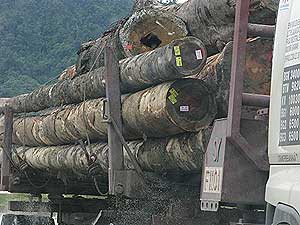 This leaves native landowners twisting in the wind, since the Land and Survey Department has gazetted less than 10 percent of all NCR land throughout Sarawak, since the formation of Malaysia! The department claims it lacks the resources to complete its task.
Resentment among rural Sarawakians has been simmering for years, because the administration's actions have ignored legal precedents such as Madeli and Rumah Nor Nyawai.
These seminal cases affirmed that NCR claims over land, established by traditional laws and practices, or 'adat', over many centuries, cannot be extinguished by administrative edict.
This dissatisfaction may be boiling over. NCR issues will count among the most important political issues in Sarawak and Sabah in the upcoming 13th General Election.
It appears likely that native Sarawakians will now be emboldened to launch more lawsuits against the government.
There may even be some anxiety among state ministers that the tide may turn against them in the court of public opinion - the upcoming elections.


Report this comment
Are you sure you want to delete this comment?
This action cannot be undone.