




Jomo: 30% bumi equity target unachievable
The 30 percent bumiputera equity ownership target under the 10th Malaysia Plan (10MP) is not achievable because there is no incentive for bumiputeras to hang on to their shares, said prominent economist Jomo KS.
The 30 percent bumiputera equity ownership target under the 10th Malaysia Plan (10MP) is not achievable because there is no incentive for bumiputeras to hang on to their shares, said prominent economist Jomo KS ( below ).
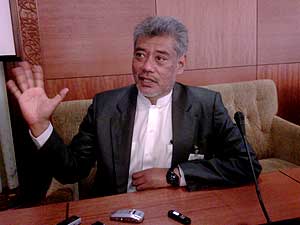 "You have a situation, where your measure of what it is to bring about Malay progress, is a measure which is bound to fail because of the policy," he said during a press conference at the Parliament lobby today after briefing Pakatan Rakyat MPs on the 10th Malaysia Plan.
Jomo fingered former prime minister Dr Mahathir Mohamad as the person responsible of starting the practice in which bumiputera shares were reserved for an elite few.
He argued that such practices had caused bumiputera equity to be stagnant at between 18 to 22 percent since the mid-1980s.
"If you look at the figures over time from 1970 onwards, from 2.4 in 1970, it went up to about 18 percent by the early 1980s and then it stayed between 18 to 22 percent for the next 30 years.
“Why did that happen? Because you took assets which was held on behalf of the bumiputera community and then gave it to a few people.
“So what did they do? Because they want to make money, so what they do is they sell it off. So the result is that it was no longer held by bumiputera," he explained.
He claimed that if the shares had been held by a government agency, then the target would have been achieved.
“Whereas if you had done that, all additional shares are put through PNB or some variation of PNB, I would say that the 30% target would have been achieved a long time ago,” he said.
Target for foreigners overlooked
Jomo pointed out that the government had overlooked the target for foreigners which had exceeded the 30 percent allocated for them.
“What is the proportion of shares held by foreigners now? About 40%. How come nobody gets excited about that? Malaysians are fighting among themselves and quite happy to get foreigners benefit from that. So what is going on?” he asked.
The former Universiti Malaya professor stressed that any policies from the government should benefit the whole society and not just part of it.
“Redistribution measures in the future should be needs-based and there should be greater emphasis on merit. These are the two proposals that are very important,” he said, adding that it seems like the Pakatan Rakyat is more in favour of this than the Barisan Nasional.
“I have met a few government ministers, I have not heard any of them support it, besides the prime minister himself.”
A country cannot go bankrupt
When asked his opinion if the country will really go bankrupt, he said that governments do not go bankrupt.
“It is misleading to talk about bankruptcy. Governments do not go bankrupt. The concept of bankruptcy is a concept that you can have for individuals or a corporate body.
“Governments by definition do not go bankrupt. So it is wrong to think in those terms,” he explained.
However, he pointed out that the government had been borrowing heavily for the last 13 years, since the 1997 crisis.
“Now what has happened, ever since 97, we have never been able to get the private investments going.
“And this is the reason why we are in trouble. So we have been keeping the economy going by the government spending. That is why we have such a huge deficit,” he added.


Are you sure you want to delete this comment?
This action cannot be undone.