




Satire is seditious? Foreign press groups shocked
International press freedom advocacy groups have expressed shock that cartoons and satire in Malaysia can lead its ‘perpetrators’ to being slapped with sedition or other criminal charges and prosecution.
International press freedom advocacy groups have expressed shock that cartoons and satire in Malaysia can lead its ‘perpetrators’ to being slapped with sedition or other criminal charges and prosecution.
The New York-based Committee to Protect Journalists (CPJ), citing the prosecution of blogger ‘Hassan Skodeng’ as well as the more recent police actions against cartoonist Zunar, noted that “sedition charges in Malaysia are often used to suppress press criticism.”
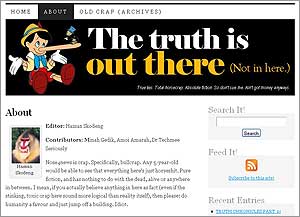 Hassan Skodeng, whose real name is Irwan Abdul Rahman, was charged after posting a blog piece poking fun at power firm Tenaga Nasional Bhd with acting with
“intent to hurt”
.
Hassan Skodeng, whose real name is Irwan Abdul Rahman, was charged after posting a blog piece poking fun at power firm Tenaga Nasional Bhd with acting with
“intent to hurt”
.
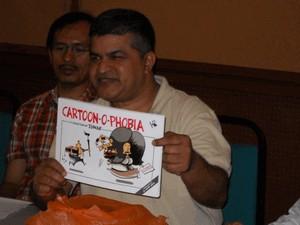
Condemning Zunar’s arrest during the weeked over his publication "Cartoon-o-phobia" and the seizure of his works, CPJ called on the Malaysian authorities to “stop harassing” the political cartoonist” and drop the sedition charge against him.
“The arrest of a cartoonist is inconsistent with Prime Minister Najib (Abdul Razak)’s vow on taking office that he would uphold, not suppress, press freedom,” said CPJ senior Southeast Asia representative Shawn W Crispin in a statement from Bangkok.
Crispin was referring to Najib’s call upon taking office in 2009 for the media not to be afraid of criticising the government and pointing out its shortcomings.
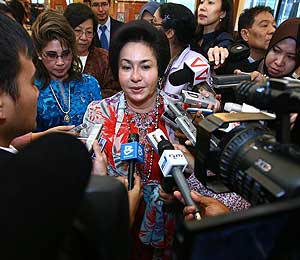 Zunar’s drawings often tackle sensitive issues, including the ongoing sodomy trial of Opposition leader Anwar Ibrahim and the perceived influence of Najib’s wife Rosmah Mansor (
right
) over his decisions.
Zunar’s drawings often tackle sensitive issues, including the ongoing sodomy trial of Opposition leader Anwar Ibrahim and the perceived influence of Najib’s wife Rosmah Mansor (
right
) over his decisions.
Home Minister Hishammuddin Hussein had said the arrest was related to cartoons that touched on the legal system and the ‘Allah’ issue .
Three of Zunar’s previous volumes of cartoons were banned by the home ministry in June under the Printing Presses and Publications Act.
In the Indian sub-continent, the Pakistan Press Foundation (PPF) also expressed concern over Zunar’s arrest and the seizure of his books.
 Its secretary-general Owais Aslam Ali called for the Malaysian government to release Zunar from all charges as well as to abolish the Sedition Act 1948 “and other outdated, draconian legislation that seek to control (freedom of) expression.”
“As long as these laws exist, they will continue to be open to abuse by the government of the day as a means to curtail legitimate criticism,” said Owais.
“Amid a climate of increased intolerance on the part of the authorities, it is highly likely that Zunar's latest book will be banned, too,” he added.
 The Paris-based Reporters Without Borders (RSF), meanwhile, also said it was “distrubed by the repressive nature of the sedition investigation” against Zunar and “firmly” condemned his arrest and the police’
search
for his books in
Malaysiakini
and its publishers and distributors.
The Paris-based Reporters Without Borders (RSF), meanwhile, also said it was “distrubed by the repressive nature of the sedition investigation” against Zunar and “firmly” condemned his arrest and the police’
search
for his books in
Malaysiakini
and its publishers and distributors.
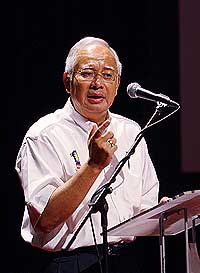
It also urge Prime Minister Najib Abdul Razak ( left ), the subject of some of his (Zunar) cartoons, to intervene to ensure that the police investigation into Zunar, this book and his publishing house is abandoned.
“It would be very alarming for media freedom in Malaysia if press cartoons were to be threatened in this manner,” said RSF’s Asia-Pacific desk chief Vincent Brossel.
“How can a book of cartoons be seditious?” he asked.
“Zunar’s cartoons may sometimes be very cutting in their portrayal of Malaysian political life, and especially the ruling party, but they cannot in any way be regarded as seditious.”
“It would be very alarming for media freedom in Malaysia if press cartoons were to be threatened in this manner,” Brossel added.


Are you sure you want to delete this comment?
This action cannot be undone.