




Nearly half of M'sians feel graft has worsened
Close to half of Malaysians surveyed in a global corruption study feel that corruption is on the rise in the country.
According to Transparency International's Global Corruption Barometer 2010, 46 percent of 1,000 people surveyed believe corruption has been higher this year than last year
Another 19 percent feel it has dropped, while 35 percent say that there has been no difference.
Close to half of Malaysians surveyed in a global corruption study feel that corruption is on the rise in the country.
According to Transparency International's Global Corruption Barometer 2010, 46 percent of 1,000 people surveyed believe corruption has been higher this year than last year.
Another 19 percent feel it has dropped, while 35 percent say that there has been no difference.
However, market research agency TNS Malaysia said in the face-to-face interviews conducted from June 28 to July 26 this year, only nine percent, or 90, admitted to have given bribes in the past 12 months.
The 90 said that they had bribed the police or people working in registration and permit processing, land, medical, utilities, state education or customs offices, and even the judiciary.
This puts Malaysia in the seventh spot among the 22 Asia Pacific countries surveyed, with South Korea leading the pack at only 2 percent of the people interviewed there admitting to having given bribes in the past one year.
Growing faith in government effort
Interestingly, 48 percent of the Malaysian respondents said they felt the government effort to combat corruption was effective, compared with 20 percent who felt that it was not and 32 percent who saw no difference.
This is a jump from last year, where a whopping 67 percent of Malaysians surveyed said that they did not think the government was effective in combating corruption.
 The 2010 figure also exceeds the national key performance indicator for corruption, whereby the government targeted that 37 percent of the people would feel that its efforts against graft were effective.
However, Transparency International Malaysia president Paul Low (right, in photo) said, the figure probably reflected only efforts against petty bribes.
"The perception that corruption is on the rise reflects the perception on 'grand corruption'. Fewer 'big fishes' are being prosecuted, and only the small guys are prosecuted.
"Also, procurement is not as open as it should be and we often hear of this or that project given to someone at three times higher than what it should cost," he said when unveiling the report to the Malaysian media this morning.
Low added that charging high profile politicians with graft must not be done as a political gimmick, for failing to get a conviction would reflect badly in the next survey.
Police most affected by corruption
Most Malaysians interviewed felt the police force is the most affected by corruption, followed by political parties and Parliament.
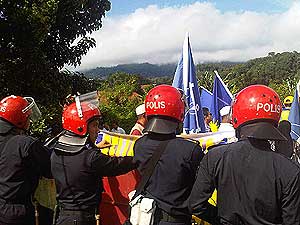 They scored 4.1, 4.0 and 3.4 respectively, on a scale of 1 to 5, with 5, being the most affected by corruption.
Next came the public and private sectors, both scoring 3.0, the same as the judiciary.
And NGOs are at 2.9, followed by the media at 2.7, the education sector 2.4, armed forces 2.3 and religious bodies were believed to be least affected at 2.4.
The score for the media improved remarkably compared with 2009, when the media was given a score of 3.7 out of 5.
Low said this could probably be due to the number of corruption cases in 2009, most remarkably the PKFZ scandal, which the media was perceived to have under-reported.
"The public could have felt that media did not report the way it should have been, or had shied away from reporting what should be known," he added.
In Asia Pacific, the media was ranked as the institution most trusted in fighting corruption, above governments and the judiciary, but the Malaysian figures are not available.
Worldwide, police were the institution found to be most affected by graft, with 29 percent of those having dealings with the force saying that they have paid bribes, either to avoid problems or cut red tape.
One in four have given bribes
Alarmingly, however, according to the survey conducted on 91,000 people in 86 countries, an average of one in every four persons worldwide has indulged in this social sin at least once in the year.
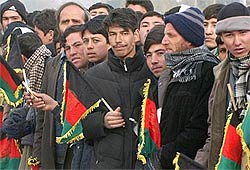 Countries with the highest number of reported bribe payments in that period -more than once in every two respondents- were Afghanistan, Cambodia, Cameroon, India, Iraq, Liberia, Nigeria, Palestine, Senegal, Sierra Leone and Uganda.
The Global Corruption Barometer is the largest cross-country survey, measuring both perception and experience of graft of the average citizen.
This is different to the Corruption Perception Index which polls members of the corporate sector and country experts, either locally or abroad.
It was released yesterday in conjunction with the United Nations International Anti-Corruption Day.
MACC pleased with graft survey results


Are you sure you want to delete this comment?
This action cannot be undone.