




'KL Chinatown acquisitions abuse of Land Code'
Petaling Jaya Utara MP Tony Pua today accused MY Rapid Transit (MRT) project owner Prasana Nasional Bhd of abusing the National Land Code 1960 in its attempt to acquire properties along Jalan Sultan.
Petaling Jaya Utara MP Tony Pua today accused MY Rapid Transit (MRT) project owner Prasana Nasional Bhd of abusing the National Land Code 1960 in its attempt to acquire properties along Jalan Sultan.
In a statement today, Pua said Prasana's excuse of being bound by the National Land Code 1960 was "outrageous" as the code had been amended to allow make way for underground development.
 According to the MP, the 1990 amendment, inserted as Part Five (A) (section 92A to 92G) under Clause 3 enables the "disposal of underground land, which can then either be alienated or leased or can be subject to the right of use".
In fact, Pua ( left ) said, when the amendments were debated in Parliament in 1989, then Deputy Land Development Minister Mohd Khalid Mohd Yunus said it was to enable "underground car parks, underground railways and underground pipes and other conduits."
"Clearly then, Prasarana is attempting to hijack the pieces of land, which affect the heritage shoplots in Kuala Lumpur's Chinatown, for the purpose of profit and not for the purpose of MRT construction works 100 feet underground.
"Such action for profit is clearly the use and abuse of the Land Acquisition Act 1960," Pua added.
Land can be given back to owners after tunnelling
Lawyer Derek Fernandez, who is an expert in town planning, agreed with Pua and said it was legally possible for the government to come to an agreement with the Jalan Sultan landowners to return the land after the tunnelling work was done.
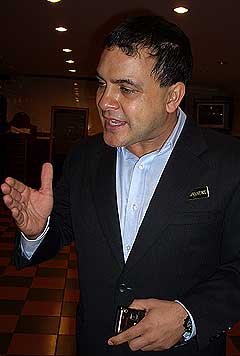 "The Land Code specifies that the right to land includes anything above and below the land, but it is legally doable for the government to come to an agreement to allow the owners back after the tunnelling work is done," Fernandez (
right
) said.
"The Land Code specifies that the right to land includes anything above and below the land, but it is legally doable for the government to come to an agreement to allow the owners back after the tunnelling work is done," Fernandez (
right
) said.
He said the intent of the work was to provide public amenities and not to "enrich the concessionaires through the development of the space on top of the land".
Prasarana's justification that this would help offset the cost of the MRT was also indefensible, Fernandez added, as the government should pay for this through tax revenue.
"You cannot burden the landowners. The fact is that the government has been collecting money throughout the years, and the public should not be taken to task if this is not enough.
"Asking the landowner to vacate the land is like asking them to build their own public transport," Fernandez said when contacted.
Prasarana won't budge
At a town hall meeting last week, Prasarana said the landowners could not keep their land as the National Land Code required that land above any underground work must be acquired.
Prasarana also said tunnelling work for its multi-billion ringgit mass rapid transit project would be unsafe for the buildings and that it later hoped to develop a shopping mall on the then vacant land.
This would follow the Hong Kong model, where land acquisition and development were used to offset the cost of building its MRT.
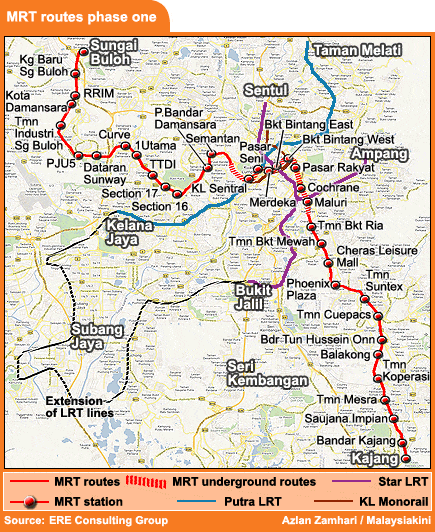
While the final figure is yet to be announced, experts estimate the Kuala Lumpur MRT project to cost at least RM30 billion.
A total of 22 shoplots on Jalan Sultan will be affected, with the hearing for compensation payments to the landowners now under way.


Are you sure you want to delete this comment?
This action cannot be undone.