




'Rib wounds not caused by physical blows'
The fractured ribs sustained by taxi driver Baharuddin Ahmad, who died during last year’s Bersih 2.0 rally, was not caused by being punched or kicked, says the doctor who conducted the autopsy.
The fractured ribs sustained by taxi driver Baharuddin Ahmad, who died during last year’s Bersih 2.0 rally, was not caused by being punched or kicked, said the doctor who conducted the autopsy.
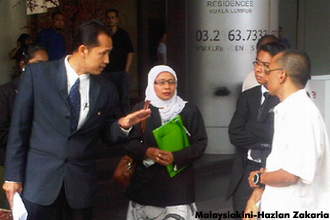 “The fractures were not from blunt trauma,” Kuala Lumpur Hospital forensic pathologist Dr Khairul Anuar Zainal told the inquest into Baharuddin’s death at the Kuala Lumpur Magistrate Court today.
He ruled out kicking or punching as the cause of the broken ribs because the pattern marks of the injury were not consistent with physical blows and there were no tissue damage or bleeding around the fractures.
“I conclude that those wounds must have been made after or during the process of dying,” Khairul told coroner Zulkpli.
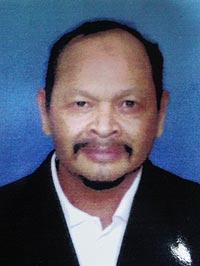 He added that if the injuries were sustained when Baharuddin (
left
) was alive, there would have been bleeding and tissue damage.
He added that if the injuries were sustained when Baharuddin (
left
) was alive, there would have been bleeding and tissue damage.
Instead, he believed that the location and pattern of the injury was consistent with cardiopulmonary resuscitation (CPR) related injuries.
Khairul also said that he had meticulously studied Baharuddin’s hands for defensive wounds, skull for fractured and elsewhere for signs of bruising or other indications of injury from trauma, but found none, hence concluding that the deceased was not involved in any altercation.
He added that examinations and lab tests also did not find any traces of CS (the chemical which is a major component of tear gas) on Baharuddin’s anatomy, especially the eyes where such exposure would have been evident.
Shown a CCTV footage of Baharuddin running into Avenue K where he was later found collapsed, Khairul said that the gait of the deceased running does not exhibit that of one who is enduring three broken ribs.
Indication of previous heart problems
The pathologist’s findings during the autopsy also painted a less than rosy picture of Baharuddin’s health.
He mentioned about scar tissue found on the deceased’s heart muscle, which indicated previous heart attacks.
 According to his findings, Baharuddin’s arteries were also found to be clogged by fat, exhibited calcium build-up and were inflamed from the effects of what seemed to be prolonged hypertension.
All those he said, pointed to the existence of heart related diseases or complications.
Khairul concluded that in his expert opinion, the deceased expired due to heart arrest; pointing out as further proof, the pulmonary edema or fluids which were found concentrated in the taxi driver’s lungs. They are symptoms of a problematic heart.
Meanwhile, the police have maintained their claim that Baharuddin was the victim of a heart attack, although family members and his fellow Bersih compatriots have other suspicions.
The deceased’s family is also adamant that Baharuddin was in the pinkest of health despite a history of hypertension, which they claim had subsided.
The inquest adjourned today after Khairul was questioned by the deputy public prosecutors assisting the coroner.
The inquiry will reconvene tomorrow with other medical experts and personnel involved to be called up.
However, Khairul who has another trial to testify at, will be recalled for him to be re-examined by the lawyers representing the deceased's family.


Are you sure you want to delete this comment?
This action cannot be undone.