




No more excuses not to sign anti-racism UN convention
The government has run out excuses not to sign the United Nations International Convention on the Elimination of All Forms of Racial Discrimination (ICERD), Bar Council president Lim Chee Wee said today.
The government has run out excuses not to sign the United Nations International Convention on the Elimination of All Forms of Racial Discrimination (ICERD), Bar Council president Lim Chee Wee said today.
The UN will review Malaysia's human rights record in October, and that is when the country will also have to explain why it has not signed some of the international conventions.
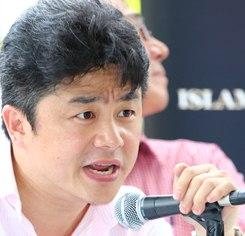 Lim told a forum on racism that during the last Universal Periodic Review (UPR) of the UN in 2009, Malaysia told the UN Human Rights Commission in writing that a cabinet committee has already agreed to sign the ICERD.
However, the Attorney-General's Chambers (AGC) was of the opinion that the local laws should be in line with the convention before Malaysia inked the ICERD, which is the opposite of what most other countries do, Lim said.
"That is also the reason why we have yet to sign up on the International Criminal Court agreement, notwithstanding that our minister in charge, Mohd Nazri Abdul Aziz, openly pledged to do so almost two years ago.
"So, this is the reason why this is happening. When the next round of the UPR takes place in Geneva in October this year, I wonder what more we will say to delay signing the ICERD," he said.
Lim was speaking at the 'Say No to Racism' forum held in Kuala Lumpur and explaining Malaysia's legal position on race relations issues.
Fears of selective persecution
The forum was jointly organised by NGOs Pusat Komas and the Islamic Renaissance Front in conjunction with the re-launch of a campaign to urge the government to ratify the ICERD.
Lim also said that the government had mooted of a ‘Racial Relations Act’ in September 2008, but then abruptly rescinded it about four months later.
The idea later resurfaced in December 2011, this time known as the ‘National Harmony Act’ that is meant to “combat racial extremism”. However, Lim believes the legislation would not see light of day anytime soon.
“Of course, the AGC is drafting it at the moment as we speak, but because of the impending general election, I can’t see the consultation process even starting now. I really can’t even see it starting shortly after the election.
“We probably are not even looking at the first sitting of the parliament after the general election, but probably the second one, so that is at the last quarter of this year.”
Lim added an anti-discrimination law would necessarily punish hate speech, but fears abuse and selective persecution similar to those seen under anti-hate speech provisions of the Sedition Act.
He said such laws should have an “objective test” as to whether a purported hate speech truly causes racial disharmony before a person can be convicted.
Ratify them without reservations
Meanwhile, another panelist Marina Mahathir said the government should lift existing reservations in the UN human rights conventions that it has ratified, in addition to ratifying ICERD without reservations.
“Human rights cannot be subdivided and isolated from one another. We must accept equality as a whole and not on just some issues, but not others.
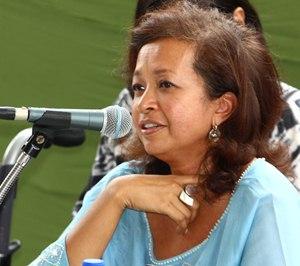 “As it is, our reservations on Convention on the Elimination of All Forms of Discrimination against Women (Cedaw) and the Convention on the Rights of the Child (CRC) are based on perceived conflict with the syariah law.
“These reservations has also been seen as a form of discrimination against a group of people based on their religion, race and sex. Thus for ICERD to have full meaning, it cannot be separated from those other conventions that we have yet to fully accept,” said Marina, who was speaking as a board member of Sisters in Islam.
She also lamented while many people complain of discrimination against themselves, they often target others with some form of discrimination as well, such as against women or against foreigners from poorer countries, like those from African nations as well as Indonesians.
"This makes as much sense as Holocaust victims supporting the violent oppression of Palestinians, for example,” she said.
Other speakers include Bersih co-chairperson Ambiga Sreenevasan, Oriental Hearts and Mind Study Institute executive director KJ John, Pusat Komas director Jerald Joseph, Ikram secretary-general Zaid Kamaruddin, and Suaram adviser Kua Kia Soong.


Report this comment
Are you sure you want to delete this comment?
This action cannot be undone.