




'But have medical services improved after hike?'
Medical fees in the private healthcare sector should not have been raised without first ensuring improved quality of services, the Federation of Malaysian Consumer Associations (Fomca) says.
Medical fees in the private healthcare sector should not have been raised without first ensuring improved quality of services, the Federation of Malaysian Consumer Associations (Fomca) says.
 Vice-president Ratna Devi Nadarajan
(left)
said Fomca had received 882 complaints against healthcare providers in 2011 and that the majority of these involved the private sector.
Vice-president Ratna Devi Nadarajan
(left)
said Fomca had received 882 complaints against healthcare providers in 2011 and that the majority of these involved the private sector.
"The notion is that private healthcare provides better services. But among the complaints were poor treatment by doctors, failure to disclose reasons for treatment, unnecessary tests to bill customers and wrong dosages (of medicines),” she said when contacted.
"So, with the increase in fees, they must justify how their services have improved.”
Among the improvements required to match the fee hike, Ratna said, should be proper redress for patients who complain about the quality of services.
"At the moment, if people are not happy with medical services, they can take it up with the Malaysian Medical Council.
"However, many people are not aware of the process and the panel is made up of all doctors - there is no one representing the other side.
"What should be introduced is a medical tribunal similar to the Tribunal for Consumer Claims under the Domestic Trade, Cooperatives and Consumerism Ministry.”
 Furthermore, Ratna said, there should be an accreditation system on the quality of private healthcare providers.
"The Malaysian Society for Quality in Health provides such accreditation, but it is not compulsory," she said.
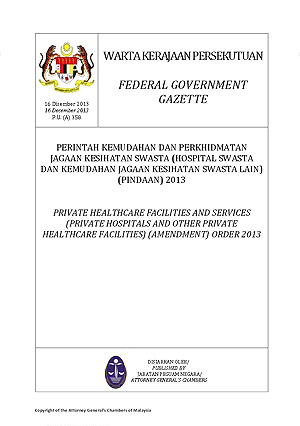
Ratna was commenting on the revision of the 13th Schedule of the Private Healthcare Facilities and Services Act 1998 which saw across-the-board fee hike for medical consultation and procedures.
Yesterday. Malaysiakini reported that the new fee schedule had been published in the federal gazette on Dec 16 last year, but has not been publicised by the government.
The revised schedule caps the consultation fee at RM125 for general practitioners and RM235 for specialist doctors, while the cost of medical procedures has gone up by between 14 and 18 percent.
‘What about other stakeholders?’
Ratna also criticised the government's lack of transparency.
Even though the Health Ministry had consulted the medical fraternity prior to the hike, she said, it should have also consulted other stakeholders as the decision would affect other sectors.
 "For example, employers may now need to consider increasing their employees’ insurance coverage as the existing coverage may no longer be sufficient," she said.
Section 106(2) of the Private Healthcare Facilities and Services Act empowers the health minister to amend fees in the 13th Schedule with order published in the federal gazette, without having to go through Parliament.
Ratna said the law should amended as one individual should not be provided with such vast powers.
"Whatever law that provides that kind of power to the minister should be revised. It should go through a deliberation process that is transparent," she said.
Related stories
MMA: Medical fees not raised for 12 years


Report this comment
Are you sure you want to delete this comment?
This action cannot be undone.