




No medicine price hike due to TPPA deal, says minister
The TransPacific Partnership Agreement (TPPA) would not affect the prices of medicines, said International Trade and Industry minister Mustapa Mohamed.
He said that Malaysia would maintain existing policies related to the sector which would be streamlined in accordance with the TPPA.
The TransPacific Partnership Agreement (TPPA) would not affect the prices of medicines, said International Trade and Industry minister Mustapa Mohamed.
He said that Malaysia would maintain existing policies related to the sector which would be streamlined in accordance with the TPPA.
 "Let me make it clear that the pharmaceutical sector involves patents for 20 years and it protects existing policies, while for non-chemical-based drugs, we have an exclusive five-year data protection," he said in the session to clarify the TPPA in Kelana Jaya today.
The medicine and drugs price hike has been the main worries of both proponents and opponents of the TPP discussion, which was agreed upon in Atlanta, US, two weeks ago.
Mustapa said that biological-based drugs would be placed under the conventional medicines policy so that it would not be covered under the TPPA implementation.
"The TPPA does not change the national policy that will make it difficult for generic drugs where it can be waived in the event of an emergency.
"And we had successfully negotiated the terms in accordance with the government policy to give 'protection' to medicines," he said.
Addressing dispute between corporations, gov't
Meanwhile Mustapa also said that the Investor-State Dispute Settlement (ISDS) mechanism in the TPPA that was leaked on WikiLeaks documents earlier this week were outdated.
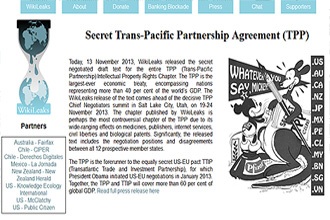 “The Wikileaks texts, I believe, were from 2013. It is now October of 2015. Many changes have taken place.
“Among the changes, we based them on learning from cases in Australia, Ecuador, and many more. We take into consideration weaknesses from existing ISDS practices,” he added
On Monday, a document on ISDS practices on TPPA showed the provisions on how corporations can bring governments to court for losses suffered as a result of a country’s legislation or legal decisions.
However, the latest WikiLeaks release on the TPP investment chapter, which covers the ISDS mechanism, was based on documents up to January 20, 2015.
The Malaysian Bar Council had previously expressed its concern over the lack of information on the TPP, especially on its ISDS provisions and how they would be implemented.
Mustapa also said today that there were added protocols that include the requirement for companies to first meet with the government it intends to take to court before taking legal action.
He further stressed that Malaysia was currently involved in eight Investment Guarantee Agreements (IGA) that already have provisions for ISDS mechanisms.
“Malaysia has been sued twice by foreign companies, and there have been two Malaysian companies that have sued foreign governments. So it is nothing new,” he said.


Are you sure you want to delete this comment?
This action cannot be undone.