


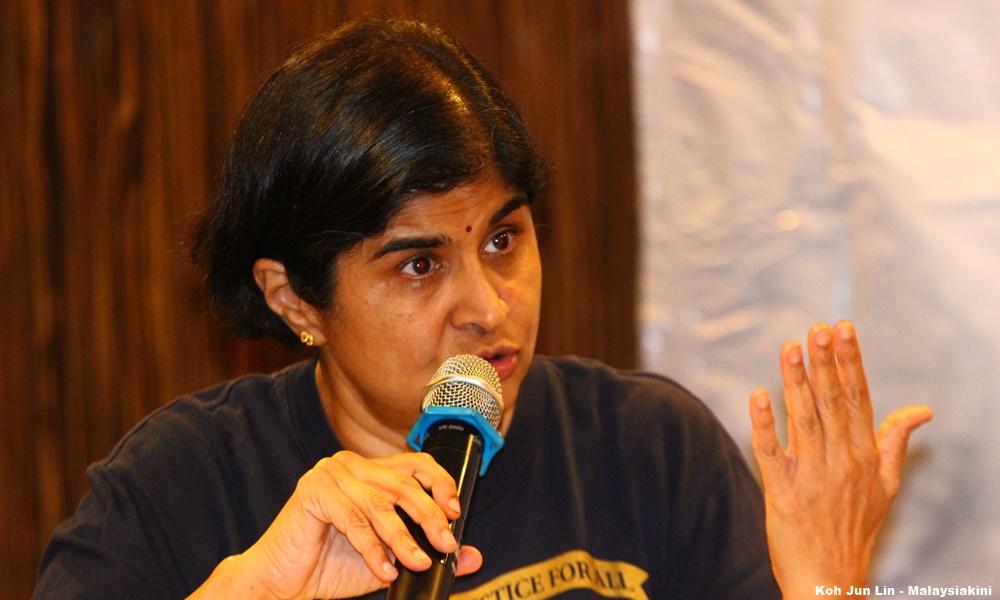

Ambiga: NSC Bill the worst piece of legislation I have seen
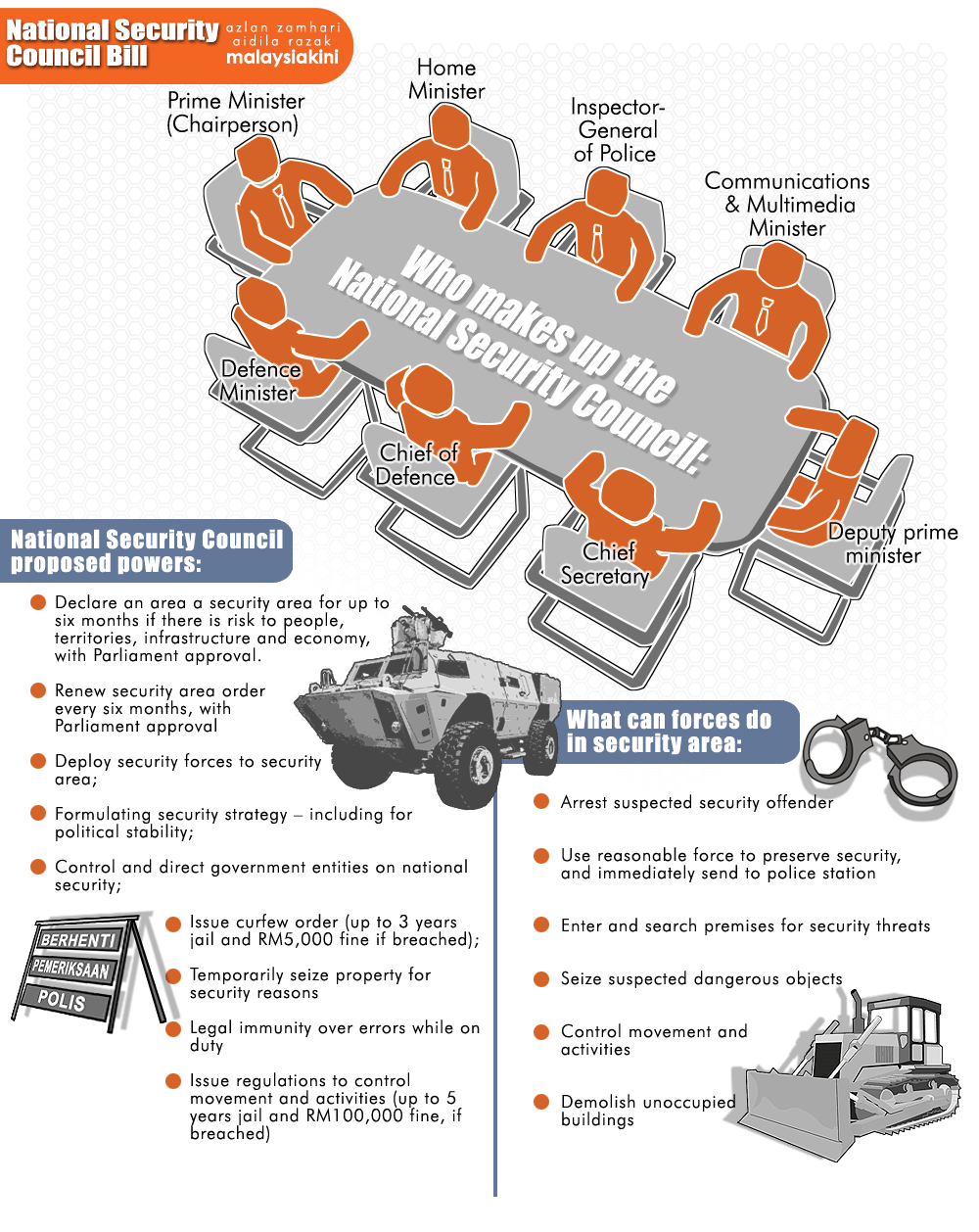
The National Security Council (NSC) Bill 2015 is a dangerous piece of legislation which allows a government crackdown even on ‘perceived’ and ‘possible’ threats.
Bulldozed through Parliament two weeks ago and up for debate in Senate next week, it allows security forces to use reasonable force against ‘perceived threat’, which senior lawyer Ambiga Sreenevasan said is “not acceptable”.
"This is really the worst piece of legislation I have seen. This is not about security; this is about insecurity and power...
The National Security Council (NSC) Bill 2015 is a dangerous piece of legislation which allows a government crackdown even on "perceived" and "possible" threats.
Bulldozed through Parliament two weeks ago and up for debate in the Senate next week, it allows security forces to use reasonable force against "perceived threat", which senior lawyer Ambiga Sreenevasan said is "not acceptable”.
"This is really the worst piece of legislation I have seen. This is not about security; this is about insecurity and power.
“The army deals with real threat, high levels of threat, a hostile act which is committed, or a hostile intent.
"The NSC Bill doesn't talk about real threat; it spoke about ‘perceived threat’ and ‘possible threat’," she said.
The former Bar Council president claimed that under the proposed act, the military can be mobilised even if a threat is economic in nature.
Ambiga, who is the president of the National Human Rights Society (Hakam), drew a distinction between the power and responsibility of both the police and the army, which would be roped in to ensure the security of an area.
"When you talk about internal threat, that is the domain of the police, while the external threat goes to (the domain of the) army. We need to keep the distinction very clear," said Ambiga at a forum on the NSC Bill last night, organised by the Bar Council Human Rights Committee.
If there is no war between nations, no armed conflict between combatants and no issues of entitlement to take prisoners of war, then the matters shall be strictly within the jurisdiction of the police or other enforcement agencies with similar jurisdiction, she said.
"The distinction is not here in the bill; everything is mixed up," she said.
"There is no check and balance in this legislation. Some may believe the prime minister was the chosen one by God. I wouldn't give the prime minister such power; you should give no one this (much) power,” said Ambiga.
Who’s in command of the armed forces?
The entire bill is illegal and completely unworkable, as it did not provide a chain of command that complies with the Federal Constitution and the Armed Forces Act, she said.
Article 42 of the Federal Constitution stipulates that the Agong should be the commander of the armed forces of the federation, while Section 21(1) of the NSC Bill said the director of operations appointed shall establish a “unified command” of the security forces in the declared security area.
The Armed Forces Act said the Armed Forces Council, with the approval of the Agong, may stipulate the person from the armed forces to command the military.
However, the NSC Bill grants the prime minister power to declare a security area, and thus bypassing the Armed Forces Council, said Ambiga.
It allows the prime minister and the chief of National Security Council to declare a security area, which effectively is the same power as the Emergency Act, she said.
"Command of the army, in this case (the NSC Bill), will be vested in the director of operations. In our view, this has violated Article 41 of the Federal Constitution, which spelled out the declaration of emergency issued by the king.
"Someone who shouldn't be issuing commands to the military will be doing so,” she said.
"I came to understand that the word 'command' is a very sensitive word for the military," said Ambiga, presenting her views which contained input from retired army personnel.
"Who holds the command is key for how the military functions […] The chain of command here (in the NSC Bill) is vague.”
Ambiga also pointed out the responsibility of the commander could not be established under the NSC Bill, as it does not observe the chain of command.
Meanwhile, PKR Batu parliamentarian Tian Chua said the police need to observe the Criminal Procedure Code (CPC) in their enforcement, while the army has immunity when they engage with external enemies.
"When you merge both together, you are as though giving the police the licence to shoot (without adhering to CPC) and authorise the military to arrest, search, and interrogate," said Tian, who attended the forum.
Other speakers were Bar Council president Steven Thiru, Research for Social Advancement (Refsa) senior fellow Lam Choong Wah, as well as Andrew Khoo, co-chairperson of the Bar Council Human Rights Committee.


Are you sure you want to delete this comment?
This action cannot be undone.