



Rehda: Developers' lending to homebuyers is for bridging loans
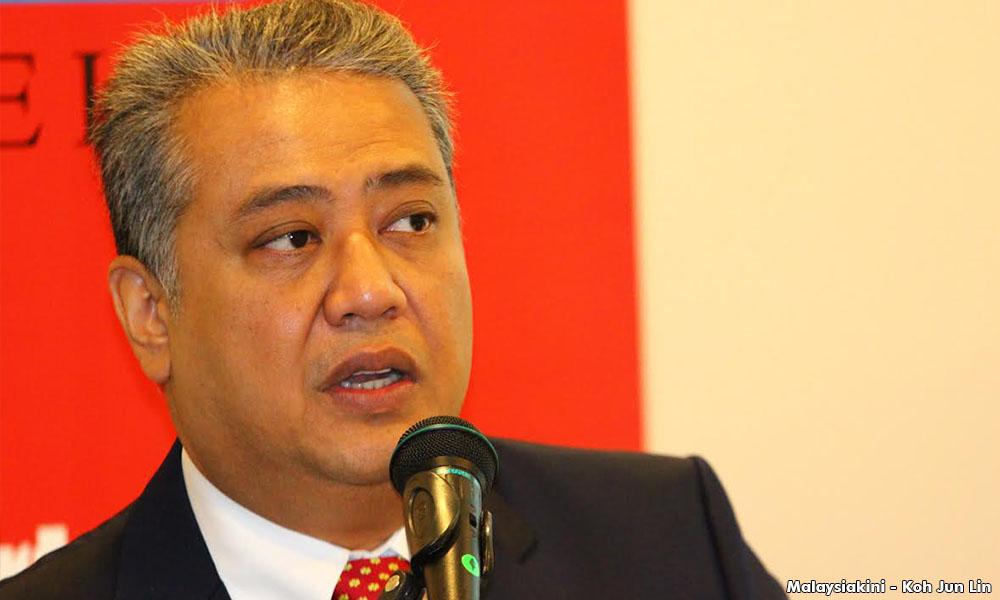
The proposal for developers to be given moneylending licences is not meant for them to offer housing loans, said the Real Estate and Housing Developers' Association (Rehda).
Its president Fateh Iskandar Mohamed Mansor said even the most deep-pocketed developers do not have the financial capacity to offer such loans to homebuyers.
The proposal for developers to be given moneylending licences is not meant for them to offer housing loans, said the Real Estate and Housing Developers' Association (Rehda).
Its president Fateh Iskandar Mohamed Mansor said even the most deep-pocketed developers do not have the financial capacity to offer such loans to house buyers.
Instead, the lending is meant to bridge a gap between the margin of financing that banks are prepared to offer, and the margin that house buyers are willing to pay.
“This moneylending thing is not new. It has been there for a long time and some developers already practise it, but again, it is a bridger, not a 100 percent (loan).
“The main issue that the purchasers face is when they get a margin of financing of 75 to 80 percent (from banks) - that’s the average; we’ve checked.
“So somebody has to come in to give you that 10 to 15 percent,” Fateh told reporters at a press conference in Rehda’s headquarters in Kelana Jaya today, where he announced the findings of the association’s Property Industry Survey for the first half of 2016.
The biannual survey was conducted from January to June 2016 and involved 157 respondents, who are all Rehda members across peninsular Malaysia.
In this survey and in the previous one, respondents cited end-financing issues and loan rejection as the top reason for their unsold units of property.
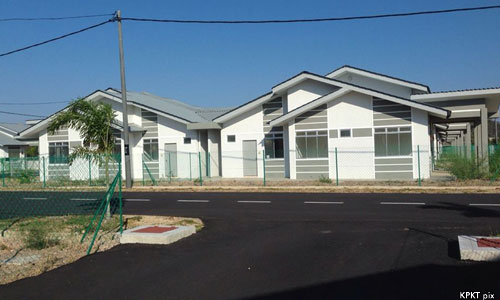 Fateh said demand for housing is still strong, as evidenced by the high turnout at new property launches. However, house buyers want a higher margin of financing than what banks are willing to offer.
Developers, on the other hand, would want some show of commitment from buyers, instead of 100 percent financing, so the margin of financing ought to be 90 percent.
Hence, discussions are underway to find ways to bridge the gap to assist first-time house buyers looking for properties below RM500,000.
“Let’s say if you were to buy a house for RM400,000 and if you were only to get an 80 percent loan, that means you have to come up with RM80,000, right? On top of that, you have to come up with your stamp duty, legal fees, blah, blah, blah… Another RM20,000.
“So, upon buying a RM400,000 house, you are slapped with a RM100,000 upfront cost. Let’s be reasonable. How many people can afford to buy a RM400,000 house?
“Not many people can, but can they afford to pay RM40,000 (if they obtain 90 percent financing? I think so,” Fateh said.
He also argued that second-time house buyers looking to upgrade from their existing property should be offered incentives as well, including the ‘bridger loan’.
As for the interest rate, Fateh explained that the 12 to 18 percent per annum rate cited in previous news reports are actually the maximum amount allowed under the Moneylenders Act 1951.
He said developers would have to charge some interest in order to cover the cost of their own borrowing and to offer the loan, but charging such high interest rates would only scare away potential buyers.
The exact interest rate to charge is still being discussed, he said.
 Previously, the Urban Wellbeing, Housing and Local Government Minister Noh Omar (photo) had came under fire after he said the ministry is mulling a proposal for the issue of money lending licences to housing developers.
This is so that the developers can offer loans to help house buyers not able to get bank loans and overcome downpayment issues, according to a Bernama report.
However, Finance Minister II Johari Abdul Ghani said this is not sustainable for the developers, and that developers themselves would have to borrow in order to offer the loan.
Redha’s Property Industry Survey showed the number of new property launches to have slumped from 9,607 residential and 331 commercial units in the second half of 2015, to 6,939 residential and 233 commercial units in the first half of 2016.
At the same time, the proportion of residential units costing below RM200,000 had grown from six percent to 14 percent, while the much sought after RM200,000 to RM500,000 units increased by only one percentage point to 36 percent.
For upscale residential properties, new properties ranging from RM500,001 to RM1 million also grew by one percentage point to 42 percent, while properties costing above RM1 million fell from 17 percent to a mere seven percent.
Altogether, affordable properties (those costing RM500,000 and below) grew to make up 51 percent of the new properties being built, compared with 42 percent in the previous half-year.
Developers cited high land prices as the top challenge (30 percent of respondents) to building affordable houses, as Redha has repeatedly asserted in the past.
This is followed by the cost of doing business, with 26 percent of respondents citing it as the top challenge to building affordable housing.
Fateh the said the cost of land and the cost of labour have remained high, while compliance costs, such as premiums, development chargers and infrastructure contribution funds have increased.
He said the compliance costs are same, whether for an upscale property or an affordable one, and he urged the government to reconsider this.


Are you sure you want to delete this comment?
This action cannot be undone.