




Bersih withdraws appeal against EC ruling to avoid precedent
Bersih chairperson Maria Chin Abdullah has withdrawn her appeal against the decision of the Kuala Lumpur High Court to refuse leave for her judicial review application to stop the Election Commission's (EC) proposed redelineation.
Bersih' steering committee, in a statement today, said they were not optimistic about success of the appeal, and were concerned the results could act as a precedent that would have adverse effect on other pending and future delineation law suits filed against the Election Commission (EC).
Bersih chairperson Maria Chin Abdullah has withdrawn her appeal against the decision of the Kuala Lumpur High Court to refuse leave for her judicial review application to stop the Election Commission's (EC) proposed redelineation.
Bersih' steering committee, in a statement today, said they were concerned the outcome of their appeal would not be favourable, and the results could act as a precedent that would have adverse effect on other pending and future delineation law suits filed against the EC.
In particular, Bersih noted the panel that was to hear their appeal is also assigned to Lembah Pantai MP Nurul Izzah Anwar’s review.
“On 23 January 2016, Maria’s lawyers were informed that a special panel of judges will be hearing the appeal at the Court of Appeal.
“Strangely enough, this same special panel was also assigned to sit on Nurul Izzah Anwar’s judicial review application against the EC.
“In those proceedings, the attorney-general is appealing against the High Court’s decision to grant leave to the judicial review application by Nurul Izzah Anwar and 10 voters.
“Their judicial review application is to quash the EC’s proposal to redraw the Lembah Pantai parliamentary seat.
“We consider it to be unusual to have such a special panel convened to hear these appeals, especially when it was not requested by any of the parties,” said Bersih.
'Land mass info crucial'
The EC's upcoming redelineation proposal has elicited widespread objections over alleged malapportionment, among other concerns.
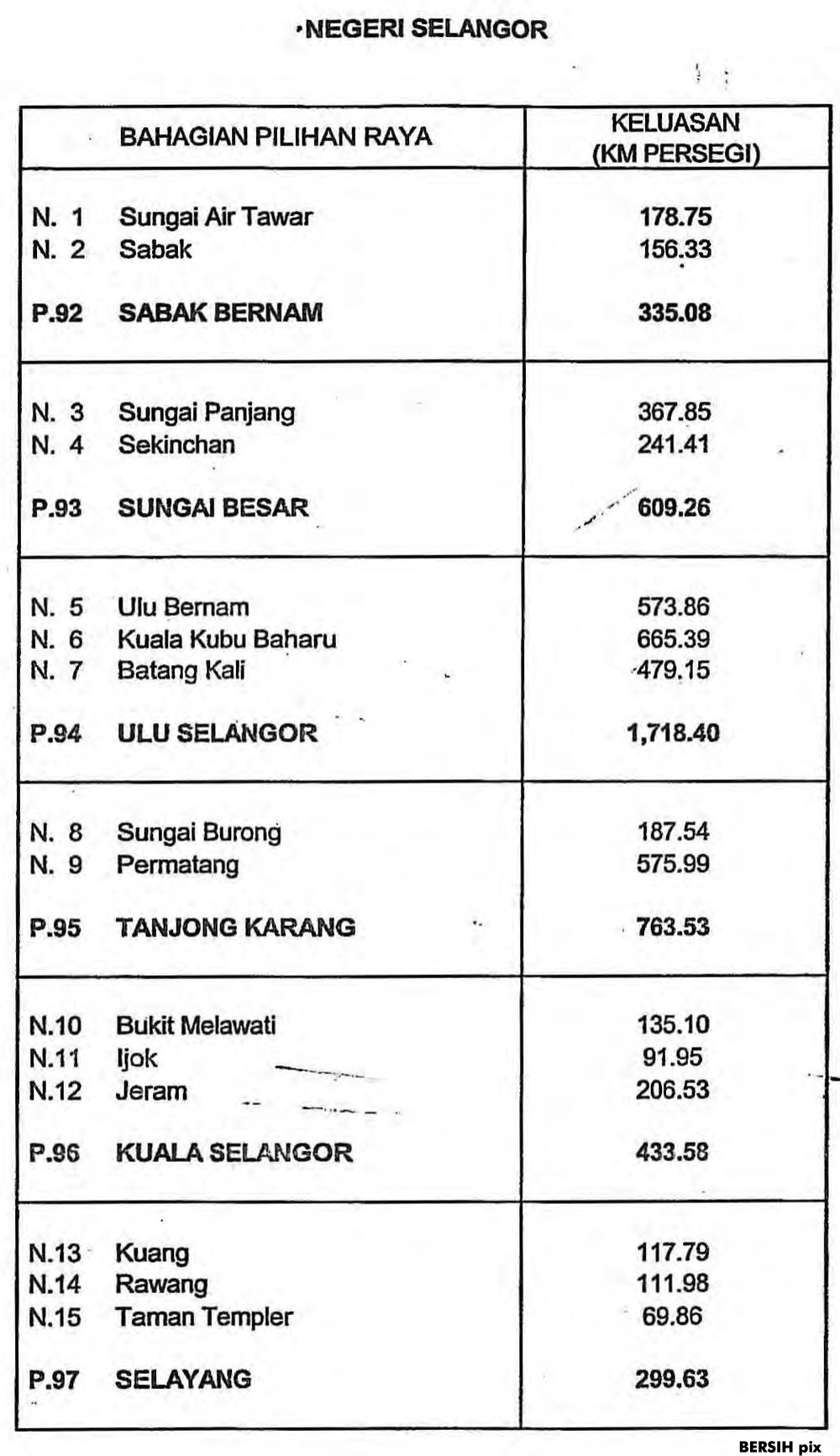
Bersih's legal argument was the EC's failure to provide information on land mass in their announcements, hampered attempts to study the existence and extent of such alleged distortions.
However the High Court last November, dismissed Bersih's application for leave, saying they did not have an "arguable case".
Bersih however, continues to maintain the importance of providing land mass information to voters.
"Maria’s suit and subsequent appeal against the High Court decision was to stop the EC's insidious act of deliberately denying state governments, local councils, and voters the land mass information, which effectively hampers the stakeholders' ability to raise effective objections to the redelineation exercise.
"We regret that our leave was not granted in the High Court and now circumstance has also led us to stop our pursuit in the Court of Appeal.
"Notwithstanding our withdrawal, we believe Maria’s legal challenge has helped to draw public attention to this important issue," said Bersih.
The lack of information provided by the EC is a “serious compromise” of the voters’ ability to scrutinise and challenge the EC's proposals effectively and competently, and as such gives the EC an unfair advantage in proposing any redelineation to constituencies they deem necessary.
“The lack of landmass information has impaired any objection by interested parties to challenge the EC on whether due weightage has been given in EC's proposal in accordance with the thirteenth schedule of the federal constitution,” said Bersih.
Explain disparities, EC told
Citing an example, Bersih said the information they seek is “necessary and crucial” to assess constitutionality of the vast disparity such as in proposed electorates of P092 Sabak Bernam (37,126), P094 Hulu Selangor (76,599), and P106 Damansara (150,439).
“The ratio of 4:1 between P106 Damansara and P1092 Sabak Bernam is clearly a grave deviation from the "approximately equal" apportionment (as stipulated by the constitution).
“But is the excessive over-representation of P092 Sabak Bernam (37,126) justified by its area or land mass (in squared kilometres)?
“If so, could the EC explain why P094 Hulu Selangor can have an electorate twice as large as that of P092 Sabak Bernam (76,599 voters) with a land mass that seems to be five times as large?” asked Bersih.
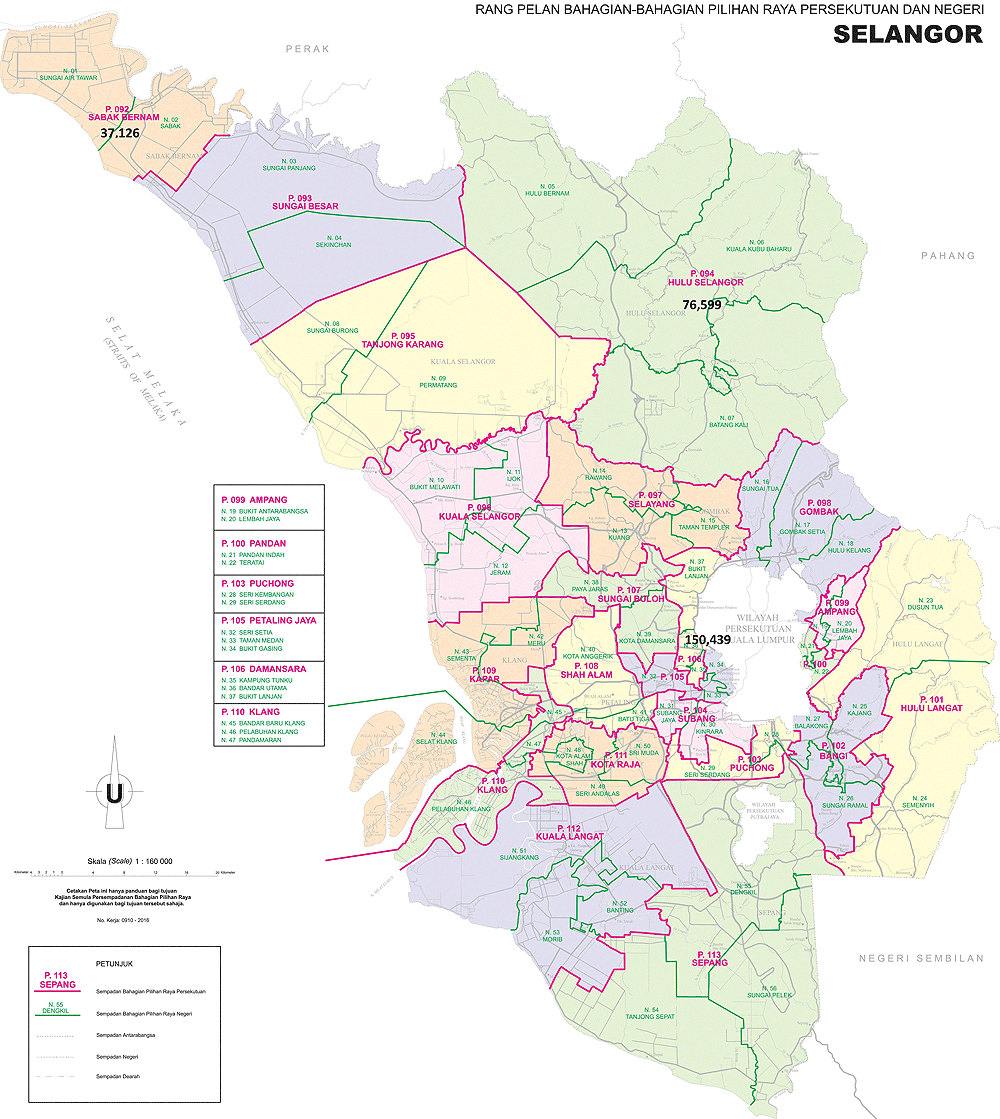
Bersih said land mass information was critical to objectors, and this information had previously been included in the EC's report to Parliament (see table below).
“If left unchecked and unchallenged, the EC would be allowed to decide on the kind of information that needs to be made available to the public, and that only the bare minimum of information regarding the proposed redelineation exercise would be disclosed.”


Are you sure you want to delete this comment?
This action cannot be undone.