




Death of Filipino child deportee hushed up
Contrary to assurances by the authorities, Filipino deportees are suffering under worse conditions in the current deportation exercise by the Malaysian government, with children receiving the brunt of the crackdown on undocumented migrants, says a report by migrants' advocacy groups.
Contrary to assurances by the authorities, Filipino deportees are suffering under worse conditions in the current deportation exercise by the Malaysian government, with children receiving the brunt of the crackdown on undocumented migrants, says a report by migrants' advocacy groups.
Despite this, neither the death of two-year-old Rene Nasir nor the alleged rape of an 11-year-old child deportee shortly after arriving in Zamboanga from Sandakan, Sabah, have been highlighted by the media or publicly acknowledged by the Malaysian and Philippine authorities.
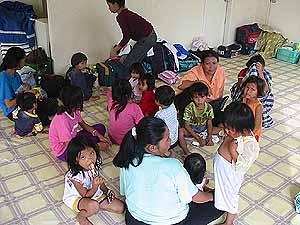 It had earlier been reported that
two-year-old Rene died
while 15 others were warded at the Zamboanga City Medical Center after suffering from severe dehydration. They had been vomiting after suffering from a severe bout of diarrhea when they were deported.
It had earlier been reported that
two-year-old Rene died
while 15 others were warded at the Zamboanga City Medical Center after suffering from severe dehydration. They had been vomiting after suffering from a severe bout of diarrhea when they were deported.
About 30 percent of the more than 1,200 deportees registered with the Zamboanga authorities by May were under the age of 17, most of whom were born in Sabah but were deported along with only one of their undocumented parents or none at all.
"This time, there are more children and infants who suffered the brutal arrest, detention and deportation procedures of the Malaysian government and the general neglect of the (Gloria) Macapagal-Arroyo administration," said the Manila-based Migrante International and the Asia-Pacific Mission for Migrants (APMM) in Hong Kong in their report.
One of the children, an 11-year-old girl who was deported along with her parents and brother by the Malaysian authorities, was allegedly raped by her parents' Filipino employers shortly after arriving in Bongao, Mindanao in late May.
The report also criticised Malaysian immigration authorities, police officers, and civilian volunteer corp Rela for various abuses committed during crackdown operations against undocumented Filipino migrants as well as their children.
"While the Malaysian government benefits economically from the fruits of the undocumented migrant workers' labour, it continues to violate the human rights of undocumented migrant workers and their families."
Playing down the case
The report highlighted, in particular, conditions at the detention centres in Sabah and detailed the "inhumane, cruel, and degrading treatment, malicious mischief and sexual harassment while in prison".
Among them:
- Women detainees recounted that they were slapped, verbally abused and ' nginudngod sa rehas ' (heads banged against each other) when late in reporting to the jail guard, noisy or even with no apparent reason;
The report added that the authorities were also culpable for keeping mum on the cases of 21 women deportees who were identified as having been victims of sex-trafficking into Malaysia.
"The findings of this mission are painstakingly being withheld from the public by the current Manila adminstration," said the groups in a joint statement on the report after returning from their May 29 to June 6 fact-finding mission.
The report is the result of interviews by an eight-member team with 36 Filipino deportees, who were among the most recent batches sent by Malaysian immigration authorities as part of a three-month crackdown on undocumented migrants that began last March.
There are said to be 499,104 undocumented Filipino migrants in Malaysia, most of whom have either avoided arrest and remained in the country, or returned to their home provinces through 'unofficial' channels.
Repeat of tragedy
In a mass expulsion of about 10,000 Filipino illegal immigrants from Sabah in 2002, four children died from dehydration and other hardships, while there were also reports of sexual abuse.
Numerous groups have warned that the tragedy would repeat following Malaysia's crackdown on an estimated 1.2 million undocumented migrants beginning in March this year.
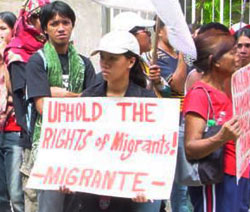 Unlike the 2002 deportation exercise, however, more children are said to have suffered as a result of the current deportation exercise, claims the report.
According to APMM chairperson Esther C Bangcawayan, both her organisation and Migrante would approach Philippine congress members to highlight the situation of the deportees, including the case of the 21 victims of sex-trafficking into Malaysia.
This was especially pertinent following efforts by officials in Zamboanga to apparently play down their case, said Bangcawayan when contacted.
When contacted, the deputy director of Sabah immigration refused to comment, saying that he did not know about the issues raised.


Are you sure you want to delete this comment?
This action cannot be undone.