




Inter-faith group kicks off signature campaign
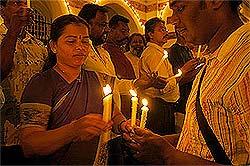
After holding a 20-day candlelight vigil, an inter-faith group will conduct a nationwide signature campaign to support the review of Article 121 (1A) of the Federal Constitution.
After holding a 20-day candlelight vigil, an inter-faith group will conduct a nationwide signature campaign to support the review of Article 121 (1A) of the Federal Constitution.
The campaign, organised by the Malaysian Consultative Council for Buddhism, Christianity, Hinduism and Sikhism (MCCBCHS), seeks one million endorsees by the end February.
 "The aim of the campaign is to allow the non-Muslim community to give support to the prime minister to undertake the necessary changes," said MCCBCHS deputy president Pardip Kumar.
Previously, Prime Minister Abdullah Ahmad Badawi have said that laws pertaining to religious conversions need to be clear, while his deputy have said that the Prime Minister's Department was already looking into the matter and will formulate a system to satisfy all parties involved.
"We are appreciative of the response and feedback from the prime minister and his cabinet," said Pardip at a press conference in Kuala Lumpur.
The sign-up sheets would be distributed to various religious leaders nationwide who would then conduct the campaign face to face and explaining the issues involved.
Different opinion
Asked to comment about the increasing number of Muslim groups that are voicing for status quo over Article 121 (1A), Pardip said that the MCCBCHS was unperturbed.
"They have a right to their opinion. We merely speak for the four major non-Muslim religion in the country," he said.
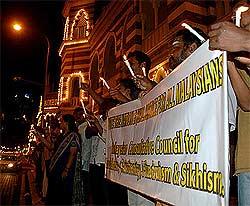 The MCCBCHS has been among the most fervent non-political campaigners for the review of Article 121 (1A).
They have sought the attention of lawmakers and even the prime minister, while holding daily candlelight vigil to create grassroots awareness.
The death of Everest climber M Moorthy, 36, opened the floodgates of issues surrounding religious conversions.
A legal tussle erupted between his widow and the Islamic religious authorities over his funeral rites, with the former claiming he was a practicing Hindu and the latter stating that he had become a Muslim.
Following this, the Syariah Court ruled that he was a Muslim and his widow's attempt to seek redress at the civil court was futile as the presiding judge ruled that the court had no jurisdiction over such matters.
The matter has generated widespread debate on the position of the judiciary and the federal constitution.


Are you sure you want to delete this comment?
This action cannot be undone.