




Waste-to-energy plant environmentally safe
A company planning to set up a waste-to-energy plant in Sungai Udang, Malacca, has assured environmental and social activists that its state-of-the-art 'plasma arc' technology is not just green and efficient, but gives back to the community more than it takes.
A company planning to set up a waste-to-energy plant in Sungai Udang, Malacca, has assured environmental and social activists that its state-of-the-art 'plasma arc' technology is not just green and efficient, but gives back to the community more than it takes.
Melaka Waste to Energy Sdn Bhd (MWtE) claimed that its waste treatment and conversion to energy technology is 100 percent environmentally safe, unlike conventional incinerator technology which can release toxic and carcinogenic secondary products such as furans and dioxins.
MWtE and Green Energy and Technology Sdn Bhd (GET) are jointly building the plant in Sungai Udang in the Melaka Tengah district at their own cost and financial risk, said MWtE managing director Siti Fatimah Mohd Shariff.
"If any of the technology fails, we have got more to lose than anyone else. We have taken every step to mitigate the risks," she said when contacted over the weekend.
MWtE and GET have been mandated by the Malacca government to build the RM612 million plant, purported to save the government RM51 million a year by supplying 35 megawatts to the energy grid.
Their detailed Environmental Assessment Impact (EIA) report was submitted to the Department of Environment for review and put up for exhibition two weeks ago in Malacca for public viewing.
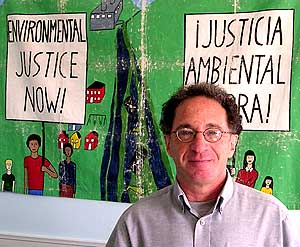 Fatimah was responding to concerns about plasma arc facilities raised by visiting environmental activist Bradley Angel - who heads the US-based Greenaction for Health and Environmental Justice (Greenaction) - during a recent working trip to Malaysia.
Angel ( photo ) said plasma arc technologies are nothing more than a newer and more sophisticated generation of incinerators, which cannot completely or safely destroy waste.
"Typical plasma arc facilities that heat the waste then burn the toxic gases, resulting in toxic emissions into the air," said Angel - who has 21 years of experience organising on the issue - when interviewed during his visit.
"Through our research we have also confirmed numerous operational problems at similar plasma arc facilities, including the Hawaii Medical Vitrification plasma arc facility and the now-closed Allied Technology Group facility in Richland, Washington.
"We hope the Malaysian people and government will fully scrutinise this project and reject it, and instead invest in safe, clean, green and renewable energy that will meet the area's energy needs while protecting public health," he added.
'Not applicable'
Fatimah, however, said Angel's citing of problematic plasma arc facilities such as in Hawaii and Washington did not apply to MWtE and GET's technology.
"Each (part of our) system has its own track record and is proven technology, such as that used in Utashinai in Japan. It has been running for a couple of years," she said.
Citing a concept paper by GET on the technology, Fatimah said the extremely high heat energy produced - between 8,000 and 12,500 degrees Celsius - from plasma gas (forms of which exist in lightning and fluorescent lighting, for example) is harnessed to break down municipal waste.
Organic materials are thereby turned into synthesis gas ('syngas') which when harnessed can drive steam turbines to generate electricity.
Inorganic materials are melted into molten 'slag' and can sold for brick-making, roadbeds, ceramic tiles or garden furniture.
Not only will the facility produce sufficient electrical energy for sale to local utilities companies or third-party users, the plant is also self-sufficient as it will run on its own generated energy, she said.
As the facility is a completely sealed system, the production of furans and dioxins are prevented, and does not produce toxic fumes or hazardous ashes like typical incinerators, she added.


Are you sure you want to delete this comment?
This action cannot be undone.