




Quick facts on bird flu
Avian flu may only affect birds for the time being but why should you care? The H5N1 virus can potentially spread to humans or mutate into a human strain, that's why.
Avian flu may only affect birds for the time being but why should you care? The H5N1 virus can potentially spread to humans or mutate into a human strain, that's why.
According to Unicef Malaysia, avian flu is what wild birds and poultry develop when they contract the avian influenza virus. The H5N1 strain that is causing concern now is deadly and can also spread to humans, although rarely.
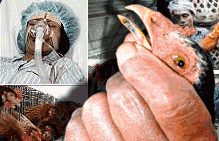 People who have been affected by the avian flu are those who have been in close contact with sick birds. The symptoms of bird flu in humans are similar to those of other types of flu - fever, sore throat, cough and possibly, conjunctivitis.
However, should the H5N1 strain mutate into a human strain, it could result in the possibility of person-to-person transmission and spark a human influenza pandemic.
Human influenza is a viral respiratory infection that affects the nose, throat and sometimes the lungs. Although human influenza pandemics are rare, they have happened before. Throughout history, they have occurred every 10-50 years quite consistently.
Such alarm may bring to memory the death of a three-year-old boy in Hong Kong in 1997 and the SARS outbreak in 2003. However, the H5N1 strain circulating now is different from earlier strains.
The current strain has undergone mutation several times with new and endemic strains being detected. It can infect more species of birds and even has also infected mammals that have eaten infected birds.
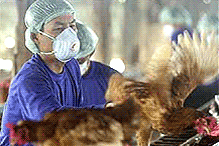 Malaysia is at risk because of its poultry trade. Children are most vulnerable in an outbreak. They account for about half of all reported human cases and a third of deaths of past avian flu outbreaks worldwide. A pandemic may indirectly affect the well-being of children through social and economic repercussions like the loss of parents and education.
By taking simple precautionary measures, the public can help prevent a pandemic. These measures include:
- Staying away from sick or dead birds
- Seeking treatment if you have fever after contact with sick birds
- Educating yourself about new virus developments
- Reporting sick or dead birds to the local authorities
- Keeping poultry away from children and living areas
- Washing hands often with soap and water
- Cleaning clothes, footwear, vehicles and cages with disinfectant
- Eating only fully-cooked poultry products
The health ministry constantly monitors influenza-like illnesses at selected clinics throughout the country. In the event of an outbreak, the public should follow instructions from the authorities, avoid crowded places and wear a mask when going out.


Are you sure you want to delete this comment?
This action cannot be undone.