




Sabah chases its tail in poverty eradication
The Sabah state government has set a target of zero hardcore poverty by next year, missing by more than a dozen years the ' Sabahru Ba' (New Sabah) promise made by the ruling BN in its 1994 election manifesto.
The Sabah state government has set a target of zero hardcore poverty by next year, missing by more than a dozen years the “ Sabah Baru ” (New Sabah) promise made by the ruling BN (Barisan Nasional) in its 1994 election manifesto.
However, fifteen years after the Umno-led BN (Barisan Nasional) coalition seized the reins of power from the PBS (Parti Bersatu Sabah) in a “bloodless coup” sparked off by crossovers of state assemblymen, the hardcore poor in the state remains at 16,043 people.
This figure, which includes disabled people and others in the advanced aged bracket, were gathered by the People’s Welfare Development Scheme Steering Committee (SPKR) and confirmed at its meeting yesterday for public release.
The hardcore poor (KIRMT) figures, according to the committee’s report, are down 5,000 from the figure two years ago when the hardcore poor last came under the public spotlight.
Hardcore poor families in Sabah, according to the federal government’s definition, are those with a monthly household income of RM540 in the rural areas and RM960 in the urban areas.
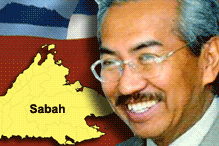 “This (16,043) is certainly a good improvement,” said Sabah chief minister Musa Aman after chairing the committee meeting.
Progress reports for earlier years, for comparative purposes, were not made available. Three censuses took place in 1995, 1997 and 2000, using different formats according to a state Rural Development Ministry official.
1,000 houses to be built
The census by the Sabah Federal Development Department in 1995 registered a total of 14,362 hardcore poor households. However, a further joint census by the department and state agencies in 1997 added to this figure by 5,998 households. The 2000 census registered 29,889 hardcore poor families in Sabah.
In the urban areas of Sabah alone, according to the 9th Malaysia Plan (2006-2010) figures, there are 6,700 hardcore poor households, mostly in Kudat, Tawau, Semporna, Ranau, Keningau and Kota Kinabalu.
UNDP (United Nations Development Programme) figures for 2004 put hardcore poverty in Sabah at 25.5 per cent, Sarawak at eight per cent and Peninsular Malaysia at 5.9 per cent.
Child poverty rates in Sabah were measured at 42 per cent with one-fifth of the population over six years never having attended school.
“The budget for eradication of hardcore poverty this year is RM23.2 million - RM156.8 million under the 9th Plan - from the Federal Rural and Regional Development Ministry,” said Musa Aman.
“In addition, RM40 million from the same ministry would be used for the construction of 1,000 houses at the water village of Kampung Mengkabong in Tuaran and other areas of poverty in the state. The houses would be similar to those constructed under the Hardcore Poor Housing Project.”
Separately, the federal government has pledged RM140 million for poverty eradication in Sabah during the 9th Malaysia Plan.
According to Musa, 15 Mesej (mini estate sejahtera) programmes were being implemented under the 9th Malaysia Plan by the Sabah Rubber Industry Board and the Sabah Land Development Authority.
Seven of these mini estates, involving 536 KIRMT, are in Kampung Sarap, Pangi, Penimbawan, Pulau Sakar, Nala, Look Butun and Pantau-Pantau. The 9th Plan has set a target of 30 Mesej programmes.
Take care of the environment
In the short term, the solution to poverty seems to be to cut down more trees and plant more oil palm and rubber.
“The logic (of replacing forests with oil palm) in the short term is impeccable but in the long term, it can be very destructive,” say environmentalists.
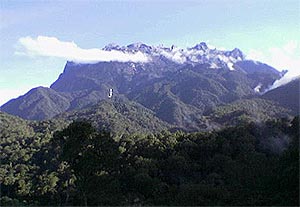 “The government has to put sustainability in its place. Sabah has one of the most unique biodiversity and eco-systems in the world that are not found elsewhere.
"If we don’t take care of the environment, everything will be gone in the next twenty years given the rapid developing technology,” they added.
Of the 16,403 hardcore poor, Musa disclosed, the SPKR programmes would target 12,580 who are productive while the non-productive including the disabled non-productive would be taken care of by the state and federal governments separately under programmes like the old folks assistance scheme (federal) and general assistance scheme (state).
Participants receive RM300 per month under the first scheme and between RM150 to RM300 per month under the latter scheme.
The SPKR scheme encompassed social development, income and the community’s standard of living. The committee monitors nine programmes viz housing assistance programmes, community development programme, taska (nursery) programme, minda insan development programme, training and education programme, income enhancement programme, additional balanced diet programme, ASB sejatera programme, and town community development programme.
The overall poverty problem in Sabah, according to the UNDP last year, is compounded by high inequality of incomes and high population growth as witnessed by the continuing influx of illegal immigrants.
This has seen the benefits of growth disproportionately distributed to the richer population while the high population growth has diluted the impact on the per capita income.
There are fears that Sabah will forever be chasing its tail in trying to alleviate poverty if in-flowing immigrants and high population growth rates are not contained and in the meantime, bio-diversity in the forests is being wiped out.


Are you sure you want to delete this comment?
This action cannot be undone.