




Asean Disruptive Leadership Summit 2018 (ADLS2018)
The ASEAN DISRUPTIVE LEADERSHIP SUMMIT 2018(ADLS2018) was held on 9th July 2018 at the Plenary Hall in KLCC. This summit was brought by Country Height Holdings Bhd, Y.Bhg Tan Sri Lee Kim Yew, chairman and founder of country heights. His motive for bringing about this summit was a noble one indeed, to simply urge Malaysians (especially the younger generations) to strive for betterment in all areas.
In his keynote address, the Chief Secretary of Malaysia Y.Bhg Tan Sri Dr. Hamsa stated “While disruption is something that is rather recent, Malaysia had already started it way back in 1981 when it introduced Malaysia Incorporated Policy. What this shows, is that disruption is not limited to private sectors. It really encompasses all and sundry”. He further emphasise that for the betterment of Malaysia, our very own government servants needs to change their mindset, to be disruptive, to break norms and be innovative to remain competitive on a global stage.
Big question. How? In this summit, five renowned individuals Marc Randolph, the founding CEO of NETFLIX, Sarah Robb O’Hagan former President of Gatorade, Jon Steinberg, former President of Buzzfeed, Ram Charan named by Fortune Magazine as the ‘Most influential Consultant Alive’, and not forgetting Scott Deming, the world-renowned customer service and emotional branding guru gave many valuable pointers to our young and old entrepreneurs during the course of this summit.
To be “Disruptive” is pretty much unheard of in our everyday language but essential when building a sustainable business. Have you ever wonder why some business model grows exponentially while some are facing law suits and perhaps, even going under liquidation. This is where the term “disrupt” comes into play, in simple terms, it means to come up with an innovative idea which no other business has done before.
The big question here is how? The former president of Buzzfeed said “I 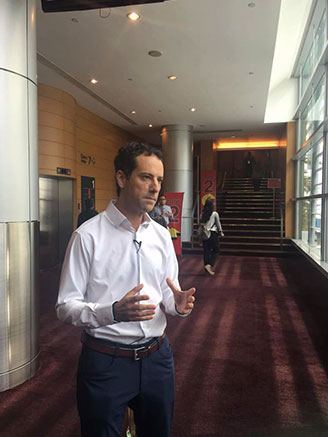 skate to where the puck is going to be, not where it has been” quoting from Wayne Gretsky. This would make great sense because if one where to simply glide to where the puck has been, by the time he arrives, the puck would be gone, the same goes for any business model. A good player would guess where the puck might go and skate to that specific spot before the puck arrives just like how a ‘disrupted’ entrepreneur would make guesses at how the direction of the market would move to.
Certainly, this involves a lot of risk taking, it requires one to move out of their comfort zone because “if you don’t disrupt yourself, someone’s going to disrupt it for you.” This makes getting yourself ahead of competition that much more important.
But taking risk does not mean to blindly diving into any pit hole that you come across. For example, in a setting where you come up with 100 ideas, logically you would have done some research on every ideas and eventually cross out the bad ones but there is no guarantee that any of those ideas would survive the elimination process in fact, there could be none at all. Marc Randolph, the co-founder of Netflix said the key to be disruptive is perhaps to be ‘overly optimistic’. Imagine a scenario where you could not hail a single cab, normally you would be complaining and fussing over it but what if you change your mind-set, what if instead of fussing you said “I bet, I could get a ride if I just paid any cars on the streets,” does that ring a bell? If you said UBER then you are right, this was how UBER was created, by just a simple change of mind-set. Perhaps next time when you encounter an irritating problem, try to think from another perspective, think optimistically. Who knows you might be the next Steve Jobs.
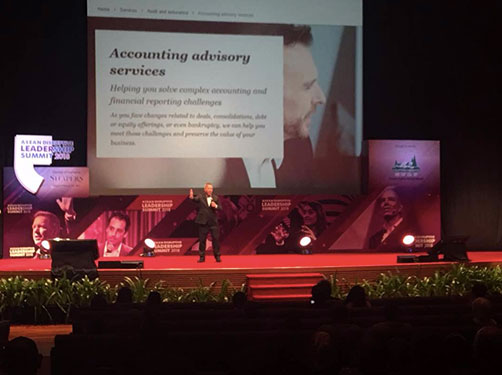
Speaking of Steve Jobs, ever wondered why some people are willing to line up hours and hours just to get the latest iPhone. Now think for a moment, Apple makes good phones but Samsung too makes good phones too. So why is there such a vast difference in customers’ loyalty. The answer to this is emotional branding. What Apple is selling is not just a commodity, they are selling a dream, a process and an experience. An example quoted by Scott Deming is possibly the best example of this emotional branding. Say for example if I were to say “Hey, how about buying a TV strap, it is made of the best material, the highest available technology …” would you buy it? The answer would probably be a no. But what if I phrased it in a different way, and if I told you to close your eyes and imagine a toddler giggling, rolling over and smiled at you and later told you that the child died because a TV toppled over him. Would you buy them? If yes, then emotional branding worked and it’s not surprising because all of us humans share one commonality which is ‘Empathy’. We feel for others and this emotional attachment is what turns a customer into a ‘loyal’ customer. After the funeral, the anguish fuelled me to set up a foundation to sell these TV straps so that none of these accidents would ever happen to your child.


