


/file/publisher-c1a3f893382d2b2f8a9aa22a654d9c97/2025/11/94c4feae30054ed5a9bf220d903bcbc1.png)

Bukit Tagar Enviro Park (BTEP) Combating Illegal Waste Dumping through Proper Solid & Scheduled Waste Management
Malaysia continues to face serious environmental challenges arising from the illegal dumping of Municipal Solid Waste (MSW), private domestic waste, and Scheduled Waste (SW). Despite continuous enforcement by the Department of Environment (DOE) and the Solid Waste Management and Public Cleansing Corporation (SWCorp) and Local Authorities, illegal dumping activities persist across several states, posing ongoing challenges to environmental protection and public well-being.
Waste treatment and disposal in Malaysia are governed by several key environmental legislations that safeguard public health and environmental quality. Among these are:
Solid Waste and Public Cleansing Management Act 2007 (Act 672) – Oversees the management of municipal and domestic solid waste, including the licensing of proper facilities.
Environmental Quality Act 1974 (Act 127) – Malaysia’s principal environmental law, regulating pollution control, waste management, and licensing for treatment and disposal facilities.
Environmental Quality (Scheduled Wastes) Regulations 2005 – Establishes detailed requirements for the storage, transportation, treatment, and disposal of hazardous and industrial wastes.
From previous news in 2025, enforcement operations intensified as authorities uncovered over 3,000 illegal dumpsites nationwide, leading to substantial fines, prosecutions, and the closure of several non-compliant facilities. During 2023–2024, DOE also targeted illegal e-waste imports and unlicensed recycling plants, seizing materials worth billions of ringgit and shutting down operators found in violation of environmental laws. A recent report by the Basel Action Network (BAN), also covered in a Malaysiakini article dated 24 Oct 2025, further highlighted the scale of the challenge, identifying Malaysia as the primary destination for discarded electronics — over 10,000 shipping containers of potential e-waste, were tracked between January 2023 and February 2025. Offenders of illegal Scheduled Waste activities were implicated under the Environmental Quality Act 1974 (Act 127) that carry significantly high penalties – ranging from RM 500,000 to RM 10 million, and imprisonment of up to five years.
Earlier, between 2020 and 2024, numerous cases of private domestic waste dumping were reported in Johor, Penang, and Selangor, where construction debris and garden waste were disposed of on vacant lands, disused mining sites, and even coastal waters. Offenders were prosecuted under Section 71(1) of the Solid Waste and Public Cleansing Management Act 2007 (Act 672), which prescribes penalties of up to RM100,000, five years’ imprisonment, or both.
Against this backdrop, the Bukit Tagar Enviro Park (BTEP), operating under the stringent supervision of Ministry of Housing and Local Government (KPKT) and DOE, stands as an outstanding facility of safe and environmentally friendly waste management in Malaysia with full compliances to the Local Authorities’ requirements.
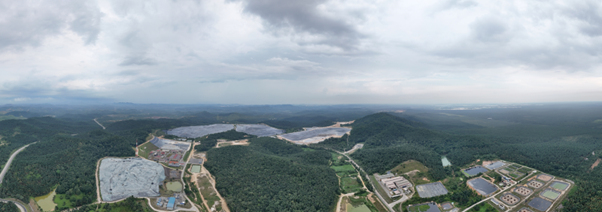
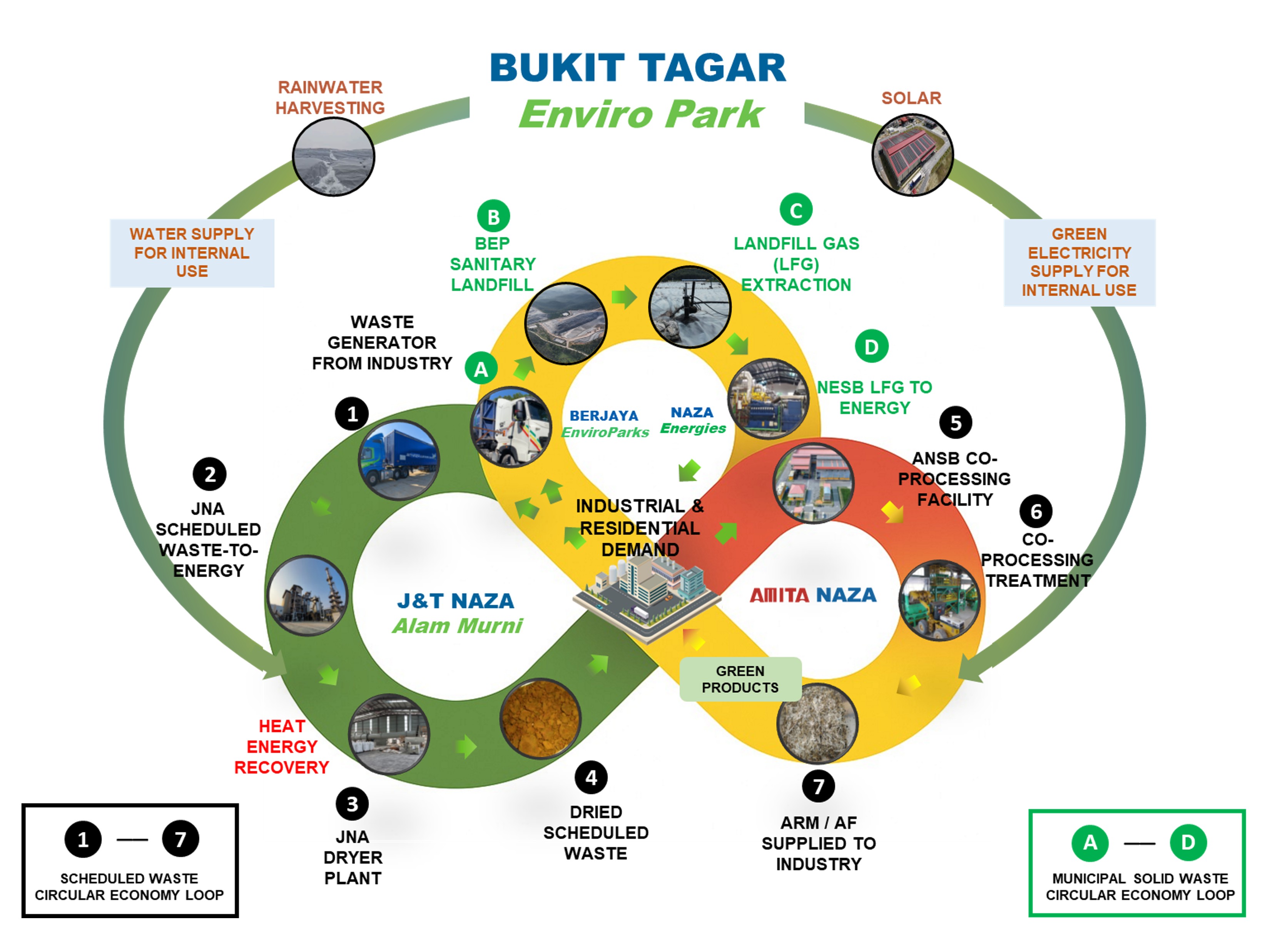
The state-of-the-art sanitary landfill with a 12MW Landfill Gas-to-Energy facility in BTEP, provides environmentally friendly waste treatment and disposal services of solid waste from households, industries, institutional, commercial & construction sectors. Through innovative engineered design, BTEP emphasizes on recycling of biodegradable solid waste to renewable energy and reduction of carbon emissions while supporting Malaysia’s sustainability goals toward a circular economy.
Meanwhile, the Sustainable Scheduled Waste Treatment Centre (SSWTC) within BTEP, specializes in the handling, treatment, and disposal of 76 out of 77 scheduled waste codes consist of industrial, hazardous and clinical wastes. Its facilities are equipped with secure storage systems and advanced treatment technologies that meet stringent DOE requirements. To further support the circular economy, SSWTC’s operation collaborates with a SW recycling facility to turn SW into co-processing substitutes, within the same vicinity, to recycle 15 scheduled waste codes into Alternative Raw Materials (ARM) and Alternative Fuel (AF) for the cement industry—achieving 100% recycling efficiency with no residue. Heat energy recovered from SSWTC’s Scheduled Waste-To-Energy (SWTE) plant is also integrated with the co-processing and recycling processes to enhance efficiency and optimise carbon emissions.
In 2025, BTEP, under the supervision of the Ministry of Housing and Local Government (KPKT), has received several awards and recognitions from various parties:
Waste Management Association of Malaysia (WMAM) 20th Anniversary Annual Conference 2025 for:
Outstanding Waste Facility Management Award
Waste Reduction & Circular Economy Leadership Award
Recognitions on Waste Management Initiatives.
Broaders Asean Solid Waste Management Congress 2025 for:
The Best Waste Management Facility in Malaysia 2025
The Malaysia Book of Records for:
Largest Grid-Connected Landfill Biogas Plant 12MW for N-Energies
Benefits of Proper Waste Management
Proper solid and scheduled waste management delivers the following tangible benefits to waste generators or manufacturers:
Legal and reputational risk reduction: Partnering with compliant facilities shields manufacturers from legal actions, environmental sanctions, and brand damage linked to illegal dumping. Proper waste management activities are traceable and auditable.
Cost control and predictability: Managed disposal systems reduce exposure to fluctuating enforcement costs and fines, while ensuring transparent fee structures.
Operational efficiency: Streamlined collection and treatment processes optimize logistics and resource utilization.
Resource recovery: Certain waste streams can be safely recycled or recovered into valuable materials, aligning with sustainability and circular economy goals.
Investor and market confidence: Demonstrated environmental compliance is increasingly a prerequisite for financing, export partnerships, and ESG certification.
Ethical and responsible action: Proper management of solid and scheduled waste is a duty and responsibility by all related parties.
Conclusion
Illegal dumping of municipal solid waste, private domestic waste, and scheduled waste continues to pose serious environmental and reputational challenges for Malaysia. Recent enforcement actions reflect stronger regulations and harsher penalties. In this landscape, waste generators should ensure that their wastes are being managed in the proper manner to prevent environmental pollution. BTEP stands out as a trusted partner for Local Authorities and waste generators & transporters in delivering safe, compliant, and sustainable waste management solutions. Moving forward, BTEP remains committed to the highest standards of compliance and responsibility—setting the industry benchmark in combating illegal dumping and advancing sustainable waste management.
BTEP is developed and being operated by Berjaya EnviroParks Sdn Bhd (sanitary landfill), a subsidiary of Naza Enviro Holdings Sdn Bhd. Other subsidiaries of Naza Enviro Holdings Sdn Bhd including, Naza Energies Sdn Bhd (12MW Landfill Gas-to-Energy facility), J&T Naza Alam Murni Sdn Bhd (treat 76/77 SW codes), Amita Naza Sdn Bhd (recycle 15/77 SW codes) and Naza B Eco Services Sdn Bhd (sales, marketing & transportation of waste), play pivotal roles in delivering sustainable and compliant waste treatment and disposal solutions. Kindly contact the Naza B Eco Services Sdn Bhd customer service officers listed in the weblink https://www.naza-bes.com/contact for further details on your required waste management services.
This content is provided by Berjaya EnviroParks Sdn Bhd
The views expressed here are those of the author/contributor and do not necessarily represent the views of Malaysiakini.
Interested in having your press releases, exclusive interviews, or branded content articles on Malaysiakini? For more information, contact advertise@malaysiakini.com or advertise@fgmedia.my


